

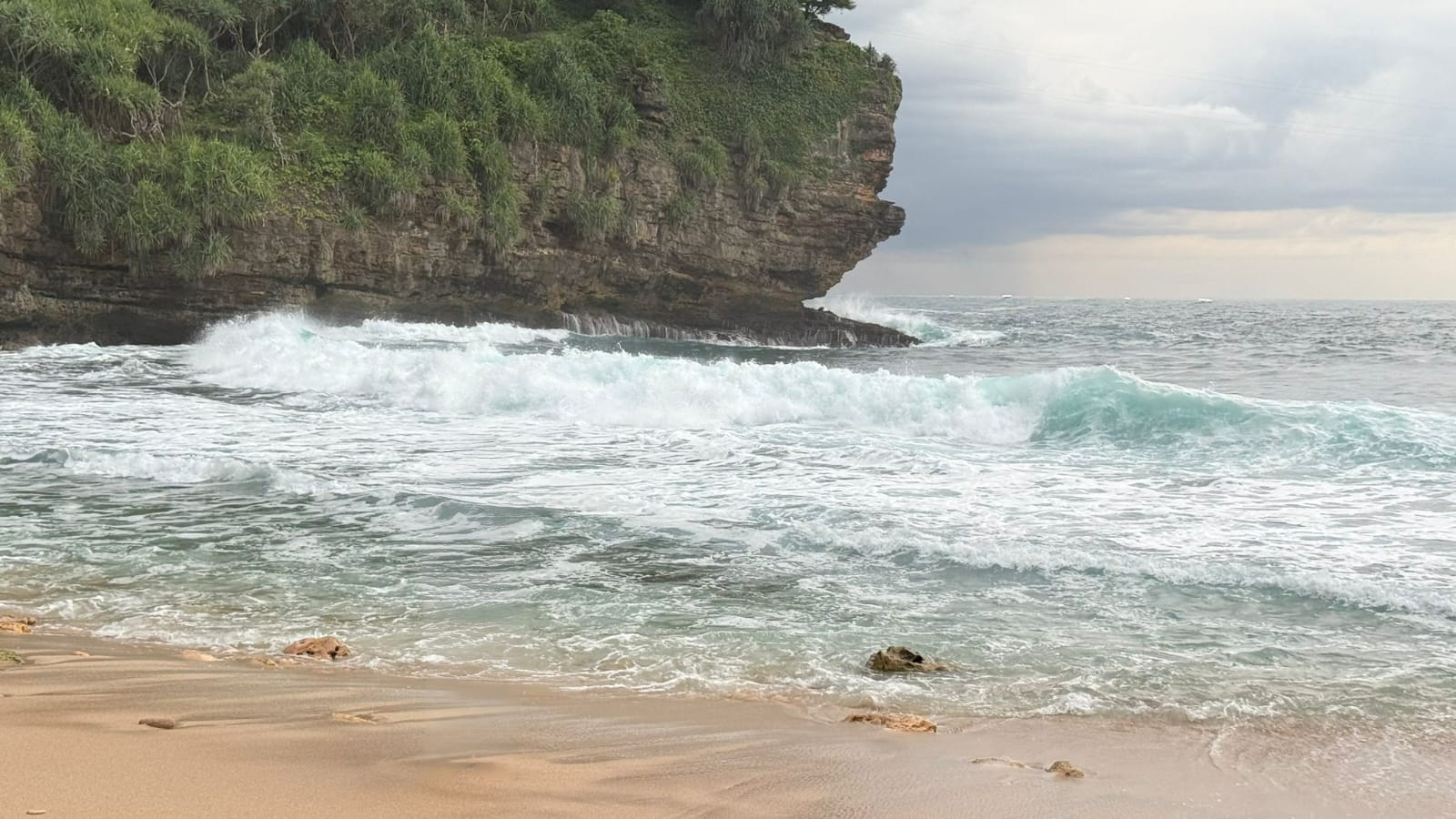
Our family vacation to Yogyakarta was never meant to be profound. It was one of those planned trips where you trust the journey more than the spreadsheet.
Pulau Timang Indian Ocean Reflection
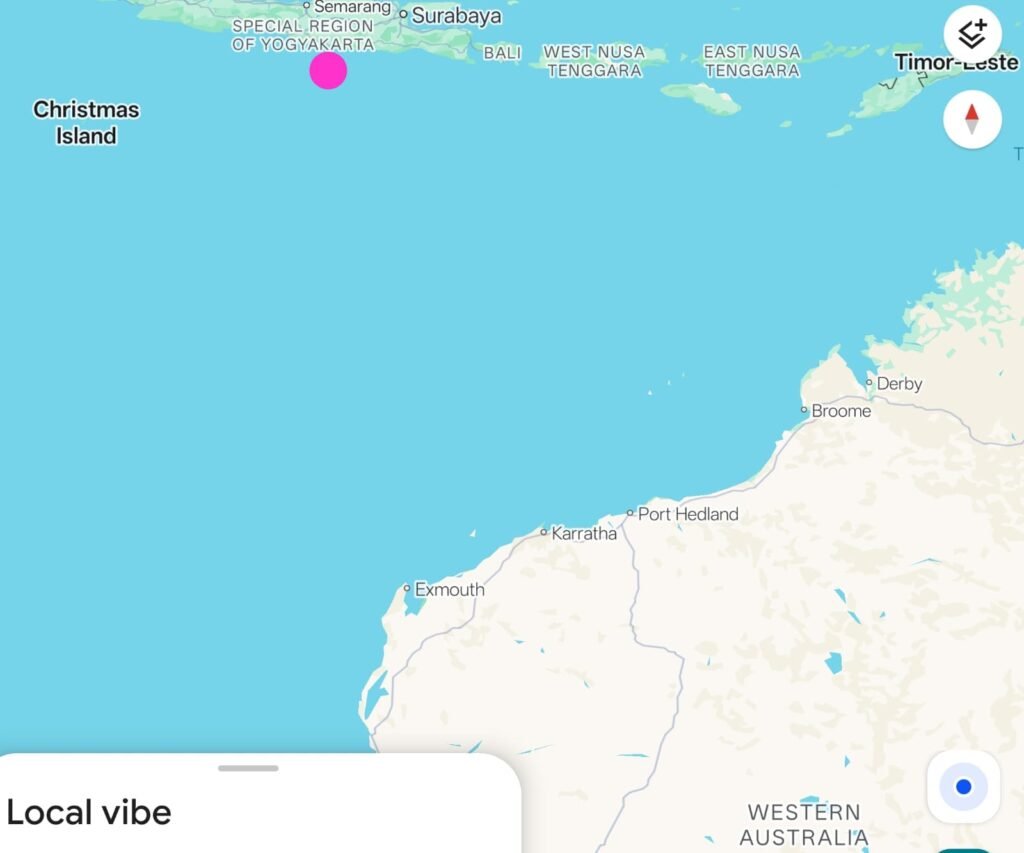
What we did not expect was to find ourselves standing at the edge of Pulau Timang, staring down at the raw Indian Ocean crashing beneath us. This was not a gentle sea. This was the vast southern Indian Ocean stretching beyond Timang Island, flowing past the tip of Java, with no major landmass until Australia thousands of kilometres away. To reach the island, there was only one way forward. A wooden gondola suspended over violent waves, pulled by human hands, crossing the relentless force of the ocean. And strangely, instead of fear, what settled in was awe and an unexpected calm, as if something deeper was quietly asking for our attention.
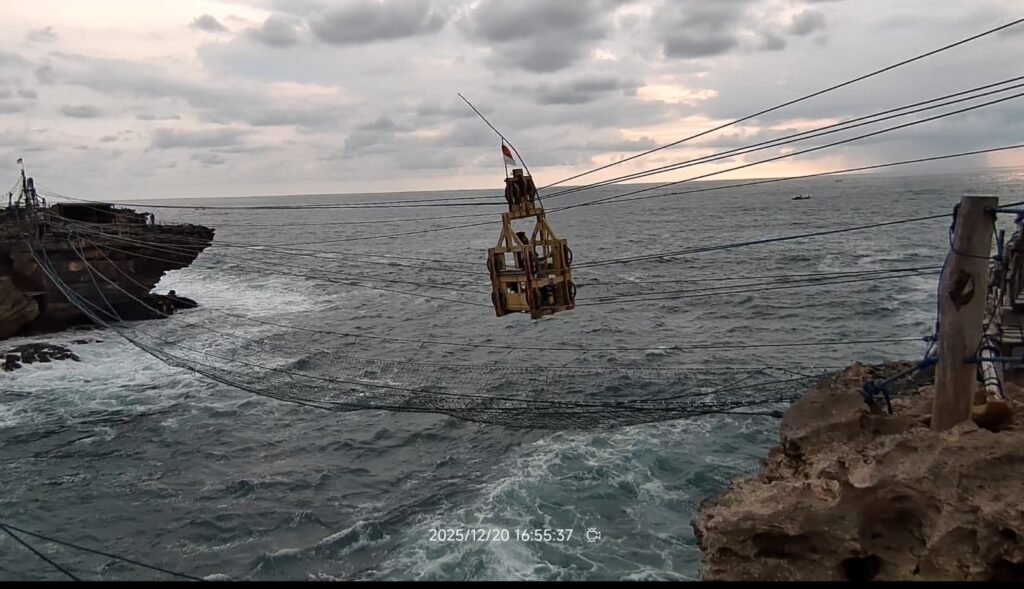
After the gondola crossing, I asked the driver a question that clearly made him uncomfortable. Could he bring me down to the untouched ocean shoreline below. He hesitated. He explained that it was possible, but not common. I would need to walk down a narrow slope for about seven minutes, a path not many people used. There was nothing down there, he said. No facilities. No safety barriers. Just the ocean. He reminded me not to go into the water.
The path down felt almost untouched, barely shaped by human feet. Uneven, slightly awkward, but manageable. As I descended, dusk began to settle. Maghrib was approaching. I did not turn back even when I sensed someone behind me. I was too focused, too drawn forward. It felt as though the reef itself was calling.
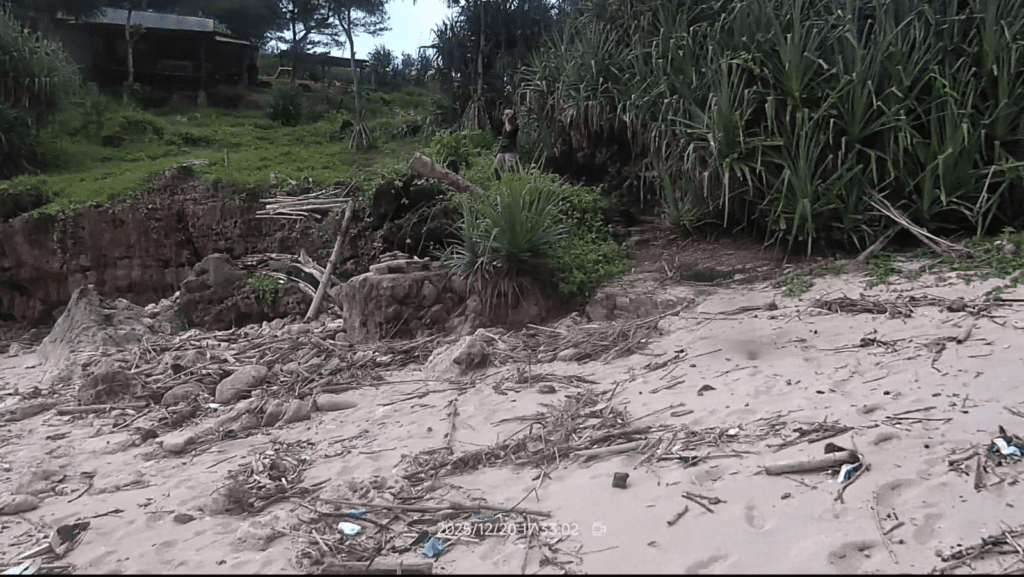
The moment my foot touched the sand, something shifted. The sand was unlike any beach I had known. Soft, cool, untouched. It felt as though no human had disturbed it before me. I stood still for a moment, absorbing the silence, then began walking slowly toward the waves.
What lay before me was not a sea I recognised. This was the Indian Ocean in its raw state. Vast. Direct. Unapologetic. I had felt something similar once before, at the edge of Jeddah, standing where the Red Sea opens toward Egypt. But this was different. This was larger. Louder. More alive. This was one of the world’s great oceans, flowing past Java, uninterrupted, stretching thousands of kilometres toward Australia.
I stepped closer.
The first wave came gently, almost deceptively so. It caressed my feet, sending a cold, tingling sensation through my body. My heart swelled. There was something deeply emotional about standing in a place so free from human interference. No shouting. No swimming. No music. Just water, wind, and intention. It felt as though creation itself was breathing.
Then the wave retreated.
I was pulled forward.
Not violently. Not dramatically. But firmly. Enough to startle me. Enough to remind me that this was not a playground. This ocean did not care that I could swim. It did not care that the wave seemed small. It obeyed its own law. I reacted immediately and stepped back, just in time to see another wave approaching. Bigger. Slower. Purposeful.
I climbed higher onto the sand as it crashed near my ankle, then retreated again, pulling hard toward the ocean. In that moment, something broke inside me. Not physically, but internally.
I realised how easily I could be taken. How no one could reach me in time. How even the shallow shore carried danger. How nature does not negotiate. It does not shout. It does not threaten. It simply acts.
Standing there, I felt utterly small.
My ego collapsed. My sense of control vanished. My intelligence meant nothing. My ability to manage risk was exposed as fragile. I understood then that human strength exists only within the limits Allah allows. Beyond that, even the simplest wave can overpower us.
We often imagine destruction through accidents, illness, or catastrophe. That day, I understood another truth. Allah’s simple creation itself is enough to humble us. Enough to end us.
And yet, within that fear was beauty. Within that power was precision. Within that danger was mercy, because I was allowed to step back, to reflect, to return.
This was not a beach meant for leisure. This was a boundary. A reminder. A living sign. The ocean did not need to announce its strength. Its silence was louder than any human voice.
I walked back slowly, my heart heavy but awake. I knew something had changed. Not because I conquered nature, but because nature reminded me that I never could.
Before I turned back toward the mainland, I noticed my daughter standing at the edge of the shoreline beside a local village man. He was there quietly, watchful, ready to act if my life was in danger. My daughter, however, was not watching out of fear alone. She was mesmerised by what she had just witnessed. The ocean. The waves. The stillness and power that held everything in place. In her eyes, I could see awe, not panic. It was the same awe that had drawn me down there in the first place.
As we regrouped and made our way back uphill toward the jeep, she walked beside me in silence for a while. Then she said, almost casually, yet with striking clarity, “Dad, none of the family member follows your adventures DNA except for me.” I looked at her, smiled, and nodded. In that moment, I realised she had been listening to the ocean in her own way.
As we drove away from the shoreline, climbing back toward the mainland, that moment stayed with me. Not the fear. Not the power of the waves. The ocean had humbled me, stripped me of certainty, and reminded me of my place before Allah’s creation. Yet in that same space, it revealed something gentler. A passing of spirit. Some journeys are not meant to be followed by everyone. They are meant to be understood.
Allah reminds us:
“And He it is who has subjected the sea, so that you may eat from it tender meat and extract from it ornaments which you wear. And you see the ships ploughing through it, that you may seek of His bounty, and perhaps you will be grateful.”
Surah An Nahl verse 14
The sea is subjected but never surrendered. It serves humanity only within boundaries set by its Creator. Beyond that, it remains obedient to Allah alone.
Seeing is not the same as witnessing. At Pulau Timang, the ocean was not something to admire from a distance. It was something that demanded humility. Something that forced awareness. Something that reminded me that faith is not only built in masjids or through words, but also through standing still before creation and recognising one’s place within it.
More Reads
- Spiritual Calm & Quranic Strength — The Hidden Power of Ayat Kursi and Why Reciting It Changes… — Rethinking Islam ➤ https://rethinkingislam.net/the-hidden-power-of-ayat-kursi-episode-1/rethinkingislam.net
- Signs of Allah in creation and reflection — Islam365 overview (not on your site, but authoritative context for reflection on creation as ayaat). Islam 365

3 Comments
Salams. Nice blog. Can you do more of these travel blogs? Allah’s creation is indeed beautiful. Would it be possible for you to create one that’s like a journal, so that we can feel your emotions and be on the journey as we read it? Keep up the great work.
And, would it be possibel to add more photos? I would love to see more.
Waalaikumsalam Mister Ali. Thank you for reading so thoughtfully and for taking the time to share this. Your words mean a lot, truly.
Yes, I do plan to write more travel pieces in a quieter, journal like way. Less sightseeing checklist, more inner movement. Those moments when nature slows you down and faith feels lighter rather than performative. I am glad that came through for you.
On the photos, you are right. I tend to hold back sometimes because I want the reflection to lead, not the visuals. But I hear you. I will include more images where they genuinely add to the journey, not distract from it.
If you enjoy reflective writing like this, I also host a small, quiet space where I share similar journal style pieces and short reflections without pressure or debate. You are most welcome to read quietly or just observe.
You can explore it here whenever you feel ready
https://nas.io/think-again-a-muslim-thinking-lab
Thank you again for your encouragement. It helps more than you know.