

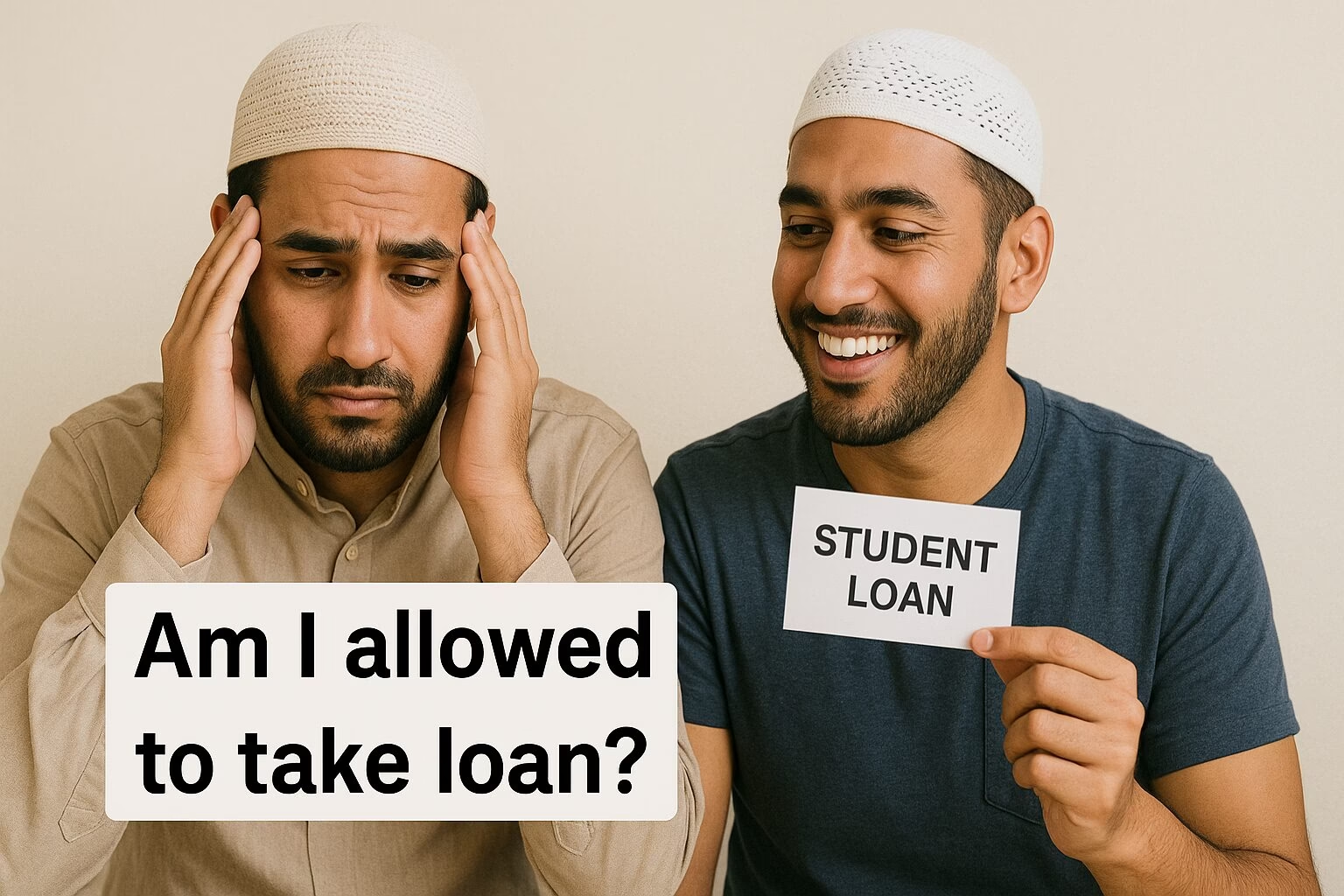
In a city like Singapore, where the cost of living is always trying to outpace your ambition, avoiding loans feels like avoiding durians during peak season — nearly impossible and slightly suspicious.
But for Muslims in Singapore, the situation is even trickier. We’re not just juggling bills. We’re juggling bills and beliefs. The question that quietly screams from many prayer mats is this:
Can I take a loan for my home, studies, or car — even if it involves interest — without compromising my deen?
Let’s unpack that.
The Riba Dilemma
First things first. Islam is very clear about riba (interest). It’s not just frowned upon — it’s haram. The Quran says:
“Allah has permitted trade and has forbidden riba.” (Surah Al Baqarah 2:275)
Classical scholars like Imam Abu Hanifa, Imam Malik, Imam Shafi’i, and Imam Ahmad ibn Hanbal unanimously viewed riba as a major sin. Modern scholars like Mufti Taqi Usmani and Sheikh Yusuf al Qaradawi have consistently reinforced this position.
Fatwa from Mufti Taqi Usmani on modern banking riba:
Living in Singapore: Reality Bites
Singapore is not Mecca. Or Kelantan. It’s a high-income, fast-paced society with prices to match. Let’s break it down by needs:
1. Housing
For a young Muslim couple, buying an HDB resale flat might require upwards of $500,000. Unless you’re from the royal family of Brunei, that’s not coming from under your sajjadah. And while the HDB loan is government-backed, it’s still interest-based.
Can this ever be allowed?
There is no blanket answer for every borrower. Riba remains prohibited, while jurists differ on how necessity and serious need apply to modern housing finance. A Muslim considering an interest bearing housing loan should examine the available alternatives and seek qualified religious advice based on the actual circumstances rather than assuming that home ownership automatically creates an exception.
Can You Buy a House with an Interest-Based Loan If Necessary?
2. Education Loans
Postgraduate degrees in Singapore (and abroad) can cost anywhere between $30,000 to $120,000. Your career might depend on it. Can you take a loan?
Education is highly valued in Islam, but that does not turn every interest bearing study loan into a religious necessity. Scholars who discuss concessions for serious need generally apply strict conditions and assess the individual situation rather than treating education alone as an automatic exception.
In Singapore, students should also check the current Higher Education Student Loan before considering more expensive borrowing. The HESL is interest free during the course of study, although interest begins after graduation or when the student leaves the institution.
Check the current Higher Education Student Loan here.
Education Loans & Necessity (Shaykh Faraz Rabbani)
“What Are the Guidelines on Student Loans in Non‑Muslim Countries?” – reiterates strict prohibition, with exceptions only in cases of true necessity SeekersGuidance.
“Is Taking a Student Loan with Interest Due to Necessity Permissible?” – says riba is prohibited, but a narrow exception may apply under urgent necessity (haja) if no alternative exists and you intend to refinance into halal options. Is Taking a Student Loan with Interest Due to Necessity Permissible? – Shaykh Faraz Rabbani
That said, it’s highly encouraged to first explore scholarships, Zakat-supported funds, or Islamic-friendly education sponsors. They exist — you just have to dig past the marketing noise.
3. Transport & PHV
Not everyone is buying a Ferrari. Some just need a decent hybrid to get their elderly mother to dialysis and maybe earn a living through PHV (Grab/GoJek).
A car can be important for work, caregiving or health, but importance alone does not create a universal religious exemption from the prohibition of riba. The borrower should first examine practical alternatives, the actual level of need and the financial consequences, then seek qualified religious advice if an interest bearing loan still appears unavoidable.
Housing & Car Loans (SeekersGuidance Fiqh Advice)
- Dr. Monzer Kahf, referencing a Singapore questioner, discusses “quasi-necessities” such as housing and car loans. He highlights that while Islamic financing options in Singapore are limited, helping build Islamic finance infrastructure is a religious duty—but acknowledges conditional allowance if necessity is proven Purchasing Cars and homes through Commercial Loan Banks
So, Can We Ever Take a Loan?
Sometimes scholars discuss concessions, but this is not an automatic yes.
A proper assessment may include questions such as:
- No Sharia-compliant alternative
- A legitimate and personal necessity (darurah or hajah)
- No excessive borrowing or exploitation
- A plan to refinance into halal options when available
These factors can be relevant to a scholarly assessment, but they do not by themselves make an interest bearing loan permissible. The ruling can depend on the type of loan, the seriousness of the need, available alternatives and the scholarly methodology being followed.
What Should I Do Then?
- Do the research. Don’t assume all loans are haram or all are halal.
- Speak to a qualified local religious teacher or scholar, preferably one familiar with contemporary finance and Singapore circumstances.
- Avoid unnecessary loans for lifestyle inflation. Don’t borrow to impress your cousin’s cousin’s wedding guests.
- Use qualified advice carefully. A financial adviser can explain regulated products, costs and alternatives. A religious ruling on necessity should come from qualified Islamic scholarship, not from a sales recommendation.
A Note from This Life — and the Next
In a country where opportunity sometimes arrives wrapped in red tape and monthly instalments, navigating your financial decisions with faith is not just noble — it’s necessary. Loans might feel like the only way forward, but the path you choose can either be lined with barakah or burdened with regret.
Mohamad Hans Edzra is listed in the AIA Agency Recognition 2026 directory under MFA Group. His public professional profile discusses Islamic finance and Shariah compliant planning. That affiliation does not by itself certify every product as Shariah compliant.
If you consult any adviser, ask for the current product documents, total fees, risks, alternatives and the specific Shariah basis behind any religious description. Keep the product recommendation separate from the religious ruling on whether an interest bearing loan is necessary in your own circumstances.
- Is this loan truly necessary or just nice to have?
- Is there a halal financing structure available — like Murabaha or Ijara?
- Can I avoid riba and still reach my goals?
- How can I uplift my family in dunya without risking my akhirah?
For a major financial decision, it can be sensible to use both kinds of expertise: regulated financial advice for the numbers and qualified religious advice for the Islamic ruling. Neither should pretend to replace the other.
Mohamad Hans Edzra — Shariah Compliant Financial Consultant in Singapore
Mohamad Hans Edzra is listed in the AIA Agency Recognition 2026 directory under MFA Group. Readers should verify his current regulated status, qualifications and the terms of any recommended product directly before making a financial decision.


Mohamad Hans Edzra, Financial Consultant in Singapore
Listed in the AIA Agency Recognition 2026 directory under MFA Group.
Public professional materials discuss Islamic finance and Shariah compliant planning. Readers should verify current qualifications, product documents and the Shariah basis of any recommended solution before making a financial decision.
Message on WhatsApp
More Reads
- Halal Investment in Singapore Why Muslims Are Falling Behind
- Discover Dubai Where Modern Muslim Travel Meets Smart Property Investment – Rethinking Islam

2 Comments
Pingback: Contemporary Renovation Ideas for Young Families
Pingback: Halal Investment in Singapore Why Muslims Are Falling Behind - Rethinking Islam