
Close Menu
Rethinking IslamRethinking Islam
  • Faith Unfiltered
    • Faith in Context
    • Ideas and Interpretation
  • Her Deen, Her Rules
    • Marriage and Family
    • Home and Everyday Living
  • Travel
    • Travel with Purpose
  • Did You Know?
    • Modern Questions
    • Thoughtful Reads This Week
    • Muslim Life in Singapore
  • Partner Spotlights
    • Just In

Subscribe to Updates

Get thoughtful stories about faith, modern Muslim life and Singapore in your inbox.

What's Hot

You Can Afford the Condo. But Can You Afford to Keep It?

October 12, 2026

A Muslim Loved One Dies Overseas. Who Can Handle Their Assets Back Home?

October 11, 2026

Why Do Muslim Women Cover Their Hair When Praying Alone?

October 10, 2026
Facebook X (Twitter) Instagram YouTube WhatsApp
Rethinking IslamRethinking Islam
Singapore’s Modern Muslim Magazine
  • Faith Unfiltered
    • Faith in Context
    • Ideas and Interpretation
  • Her Deen, Her Rules
    • Marriage and Family
    • Home and Everyday Living
  • Travel
    • Travel with Purpose
  • Did You Know?
    • Modern Questions
    • Thoughtful Reads This Week
    • Muslim Life in Singapore
  • Partner Spotlights
    • Just In
Rethinking IslamRethinking Islam
Home » Should You Raise Your Hands in Dua After Prayer
Ideas and Interpretation

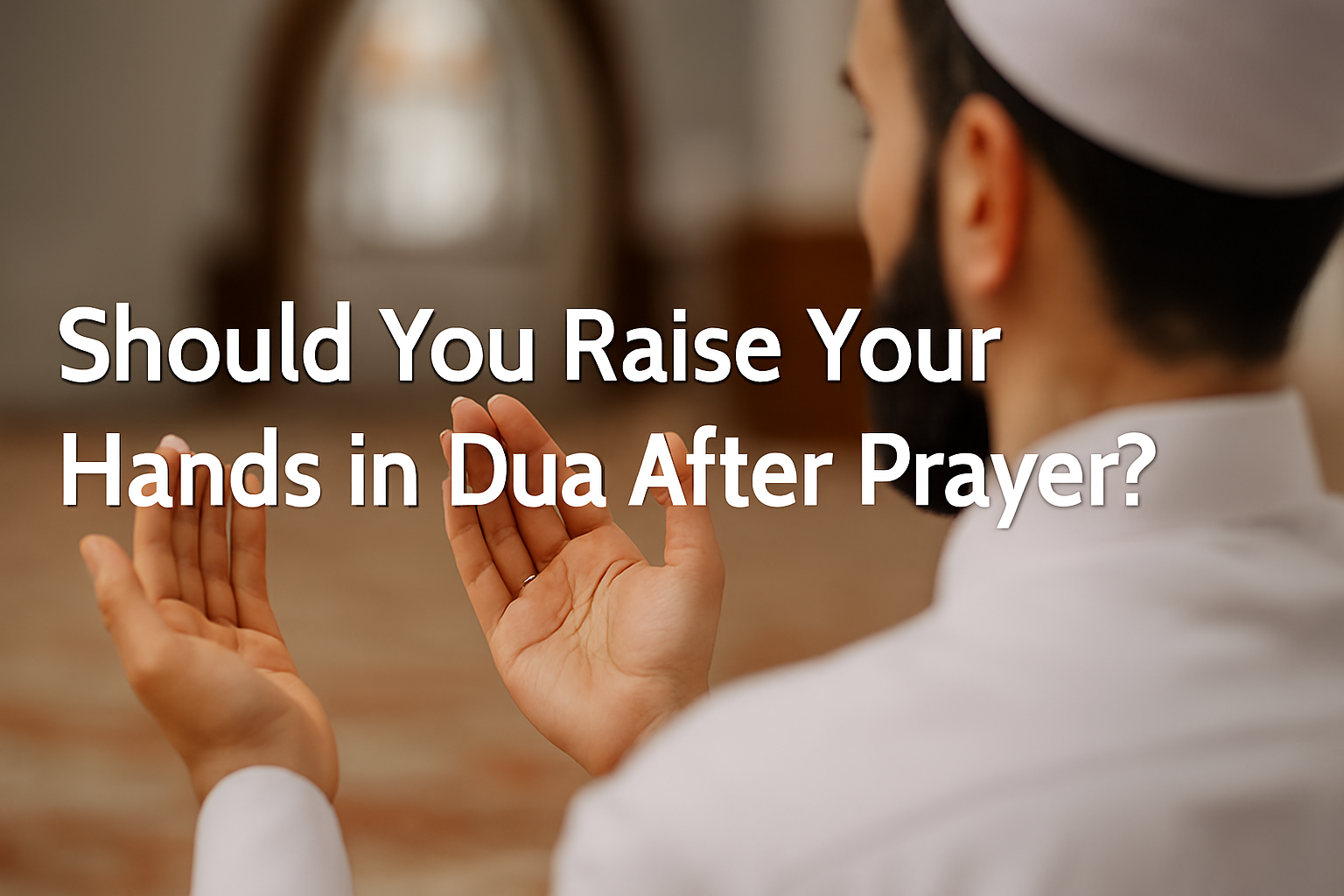
Should You Raise Your Hands in Dua After Prayer

A. L. SaidBy A. L. SaidOctober 4, 20251,949 ViewsNo Comments4 Mins Read
Share Facebook Twitter Pinterest LinkedIn Tumblr Reddit Telegram Email
Share
Facebook Twitter LinkedIn Pinterest Email

The Quiet Question Many Muslims Ask

Every masjid has its own scene. Some finish the salam and quietly leave. Others fold their arms in dhikr. And then there are those who instantly raise their hands in dua, palms open, eyes soft. At some point, you may have wondered is this right, or is it wrong?

The short answer is that scholars differ. Raising the hands is a recognised Sunnah in dua generally, but there is no clear authentic report establishing it as a fixed practice after every obligatory prayer. Some scholars therefore discourage making it a regular ritual after every fard salah, while others permit it as a general form of dua so long as it is not treated as obligatory or as an established post prayer Sunnah.

What the Prophet ﷺ Actually Did After Salah

  • Astaghfirullah three times — showing humility even after worship (Muslim).
  • Ayat al-Kursi — described as a shield and a ticket to Paradise (Nasa’i).
  • Tasbih, tahmid, takbir — Subhanallah (33), Alhamdulillah (33), Allahu Akbar (34). Together they make a hundred treasures of dhikr (Bukhari, Muslim).
  • Surah al-Ikhlas, al-Falaq, an-Nas — recited especially after Fajr and Maghrib (Tirmidhi).

After this foundation, he ﷺ would sometimes make dua but he did not establish a fixed way of raising his hands after every prayer.

Then Why Do Many Muslims Raise Their Hands

The instinct is simple. You have just stood in front of Allah, your heart softened, your body purified in wudu, your tongue wet with dhikr. This is not just “after salah” it is one of the most hopeful moments for a dua to be answered.

Raising the hands is a sunnah of dua in general. The Prophet ﷺ raised his hands in many moments at Badr, in qunoot, for rain. So Muslims combined the two: after salah, when barakah is fresh, they raise their hands to ask.

The key is not to turn a legitimate area of scholarly disagreement into a test of someone else’s religiosity.

Which Is Better Dua After Salah or Dua Anytime

The Qur’an is wide open: “Call upon Me, I will respond to you” (40:60). Dua on the bus, in your living room, even while lying in bed is accepted.

The Sunnah clearly identifies several especially virtuous times for dua, including sujood, between the adhan and iqamah and the last third of the night. After the obligatory prayer, the strongest established practice is the prescribed adhkar. A person may still make personal dua, but we should not claim that dua immediately after every fard prayer is automatically superior to dua at other times without evidence.

The Balance to Keep

  • Do the adhkar the Prophet ﷺ actually taught first.
  • Then if your heart feels the pull, raise your hands and ask.
  • Do not treat it as obligatory.
  • Do not look down on those who don’t.

A Gentle Recap

Islam is not about bending truth to match our comfort. It is about holding onto truth while making space for the heart. The Prophet ﷺ gave us a strong backbone of adhkar after salah. On top of that, raising the hands in dua is your choice, your moment, your personal doorway to Allah.

So, should you raise your hands in dua after prayer? You do not need to. If you occasionally make personal dua with raised hands, many scholars consider that permissible. If you prefer to keep to the established adhkar and make dua at other recognised times, that is also a valid approach. What should be avoided is treating one practice as obligatory or condemning Muslims who follow a recognised scholarly view.

More Read!

  • Asset Progression – What Every Muslim Family Needs to Try for Themselves
  • Bukhoor in Singapore The Scent of Heritage and Authenticity

Donate Now

Was this useful?

Share the conversation

WhatsAppTelegram

Rethinking Islam

Keep thinking with us.

Get fresh perspectives on faith and Muslim life in Singapore. Subscribe free.

Mailchimp opens in a new tab to complete your signup. Privacy policy

Continue exploring

Are Humans Smarter Than Jinn? What the Quran Actually Tells UsThe World’s Most Expensive HobbyShaytan and the Broken Windows Analogy: How Small Neglect Can Grow
A quieter corner
If you are looking for a quieter space to reflect without pressure, you are welcome to step inside.
Enter the quiet space
Quran and Sunnah islamic reflection adhkar after prayer salah habits dua acceptance Muslim daily practice raising hands dua sunnah and bidah Islamic spirituality dua after salah
Share. Facebook Twitter Pinterest LinkedIn Tumblr Email
Previous ArticleModern Muslimah Fashion in Singapore: Style, Modesty and Everyday Life
Next Article When Faith Loses Wisdom: Knowledge, Humility and Imam Mahdi
A. L. Said

A. L. Said founded Rethinking Islam, a Singapore Muslim digital magazine connecting faith with modern life. He explores identity, relationships, money and the digital world through a distinctly Singaporean lens. His articles bring together personal reflection, recognised scholarship and verified sources, with links for further reading. His aim is simple: clear ideas, thoughtful questions and meaningful conversations, with a little local wit.

Related Posts

Editor's Picks

Why Do Muslim Women Cover Their Hair When Praying Alone?

October 10, 2026
Ideas and Interpretation

Are Humans Smarter Than Jinn? What the Quran Actually Tells Us

September 13, 2026
Marriage and Family

The World’s Most Expensive Hobby

July 20, 2026
Add A Comment
Leave A Reply Cancel Reply

Top Posts

Halal Investing in Singapore: A Practical Guide for Muslims

September 19, 202547,399 Views

Loans in Singapore: When Necessity Knocks, What Do We Do?

September 19, 202543,885 Views

Can a Jinn Fall in Love with a Human? What Islam Actually Says

March 9, 202416,910 Views

Hijab Is Not Just a Scarf: The Truth We Rarely Talk About

February 14, 20266,997 Views
Stay In Touch
  • Facebook
  • Instagram
  • WhatsApp

Subscribe to Updates

Join our newsletter for deep dives into faith, spirituality, and modern Muslim thought.

Your brand banner on Rethinking Islam
Your brand name can appear here
Banner Space Available
Reach engaged readers who care about money, values and real life decisions
Strong Singapore and regional traffic
Audience that trusts thoughtful content
Simple reporting for views and clicks
Enquire About This Banner

Explore Trusted Muslim Friendly Services

Discover professionals and businesses aligned with your needs and values.

View Directory
Discover Trusted Services
Featured Partners

Discover Trusted Services

Tap a sponsor video only when you want to watch it.

⌕ RI Services Directory Find Muslim Friendly Contacts →
Traditional scents for a new generation

Attar, oud and personalised fragrance discovery in Kampong Gelam.

Visit Royal Fragrances →
Trusted legal guidance for life and family

Syariah matters, Wasiat, Hibah, estate planning and probate support in Singapore.

Book a Consultation →
Private Digital Reflection Enter Your Backroom A short interactive experience built around the choices you actually make. Enter the Experience →
Swipe or use arrows
Partner features are provided for reader discovery. Please review each service independently.

Type above and press Enter to search. Press Esc to cancel.

Instagram Wordpress
Copyright © 2026 Rethinking Islam | Powered by Pearl Organisation