

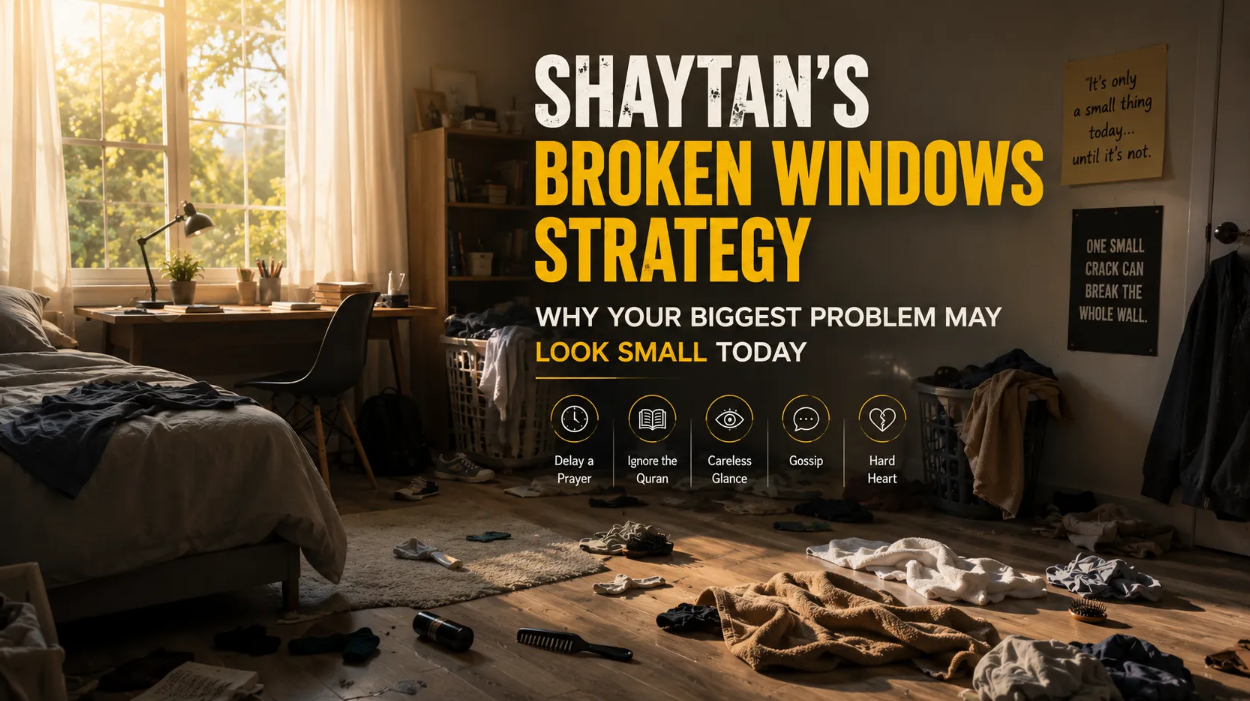
Let’s be honest.
Nobody has ever walked into their bedroom and proudly declared,
“Excellent. My room now looks like a recycling centre.”
Yet somehow… it happens.
It starts with one T shirt. You come home tired.
“Never mind,” you tell yourself. “I’ll hang it up tomorrow.”
Tomorrow arrives.
Another T shirt lands on the same chair. Then your jeans. Then a towel.
Then yesterday’s clothes because, technically, “they’re not dirty.”
A week later, the chair has officially resigned from being a chair.
It is now a wardrobe with no shelves. Then the floor joins the party.
A sock appears. Nobody knows where its partner went.
A charging cable decides to live there permanently.
A shopping bag from three months ago suddenly becomes “useful.”
Then one day, you stand at your bedroom door and ask the world’s most innocent question.
“How did this happen?”
Simple.
One T shirt at a time.
You didn’t wake up one morning and decide to live in a mess.
You slowly became comfortable with one small mess.
Then another. Then another.
Sound familiar? It should.
As a metaphor, the same pattern can help us think about spiritual habits. Small compromises can become easier to repeat, and the Quran warns believers not to follow the steps of Shaytan.
The Theory Nobody Expected to Explain Our Spiritual Life
There is something called the Broken Windows Theory.
The idea is surprisingly simple.
Imagine a building with one broken window.
If nobody bothers to fix it, people start thinking,
“Nobody cares about this place.”
Soon another window gets broken.
Then someone sprays graffiti. Then rubbish appears.
Before long, the whole neighbourhood starts looking neglected.
The broken window wasn’t the real problem.
It was the permission it silently gave.
It said, “It’s okay. Nobody cares anymore.”
Now replace the broken window with your heart.
The Quran Warns About Following Steps
Islam does not give us a daily playbook describing exactly how Shaytan approaches every person. What the Quran does warn about is following his steps, language that naturally suggests gradual movement rather than only dramatic acts of wrongdoing.
That makes the Broken Windows comparison useful as a reflection, not as a revealed description of Shaytan’s strategy.
“Skip this prayer. You’ll make it up later.”
“Read the Quran tomorrow.”
“It’s only one little lie.” “It’s only one look.”
“It’s only one gossip session.” “It’s only one missed opportunity.”
The repeated idea is familiar: “It is only this once.” The point is not that we can hear or map every whisper of Shaytan. The point is that people can normalise small compromises until they become habits.
The World’s Most Expensive Words
There are four words that have probably cost people more than they realise.
“It’s only this once.”
Those words have emptied bank accounts.
Destroyed marriages. Ruined friendships.
Broken trust. And quietly damaged countless hearts.
Because “once” has a terrible habit of becoming “again.”
Your Heart Is Like Your Bedroom
Imagine if you cleaned your room every single day.
One T shirt never gets the chance to become twenty.
One coffee cup never becomes a science experiment.
One receipt never becomes a mountain of paper.
The room stays peaceful because you deal with small problems while they are still small.
Our hearts work the same way.
One sincere tawbah. One prayer on time.
One page of Quran. One act of kindness.
One moment of dhikr.
These are the spiritual version of putting the T shirt back in the cupboard before the room becomes a disaster.
Before You Blame Shaytan
Maybe tonight, don’t ask yourself,
“What are my biggest sins?”
Ask something much more uncomfortable.
“What little things have I stopped caring about?”
Because faith rarely disappears overnight.
It quietly gathers dust.
Just like that lonely T shirt that started everything.
The practical lesson is simpler: do not wait for a habit to become huge before taking it seriously. Small neglect can become normalised, and repentance is easier when we notice the drift early.
More Reads!
- One Small Sin That Tips the Scale
- Broken Windows Theory
- Self Deception in Faith: When Your Actions Quietly Block Your Blessings
