

The Quiet Question Many Muslims Ask
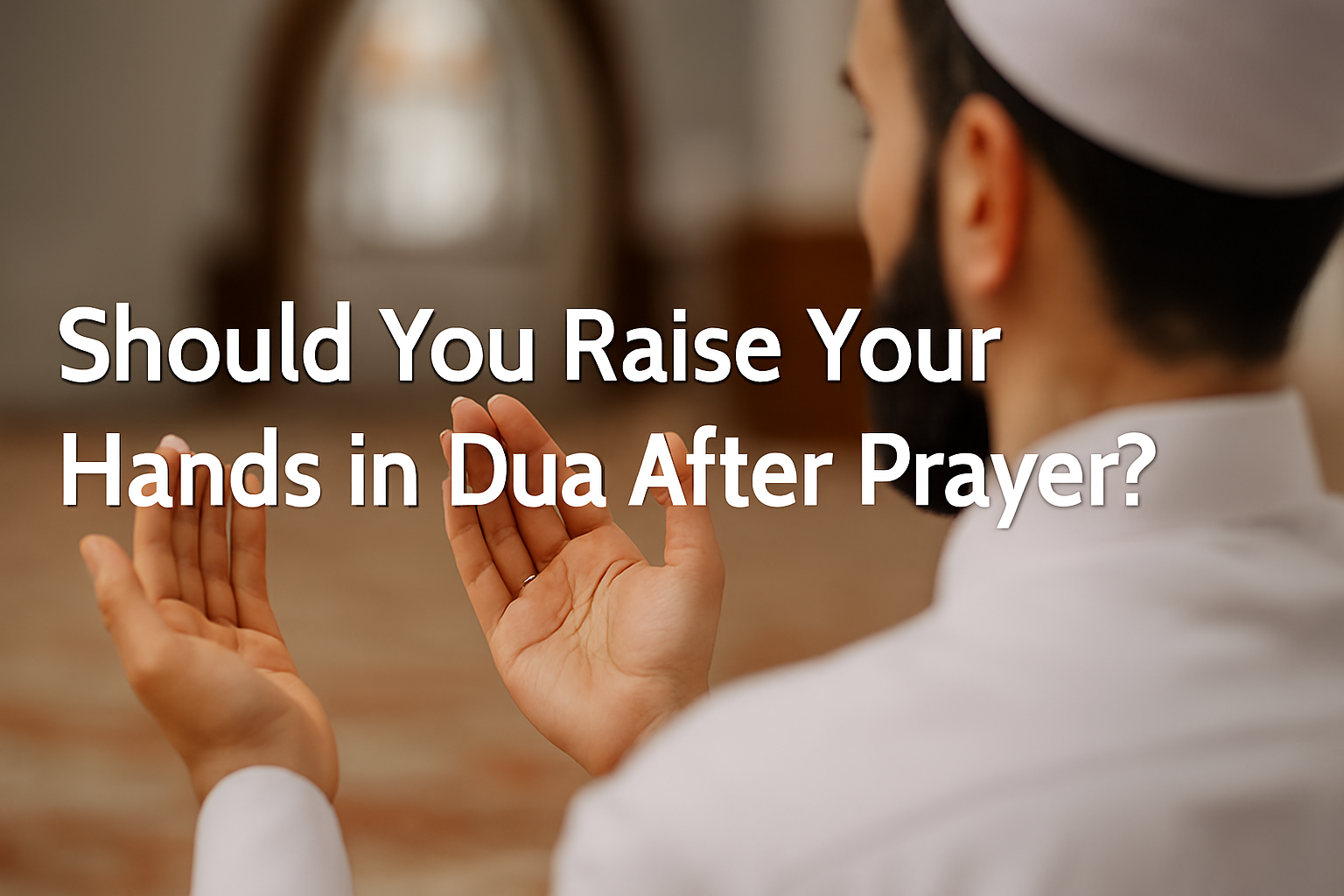
Every masjid has its own scene. Some finish the salam and quietly leave. Others fold their arms in dhikr. And then there are those who instantly raise their hands in dua, palms open, eyes soft. At some point, you may have wondered is this right, or is it wrong?
The short answer is that scholars differ. Raising the hands is a recognised Sunnah in dua generally, but there is no clear authentic report establishing it as a fixed practice after every obligatory prayer. Some scholars therefore discourage making it a regular ritual after every fard salah, while others permit it as a general form of dua so long as it is not treated as obligatory or as an established post prayer Sunnah.
What the Prophet ﷺ Actually Did After Salah
- Astaghfirullah three times — showing humility even after worship (Muslim).
- Ayat al-Kursi — described as a shield and a ticket to Paradise (Nasa’i).
- Tasbih, tahmid, takbir — Subhanallah (33), Alhamdulillah (33), Allahu Akbar (34). Together they make a hundred treasures of dhikr (Bukhari, Muslim).
- Surah al-Ikhlas, al-Falaq, an-Nas — recited especially after Fajr and Maghrib (Tirmidhi).
After this foundation, he ﷺ would sometimes make dua but he did not establish a fixed way of raising his hands after every prayer.
Then Why Do Many Muslims Raise Their Hands
The instinct is simple. You have just stood in front of Allah, your heart softened, your body purified in wudu, your tongue wet with dhikr. This is not just “after salah” it is one of the most hopeful moments for a dua to be answered.
Raising the hands is a sunnah of dua in general. The Prophet ﷺ raised his hands in many moments at Badr, in qunoot, for rain. So Muslims combined the two: after salah, when barakah is fresh, they raise their hands to ask.
The key is not to turn a legitimate area of scholarly disagreement into a test of someone else’s religiosity.
Which Is Better Dua After Salah or Dua Anytime
The Qur’an is wide open: “Call upon Me, I will respond to you” (40:60). Dua on the bus, in your living room, even while lying in bed is accepted.
The Sunnah clearly identifies several especially virtuous times for dua, including sujood, between the adhan and iqamah and the last third of the night. After the obligatory prayer, the strongest established practice is the prescribed adhkar. A person may still make personal dua, but we should not claim that dua immediately after every fard prayer is automatically superior to dua at other times without evidence.
The Balance to Keep
- Do the adhkar the Prophet ﷺ actually taught first.
- Then if your heart feels the pull, raise your hands and ask.
- Do not treat it as obligatory.
- Do not look down on those who don’t.
A Gentle Recap
Islam is not about bending truth to match our comfort. It is about holding onto truth while making space for the heart. The Prophet ﷺ gave us a strong backbone of adhkar after salah. On top of that, raising the hands in dua is your choice, your moment, your personal doorway to Allah.
So, should you raise your hands in dua after prayer? You do not need to. If you occasionally make personal dua with raised hands, many scholars consider that permissible. If you prefer to keep to the established adhkar and make dua at other recognised times, that is also a valid approach. What should be avoided is treating one practice as obligatory or condemning Muslims who follow a recognised scholarly view.
More Read!
- Asset Progression – What Every Muslim Family Needs to Try for Themselves
- Bukhoor in Singapore The Scent of Heritage and Authenticity
