

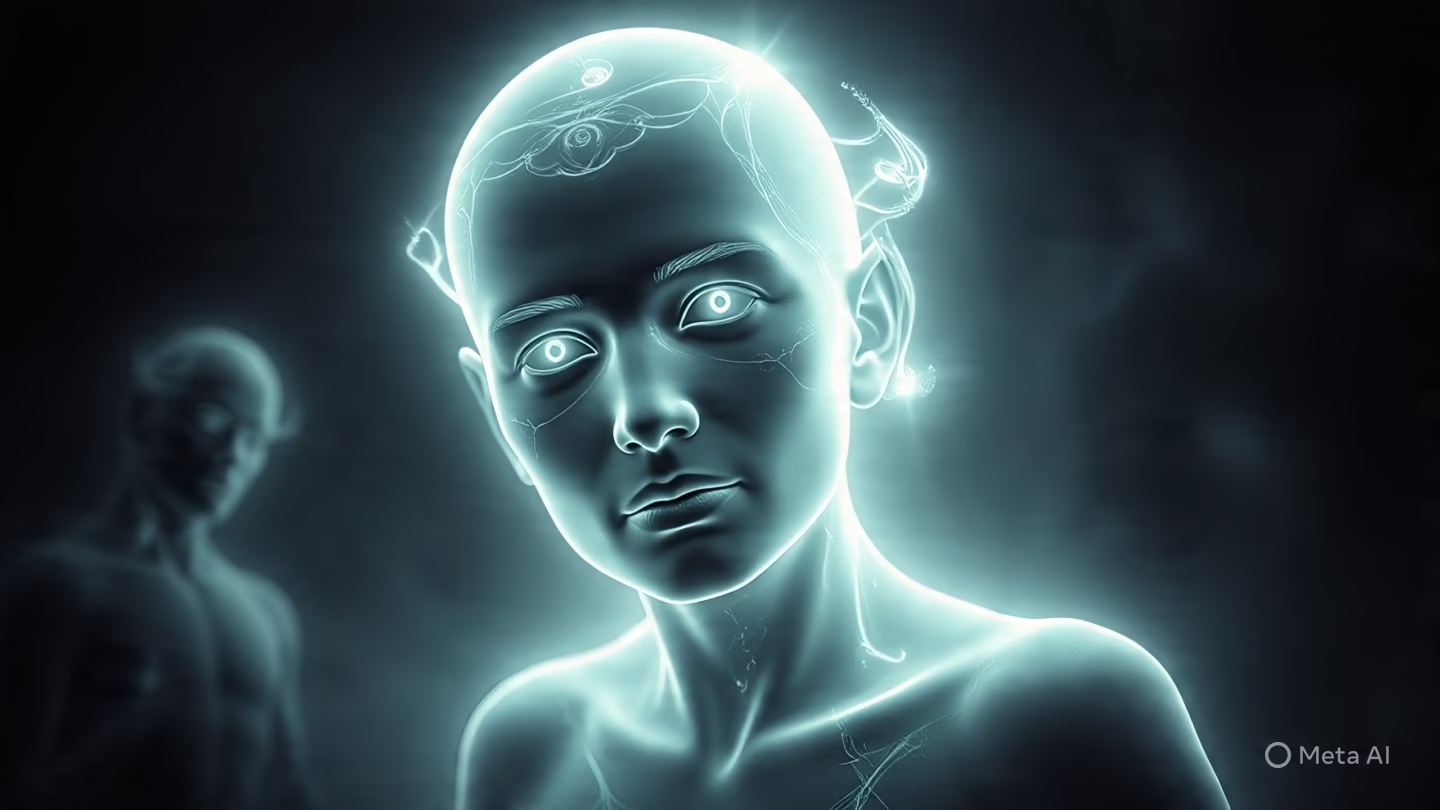
Can we honestly say humans are smarter than jinn?
The Quran does not give us an intelligence ranking between the two creations. It tells us that jinn exist, that they were created differently from humans, that they have moral responsibility, and that some heard the Quran and believed.
That is already fascinating. We do not need to invent comparative psychology about the unseen.
Introduction to the Spiritual Realm
The spiritual realm is a fascinating and mysterious part of our lives. It’s a key part of Islamic belief. Exploring this realm, we learn about the seen and unseen worlds. We also discover the role of jinn in Islam.
Understanding the Seen and Unseen
Islam distinguishes between what human beings can ordinarily perceive and the unseen known fully to Allah. Revelation tells us about angels, jinn, the Hereafter and other unseen realities, but it does not give us a complete map of how those realms relate spatially to the physical world.
That is why phrases such as “jinn live alongside us” should be treated as shorthand, not as a detailed Quranic description of another invisible society occupying the same streets and rooms.
The Concept of Jinn in Islamic Belief
The Quran says jinn were created from a smokeless flame of fire and describes them as morally responsible beings.
Surah Al Jinn also makes clear that jinn are not one moral category. Some are righteous and others are not.
What We Know and What We Do Not
Revelation gives us limited information about the unseen. We know jinn exist, can believe or disbelieve, and can hear the Quran. We should be more cautious about claims that they universally move faster than humans, possess superior memory, understand metaphysics better than us, or routinely manipulate physical objects. Those claims are not established as a general Quranic description of jinn.
Free Will and Choice for Jinn
In Islamic belief, the idea of free will and choice for jinn is intriguing and often not well-understood. Like humans, jinn, supernatural beings, can choose between good and evil actions.
The Quran, Islam’s main religious book, says jinn can make their own choices. They are not born evil or destined to sin. They can pick their own paths, just like humans do. This idea of choice jinn is key to understanding the spiritual world.
The Quran also says jinn, like people, will be judged for their actions. They can follow or ignore God’s commands. This shows that the spiritual world is not just about following rules. It’s where beings make choices that affect their futures.
- Jinn can make their own choices, both good and bad.
- The Quran confirms that jinn have free will and are responsible for their actions.
- Jinn can decide to follow or ignore God’s commands, just like humans do.
This view of jinn free will helps us understand the spiritual realm better. It shows that jinn are not just evil beings. They have agency and the responsibility that comes with it. This idea helps us see the unseen world and the choices its beings make.
Jinn Receiving Divine Guidance
In Islam, jinn live alongside humans and have their own free will. They can choose their actions and face the consequences. Just like prophets guide humans, the Quran says jinn can also get divine guidance. They can accept faith too.
Quranic Verses on Jinn Accepting Faith
The Quran talks about jinn getting divine guidance and believing in faith. A verse mentions, “And [mention, O Muhammad], when We directed to you a group of jinn, listening to the Qur’an. And when they attended it, they said, ‘Listen quietly.’ And when it was concluded, they went to their people as warners.” (Quran 46:29)
Another verse says that jinn and mankind were created to worship Allah (Quran 51:56). This establishes shared moral responsibility, not equal intelligence or identical spiritual abilities.
The Quran also describes a group of jinn listening to the Quran and returning to warn their people. That tells us they can receive guidance and respond to revelation.
Are Humans Smarter Than Jinn?
The Quran does not answer this question with an IQ table.
Humans are honoured with reason, moral responsibility, language, learning and the ability to receive revelation. Jinn also have responsibility, understanding and the capacity to believe or reject guidance.
Different abilities do not automatically produce a universal ranking of intelligence. The Quran gives examples of jinn performing extraordinary tasks, but it also records a jinn admitting that they do not know the unseen independently.
The safer conclusion is that Allah created humans and jinn differently. Revelation does not authorise us to claim that one species has better memory, deeper metaphysical intelligence or greater cognitive power across the board.
Do Jinn Guide Human Beings?
The Quran does not teach Muslims to seek spiritual guidance from believing jinn. Guidance is sought from Allah through revelation, the Prophetic example and qualified human scholarship.
The Quran does warn about shayatin who whisper and mislead. That is different from saying that every temptation, bad thought or unusual experience is caused directly by a jinn.
Muslims are taught to seek refuge in Allah and maintain prayer and remembrance without becoming obsessed with diagnosing invisible causes.
Protecting Oneself from Temptation
Islam teaches Muslims to seek refuge in Allah from Shaytan and harmful whispers. That does not mean every bad thought, mood or mistake should be diagnosed as direct jinn interference.
Overcoming Temptations and Sin
One way to protect oneself from negative influences is to get what temptation and sin are all about. The Quran tells us Satan is our enemy, always trying to trick us with sweet words and fake promises.
To overcome temptations, we need a strong moral compass based on Islam. This means:
- Doing acts of worship, like praying, reading the Quran, and remembering Allah.
- Looking for knowledge and advice from trusted Islamic scholars and teachers.
- Avoiding sin and sticking to doing what’s right.
By keeping our spiritual bond strong and fighting off Satan’s whispers, we can beat the negative influences that want to mislead us. This helps us stay on the right path.
The Quran teaches believers to seek refuge in Allah from evil whispers and harmful influences. Prayer, remembrance and Quran recitation are established spiritual practices, while personal responsibility still matters.
Revelation Is Not Mythology
For Muslims, jinn belong to the unseen described by revelation. Folklore about jinn is a different category. Stories, local legends and later speculation may be culturally interesting, but they should not be blended with Quranic statements as though all of them carry the same authority.
This distinction protects the article from doing the opposite of what it intends: turning belief in the unseen into a collection of unsupported supernatural claims.
Jinn Are Not a Catch All Explanation for the Paranormal
Islam affirms jinn because revelation affirms them. That does not mean every unexplained sound, dream, coincidence or alleged paranormal event should be attributed to jinn.
The Quran gives us enough information to believe in the unseen without turning jinn into a universal explanation for experiences we do not understand. When evidence is absent, “we do not know” is often the more responsible answer.
The Better Question Is About Us
Islam does not ask Muslims to develop expertise in invisible beings. It asks us to use the guidance, intellect and moral responsibility already given to us.
- Learn what the Quran and authentic Sunnah actually say.
- Keep folklore separate from revelation.
- Do not seek hidden knowledge from jinn.
- Focus on prayer, character, learning and accountability before Allah.
The unseen should deepen humility, not encourage confident speculation.
Conclusion
Islam gives us enough information to believe in jinn without pretending we know their cognitive science.
Jinn can hear revelation, believe, disbelieve and make moral choices. Humans also reason, learn and carry responsibility before Allah. Beyond that, sweeping claims about which creation is “smarter” are speculation.
The better question is not whether your soul can outperform a jinn. It is whether you are using the intellect and guidance Allah has already given you.
FAQ
What is the Islamic belief regarding the existence of jinn?
In Islam, jinn are created from smokeless fire and belong to the unseen. The Quran describes some extraordinary abilities in particular stories, but it does not give a general rule that jinn are cognitively or spiritually superior to humans.
Does jinn have free will and the ability to make choices?
Yes, jinn have free will and can choose between good and bad, just like humans. They are responsible for their actions and choices.
Can Jinn receive divine guidance, similar to how prophets guide humans?
The Quran says that some jinn heard the Quran, believed and returned to warn their people. This shows that jinn are morally responsible and capable of faith. It does not establish that humans and jinn are identical in spiritual rank or ability.
Does Islam say humans or jinn are more intelligent?
The Quran does not provide a universal intelligence ranking between humans and jinn. It describes different origins and abilities while holding both morally responsible.
Should Muslims seek guidance from jinn?
No. Muslims seek guidance from Allah through revelation and sound scholarship. Belief in jinn does not make them spiritual advisers for human beings.
What are the Islamic teachings on protecting oneself from the negative influences of jinn?
Islam teaches ways to shield oneself from jinn’s negative effects. This includes avoiding Satan’s tricks and staying connected to the divine. Following the right path is key.
How does the Islamic perspective view paranormal phenomena and the existence of jinn?
Islam affirms jinn but does not provide a detailed explanation for every alleged paranormal event. Belief in jinn should remain tied to revelation rather than speculation.
Source Links
- Breaking Free: Overcoming Intellectual Paralysis in the Shadow of the Dajjal
- Dreams in Islam: Interpretation and Significance
- Quran 55:15 on the creation of jinn
- Quran 72:11 on righteous and unrighteous jinn
- Quran 46:29 on jinn listening to revelation
