

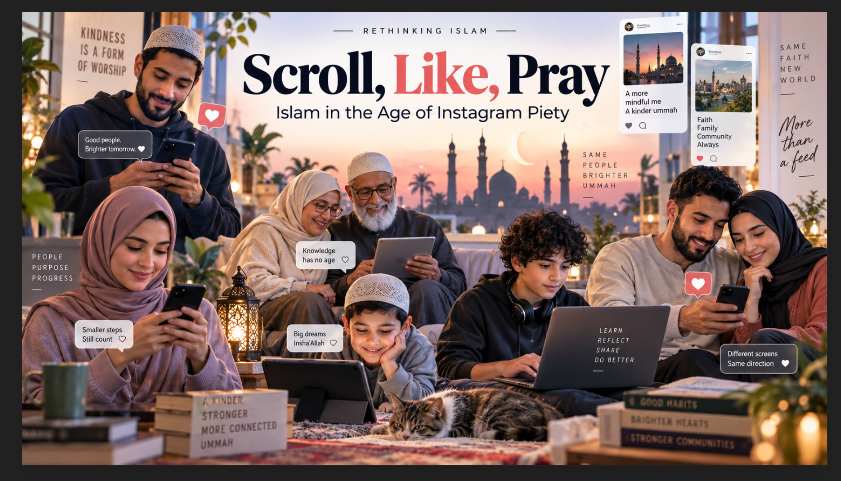
With the rise of social media, your experience of faith is evolving in unprecedented ways. This blog post explores how platforms like Instagram are reshaping Islamic piety, allowing you to engage with your beliefs while also sharing and connecting with others. As you navigate this digital landscape, we’ll explore into the implications of your online actions—scrolling and liking—on your spiritual journey and community participation, challenging you to consider how your online presence reflects and influences your faith practice.
The Evolution of Islamic Practice in Digital Spaces
For many, the digital age has redefined how you engage with Islamic practices. As you scroll through curated feeds, the norms of worship and community connection can adapt to fit this new landscape. You might notice that online platforms now serve as a space for sharing spirituality, fostering a sense of belonging, and amplifying voices that support Islamic traditions, all while navigating the balance of tradition and modernity.
Historical Context of Online Piety
For centuries, Islamic practices have evolved through various cultural and historical contexts, but the emergence of the internet has introduced a new dimension. As you explore online platforms today, you can trace how digital engagement has created new avenues for learning and sharing religious knowledge. This transformation reflects a broader shift in how you may approach faith, enabling you to connect with diverse interpretations of spirituality in real-time.
Impact of Social Media on Traditional Rituals
Rituals, once confined to physical spaces and communal gatherings, have found new expressions through social media. As you witness these changes, you may notice that platforms like Instagram and Facebook allow for the sharing of rituals in more visual and engaging formats, redefining how you experience and participate in traditional practices.
Understanding the ways social media influences traditional rituals can deepen your appreciation for contemporary expressions of faith. You might find that many individuals document their experiences during Ramadan, Eid, and daily prayers online, creating a sense of shared community that transcends geographical boundaries. As the lines between personal and communal worship blur, you are encouraged to explore these connections, while also reflecting on the implications of this digital engagement on your spiritual life.
The Role of Instagram in Modern Islamic Expression
Any platform that allows for the sharing of personal narratives and visual content has the potential to shape modern expressions of faith. Instagram serves as a modern canvas for your spirituality, blending traditional Islamic teachings with contemporary aesthetics. This dynamic interaction allows you to engage with your faith in a way that resonates with today’s digital landscape, offering new forms of connection and community among believers globally.
Visual Representation of Faith
Behind each post lies a curated reflection of your beliefs and experiences. Instagram provides you the opportunity to visually articulate your Islamic identity through images, stories, and hashtags. Whether it’s sharing photos of prayers, meaningful quotes, or experiences during significant religious events, these representations connect you with others who share similar values and aspirations.
Influencer Culture and Its Impact on Followers
Role models on Instagram have a significant influence on how you interpret and practice your faith. Influencers often present a blend of lifestyle and spirituality that can shape your understanding of what it means to be a modern Muslim. Their curated lives offer both inspiration and a standard that can be aspirational, encouraging you to engage with your faith in new and varied ways.
Consequently, this influencer culture can create an environment where your engagement with Islam becomes less about traditional practices and more about how these practices are visually projected. You may find yourself comparing your journey with theirs, which can lead to feelings of inadequacy or inspiration. Balancing these influences while staying true to your unique path can be challenging, but understanding their impact on your spiritual expression is important in navigating your connection with faith in a digital context.
Community Building Through Digital Platforms
One of the most significant impacts of social media on Islam is the facilitation of community building amongst followers. Digital platforms enable you to connect with like-minded individuals, creating bonds based on shared beliefs and experiences. This sense of belonging is increasingly important in today’s fragmented world, allowing you to access a vibrant community that supports your spiritual journey from anywhere in the globe.
Connecting Muslims Worldwide
At the heart of the digital experience is the ability to connect Muslims worldwide. Social media transcends geographical boundaries, allowing you to engage with diverse communities of believers. You can share ideas, traditions, and experiences with others from different cultures, broadening your understanding of Islam and enhancing your faith journey.
Virtual Support Systems and Online Prayer Groups
Online support groups, Quran study circles and discussion spaces can help Muslims who are isolated or unable to attend in person. They can support learning and community, but they do not automatically replace acts of worship whose validity depends on physical congregation or a qualified teacher.
Virtual Quran study and discussion can be useful, especially when the teacher is identifiable and qualified. A livestream or chat room should not be described as though it automatically fulfils congregational prayer requirements. The digital space is best treated as a support for learning and connection, not a replacement for every physical religious practice.
Challenges of Authenticity and Representation
After engaging with Islamic content on Instagram, you may find it challenging to discern authenticity in the representations of piety. The platform often emphasizes curated images and sound bites, which can lead to a superficial understanding of faith. This struggle can create a disconnect between genuine spiritual experiences and the way those experiences are portrayed visually, consequently affecting your perception and practice of Islam.
The Fine Line Between Piety and Performance
Posting religious content does not automatically make worship performative. The risk begins when public approval becomes more important than truth, sincerity or private practice. Since intention cannot be seen from the outside, the first person to examine is ourselves.
Questions About Performance and Authenticity
Social media can make religious expression more visible, but visibility creates a new question: are we sharing something beneficial, or are likes and approval slowly becoming part of the reason we share it?
That concern should not be turned into suspicion toward every Muslim who posts Quran verses, hijab content or reminders online. Intention belongs to the individual and ALLAH. The practical test is whether the content is accurate, whether it encourages good, whether private practice still exists, and whether public metrics are beginning to control the heart.
The Intersection of Faith and Consumerism
Unlike traditional views that separate faith from marketplace dynamics, today’s Islamic practices often thrive in consumer-driven environments. You may find your faith interwoven with high-demand products and services, from elegant prayer mats to stylish modest fashion. This blending can impact how you perceive and engage with your spirituality, showing how consumerism can shape, and sometimes challenge, your path to piety in the modern world.
Islamic Aesthetics in Popular Culture
Below the surface of daily life, Islamic aesthetics have infiltrated popular culture, influencing art, fashion, and design. You can see this manifestation in everything from geometric patterns in home décor to modest clothing lines that reflect faith while catering to modern tastes. This fusion allows you to express your identity aesthetically in ways that resonate with broader cultural trends.
The Commercialisation of Islamic Identity
Islamic fashion, books, travel, food and education all exist in a marketplace. Earning from useful Muslim focused products or content is not automatically a problem.
The tension appears when religious identity becomes a sales device that hides weak products, misleading claims or shallow religious advice. Sponsored content should be disclosed, religious claims should still be sourced, and a Muslim label should not be treated as proof of quality or sincerity.
Future Trends in Muslim Digital Engagement
To navigate the landscape of Muslim digital engagement, you must stay attuned to the emerging trends shaping how communities connect and practice their faith. With an increasing reliance on technology, you can expect a blend of tradition and innovation that will redefine religious expression and foster deeper connections among Muslims around the world.
Innovations in Religious Education Online
Beside traditional methods, you will find that online platforms are transforming religious education. The accessibility of virtual classes and seminars allows you to engage with knowledgeable scholars and diverse perspectives, enriching your understanding of Islam and facilitating a more interactive learning environment.
The Role of Emerging Technologies
Emerging technologies can change how Muslims access education and community. Virtual reality can demonstrate historical sites, while AI can assist with search, language and study. Neither technology becomes a religious authority simply because it can answer questions fluently.
Immersive technology can help people learn about places they cannot visit, and personalised tools can organise study material. Virtual access does not turn a simulated prayer at a sacred site into the actual physical act of worship, and AI generated guidance should be checked against reliable sources.
Conclusion
Presently, the intersection of technology and spirituality in “Scroll, Like, Pray – Islam in the Age of Instagram Piety” invites you to explore how social media reshapes your understanding and practice of faith. As you navigate this digital landscape, engaging with contemporary Islamic expressions and community, it’s necessary to discern how online interactions influence your personal commitment and belief. Embracing these platforms can enhance your spiritual life, but being mindful of authenticity and intention remains key as you balance virtual engagement with genuine practice.
