
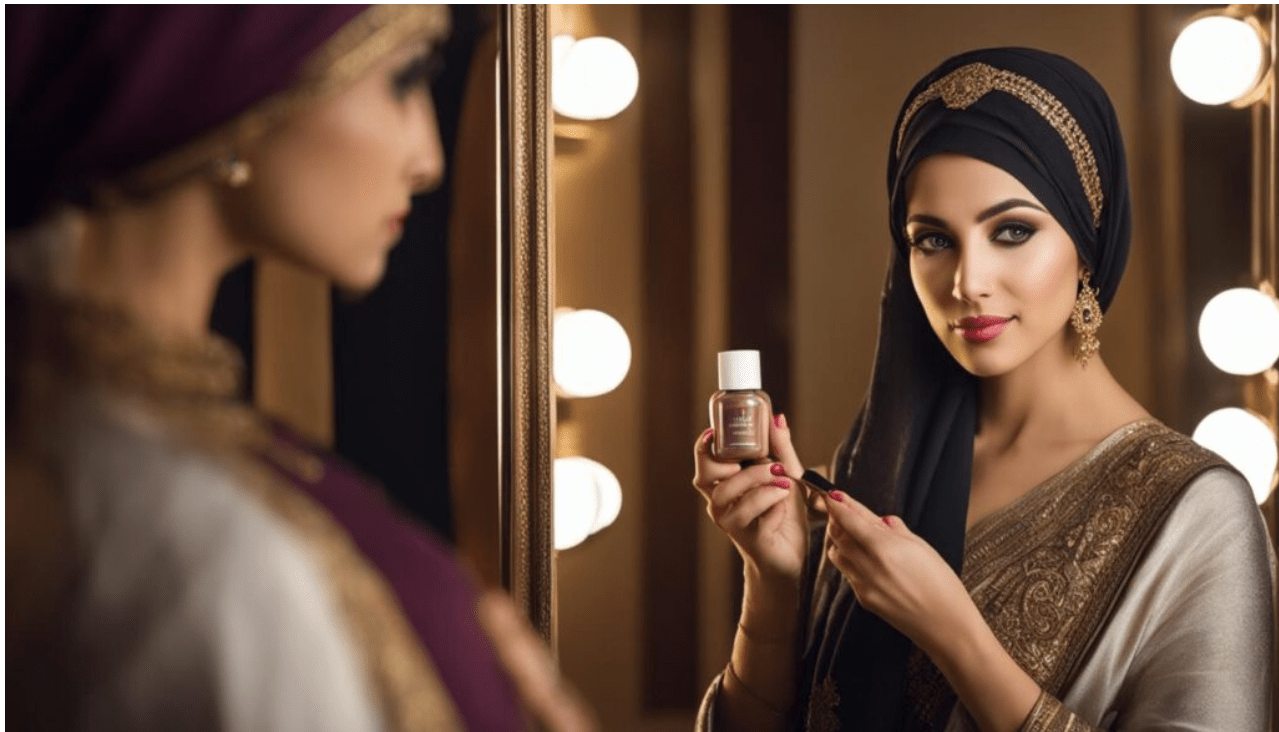
Ready to blend beauty with belief? Let’s explore the surprisingly layered relationship between makeup and Islam. In this article, we’re not just brushing over the topic—we’re diving deep into whether makeup is considered haram (forbidden) for women in Islam. From eyeliner to ethics, and modesty to mascara, we’re unboxing the religious teachings, cultural trends, and halal-friendly insights that shape how Muslim women approach adornment.
Now for the million-dollar question: is wearing makeup a sin or simply a way to slay modestly? Stick around as we untangle the shades of opinion within Islamic thought—because in this case, it’s not just black or white… there are a lot of nudes and neutrals in between.
Key Takeaways:
- Islamic teachings emphasize the importance of modesty and adornment in defining beauty.
- Cultural shifts have influenced Muslim women’s use of makeup while adhering to Islamic principles.
- There are varying perspectives on the permissibility of makeup in Islam.
- Halal-certified makeup ensures compliance with Islamic law and ethical guidelines.
- Understanding the ingredients and practices that make makeup haram is crucial for choosing halal alternatives.
Understanding the Islamic Perspective on Beauty and Cosmetics
In this section, we delve into the Islamic perspective on beauty and cosmetics, shedding light on the teachings that shape the adornment practices of Muslim women. Islamic teachings emphasize the concept of modesty and the importance of preserving one’s natural beauty. Let’s explore how these teachings influence the use of makeup and how cultural shifts impact Muslim women’s approach to beauty.
Modesty and Adornment in Islamic Teachings
In Islam, modesty is highly valued and encompasses various aspects of a person’s life, including their appearance. Islamic teachings view beauty as a gift from Allah, to be celebrated and cherished, but within the boundaries of modesty. Adornment in Islam encourages individuals to enhance their natural beauty while remaining modest and avoiding extravagance.
Cultural Shifts in the Use of Makeup by Muslim Women
As times change, cultural norms and perceptions of beauty evolve, impacting the use of makeup by Muslim women. While some Muslim women choose to embrace makeup as a form of self-expression and confidence, others opt for a more minimalistic approach to align with Islamic values and cultural traditions. These shifts reflect the diverse interpretations and personal choices made by Muslim women worldwide.
Assessing the Impact of Makeup from a Shariah Viewpoint
From a Shariah viewpoint, makeup is not judged by one rule in every situation. Scholars consider factors such as ingredients, modesty, where the makeup is worn, who will see it, whether it prevents valid purification, and whether it is connected to deception or prohibited adornment. Personal intention matters, but intention alone does not make every form of adornment permissible.
| Islamic Teachings on Beauty and Adornment | Cultural Shifts in Muslim Women’s Use of Makeup | Impact of Makeup from a Shariah Viewpoint |
|---|---|---|
| Emphasis on modesty and celebrating natural beauty | Diverse interpretations and personal choices | Encouragement of sincerity and avoidance of excessive adornment |
| Prioritizing inner beauty and righteousness | Alignment with Islamic values and cultural traditions | Moderation, modesty, and adherence to ethical guidelines |
By understanding the Islamic perspective on beauty and cosmetics, we gain insight into the principles guiding Muslim women’s choices in adornment practices. The next section will address the question of whether makeup is considered haram (forbidden) for women in Islam, providing a comprehensive analysis of the topic.
Is makeup haram for women in Islam?
When it comes to makeup in Islam, the eyeliner isn’t the only thing with fine lines—so are the rulings. Some scholars frown on it, especially if it invites unnecessary attention or clashes with modesty, while others give it a nod if worn with sincerity and within Islamic bounds. The heart of the matter? Intention. If you’re contouring to impress the opposite gender or feed the ego, that’s a red flag; but if it’s about feeling presentable or boosting confidence modestly, many scholars say it’s a-OK. Cultural context adds another layer—what’s subtle in one place might scream “extra” in another—so it’s wise to check in with scholars who get both your deen and your scene. In the end, it’s about balancing that blush with taqwa.
Distinguishing Features of Halal-Certified Makeup
Halal certification gives consumers additional assurance that the product has been reviewed against the standards of the certifying body. It does not automatically mean the product is organic, vegan, cruelty free, environmentally sustainable or better for the skin. Those are separate claims that need their own evidence.
MUIS explains that halal certification is an endorsement by a credible Islamic body that a product or service is suitable for Muslim use or consumption. Consumers should still read what a particular certification actually covers.
| Challenges in Halal Cosmetic Branding | Trust Factors in Halal Cosmetic Products |
|---|---|
| Limited availability of halal-certified products | Transparency in the certification process |
| Meeting diverse consumer preferences and trends | Verifiable information about ingredients and manufacturing |
| Establishing credibility in the beauty industry | Collaboration with reputable certification bodies |
By addressing these challenges and highlighting trust factors, halal cosmetic brands can establish a strong foothold in the market and cater to the needs of Muslim consumers around the world.
Ingredients and Practices That Make Makeup Haram
Some cosmetic ingredients may require closer checking, especially when their source is animal based or unclear. But the old version of this article was too absolute.
- Gelatin: Gelatin can come from different animal sources. It should not automatically be described as pig derived. Halal status depends on the source and processing.
- Carmine: Carmine comes from cochineal insects. Scholars and halal certifiers can differ in how they classify insect derived ingredients, so it is better to check the certification or scholarly standard you follow rather than declare every carmine product haram.
- Alcohol: Not every substance called alcohol has the same Islamic ruling. MUIS distinguishes naturally formed or fermented ethanol from industrial petrochemical alcohol used in non food products, and states that the latter can be pure and permissible for use.
- Pig derived ingredients: Ingredients genuinely derived from pig material are not permissible. If the source is unclear, recognised halal certification can provide useful assurance.
Read MUIS guidance on alcohol used in non food products
Vegan, Organic, and Cruelty-Free: The Intersection with Halal Standards
Halal, vegan, organic and cruelty free are different labels. A product can be vegan without being halal certified, halal certified without being organic, or cruelty free without meeting a particular halal standard. Consumers who care about several of these values should check each claim separately.
Exploring Halal Alternatives in Makeup for Women in Islam
As the demand for halal cosmetics continues to rise, the beauty industry is offering an array of halal alternatives for Muslim women. These alternatives prioritize natural and wholesome cosmetic ingredients, ensuring that women can adhere to their religious beliefs while still expressing their personal style.
Shifts Towards Natural and Wholesome Cosmetic Ingredients
In recent years, there has been a significant shift towards using natural and wholesome ingredients in cosmetics. This aligns with the principles of halal makeup, which advocates for products that are free from haram (forbidden) ingredients. Muslim women are now able to find a wide range of halal-certified makeup brands that offer high-quality products made from botanical extracts, minerals, and other natural sources.
By embracing these natural ingredients, Muslim women can confidently enhance their beauty without compromising their faith. These halal alternatives not only provide vibrant and long-lasting colors but also offer nourishing benefits for the skin, ensuring a holistic approach to beauty.
Innovation in Water-Permeable Nail Polishes for Wudu-Friendly Options
Another significant development in halal alternatives is the innovation of water-permeable nail polishes. Wudu (ablution) is an integral part of Muslim women’s daily prayers, and traditional nail polishes often prevent water from reaching the nails, making the ablution process challenging.
Some brands market nail polish as water permeable or wudu friendly. That marketing claim does not by itself settle the fiqh question. Valid wudu requires water to reach the parts that must be washed, so a person should verify the product claim and follow reliable religious guidance rather than assume every breathable polish automatically makes wudu valid.
The Rise of Halal Makeup Brands and Their Global Impact
The demand for halal cosmetics is not limited to Muslim-majority countries. Halal makeup brands are gaining popularity worldwide, as more women seek ethical and natural alternatives. These brands cater not only to Muslim women but also to individuals who prioritize clean and eco-friendly beauty products.
Halal cosmetic brands have helped make ingredient sourcing and religious compliance more visible to Muslim consumers. But halal certification should not be stretched into claims about sustainability, labour practices or cruelty free production unless the brand separately documents those standards.
| What to Check | Why It Matters |
|---|---|
| Ingredient source | Animal derived or doubtful ingredients may require verification |
| Halal certification | Certification can provide assurance under the certifier’s stated standard |
| Effect on wudu | Products that form a barrier may affect whether water reaches the required area |
| How and where makeup is worn | Modesty and adornment rulings can depend on context as well as the product itself |
Conclusion
When it comes to makeup and Islam, the answer is not simply yes or no. Ingredients, modesty, purification, context and scholarly interpretation can all matter. Halal certification can provide useful assurance about ingredients and production standards, but it does not automatically answer every question about how or where makeup is worn.
The practical approach is to separate the questions. Check the ingredients. Check whether the product affects wudu. Consider the setting in which the makeup is worn. Then follow a qualified scholarly view you trust.
Source Links
- https://mersicosmetics.com/blogs/blog/is-makeup-haram
- https://www.halalwatchworld.org/everything-you-need-to-know-about-the-halal-cosmetic-industry
- https://www.youtube.com/watch?v=kKnOJvNZ01I
- What Does Having It All Mean for a Woman in Islam?
