
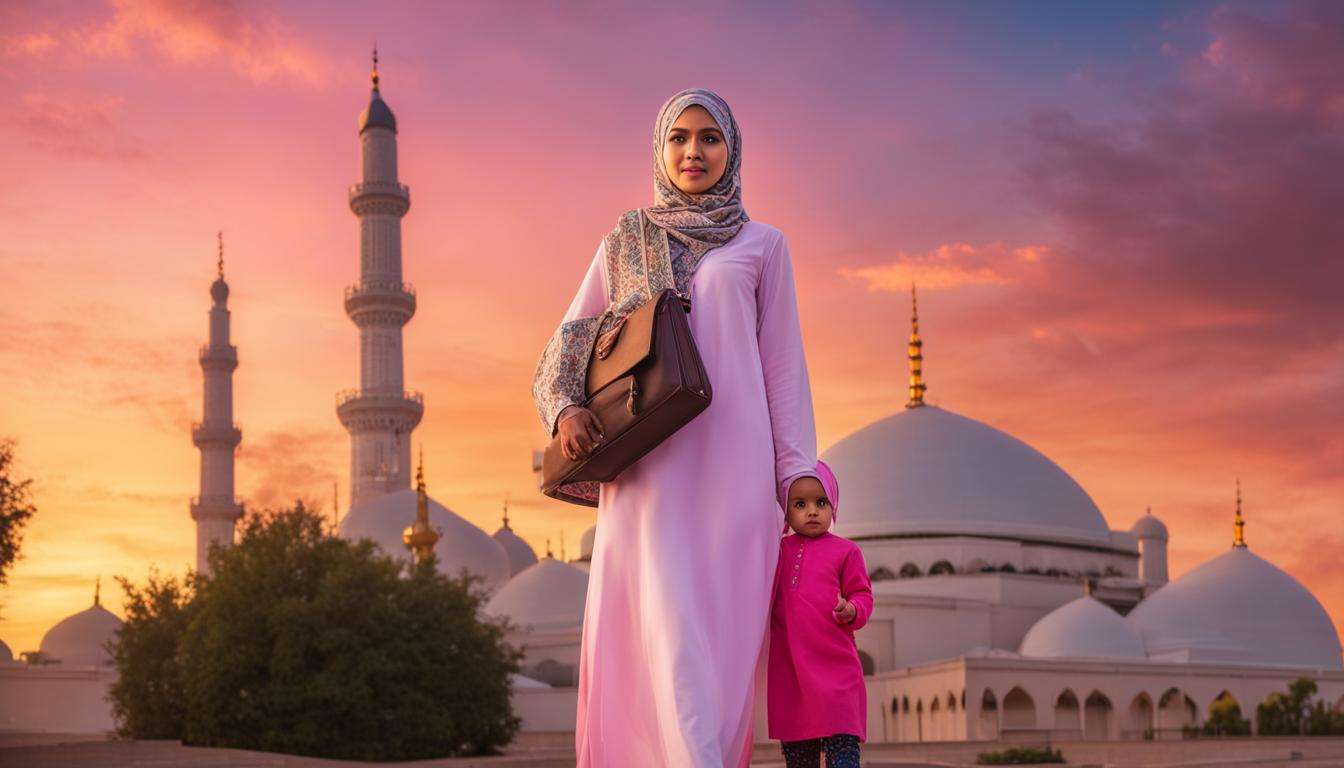
In today’s fast paced culture, women are often expected to juggle career success, family, health, faith and somehow still look perfectly rested. The phrase “having it all” gets tossed around easily, but Muslim women do not all define success in the same way.
So, what does it actually mean for a Muslim woman to “have it all”? And can she really have it without losing her faith, her family, or her sanity?
Redefining “Having It All”—No, It’s Not Just a Hashtag
Contrary to popular belief, “having it all” isn’t a universal recipe. There’s no secret sauce that fits every woman. For some, it might be leading a tech startup. For others, it’s raising three kids while mastering the art of Qur’an recitation and running a small business on the side.
Success shouldn’t be defined by external checklists but by what brings you purpose. A high-flying job may be someone’s dream, while another woman finds success in nurturing a strong, faith-driven family life. The truth? You get to define your “all.”
Here’s a quick snapshot of what success may look like:
| Factor | Description |
|---|---|
| Career | Growth, purpose, and the occasional well-earned promotion |
| Family | Healthy relationships, quality time, emotional support |
| Personal Growth | Hobbies, education, spiritual development, self-care |
| Community | Giving back, volunteering, being part of something bigger |
It’s not about doing everything; it’s about doing what matters—to you.
The Balancing Act: Faith, Family & the Office Zoom Call
Islam encourages balance. The Prophet Muhammad ﷺ emphasized moderation and the importance of rest, connection, and contribution. But let’s be real—finding time for tahajjud, toddler tantrums, and work deadlines feels like training for an Olympic triathlon.
So how do women in Islamic societies navigate this?
Start by ditching the guilt. Balance doesn’t mean equal slices of pie every day. Some days, career gets more attention; other days, your child’s fever wins. And that’s okay. Islam values intention. So if your goal is sincere—seeking Allah’s pleasure through your roles—you’re already winning.
Pro tip: A supportive spouse can be your secret weapon. In Islam, the husband’s role isn’t just financial—it includes emotional and logistical support. Bonus points if he also folds laundry.
Saudi Women in Public Life
Saudi Arabia offers some visible examples of women entering roles that were once unusual in the Kingdom.
- Yasmeen Al Maimani became the first Saudi woman to work as a commercial airline pilot after her licence was recognised by the Saudi aviation authority.
- Princess Reema bint Bandar remains Saudi Arabia’s ambassador to the United States in 2026 and was the first woman appointed to that role.
Read the Saudi Embassy biography of Princess Reema
These examples show expanding possibilities. They do not mean every Muslim woman must pursue public leadership or a high profile career. A woman can define a meaningful life through family, scholarship, work, service, entrepreneurship or a combination that suits her circumstances.
The Secret Sauce? Supportive Systems
Let’s not sugarcoat it—ambition without support is like a Ferrari with no fuel. If women are to thrive, society needs to do more than just applaud from the sidelines.
Here’s what helps:
-
Employers: Offer flexible hours, paid maternity leave, remote options, and leadership programs.
-
Communities: Provide affordable childcare, women’s networking events, and spaces for female entrepreneurship.
-
Families: Share the chores, cheer the dreams, and let go of outdated ideas about who should do what.
The more we create environments that nurture—not restrict—women, the more we’ll see them excel in ways that benefit everyone.
Navigating the Journey: A Survival Kit
Let’s talk tactics. Because between faith, family WhatsApp groups, and weekly deadlines, Muslim women need more than just dua (though that helps too).
Here are some practical, non-preachy tips:
-
Prioritize like a boss: Decide what’s non-negotiable. Let the rest slide without guilt.
-
Schedule your time (and naps): Use calendars, reminders, and yes, block time for self-care too.
-
Delegate like a manager: Kids can fold laundry. Husbands can cook. You don’t need to be the family octopus.
-
Say no unapologetically: Protect your peace. You’re not required to attend every event or bake cookies for every committee.
-
Be kind to yourself: Perfection is not the goal—progress is. Some days will be messy. Make dua and move forward.
A Future Built Around Choice and Responsibility
Across Muslim societies, women are pursuing different combinations of education, family life, work, business, scholarship and community service.
The useful question is not whether every woman should follow the same modern success formula. It is whether she has room to make responsible choices without being reduced to one role or pressured to perform every role at once.
Success is not one universal template. For a Muslim woman, ambition can sit beside faith, family, service and personal wellbeing without any one of those roles becoming the only measure of her worth.
Final Thoughts: Redefining “All”
“Having it all” doesn’t mean doing it all. It means doing your all—faithfully, joyfully, and unapologetically.
It’s about waking up every day with purpose, loving your journey (even the chaotic parts), and knowing that success isn’t defined by the world—it’s defined by you.
So go ahead, redefine your “all.” Be the boss in your boardroom, your home, or your community. Be the woman who prays Fajr, writes code, packs school lunches, leads meetings, or writes poetry—whatever your calling is.
Because Muslim women don’t just “have it all”—they redefine what “all” even means.
A meaningful life is not measured by how many roles one woman can carry at the same time. It is measured by whether the roles she chooses are sustainable, responsible and consistent with her values.
Conclusion
The journey to “having it all” for women in Islam is filled with challenges, but it is also filled with possibilities. By redefining success and breaking free from societal expectations, women in Saudi Arabia can create their paths towards fulfillment and empowerment. It is important to recognize that success is subjective and personal and that women should be able to pursue their aspirations without conforming to traditional gender roles.
The future holds promising possibilities for women’s empowerment and the continued redefining of traditional gender roles. Women in Saudi Arabia and the broader Muslim world are paving the way for a new understanding of success, one that encompasses personal fulfillment and societal transformation. The journey may be challenging, but it is ultimately rewarding, and the progress being made is truly inspiring.
