
Investing has become part of everyday online life. One moment you are watching a food review, the next someone is explaining how a particular investment could apparently transform your future.
If only money were that obedient.
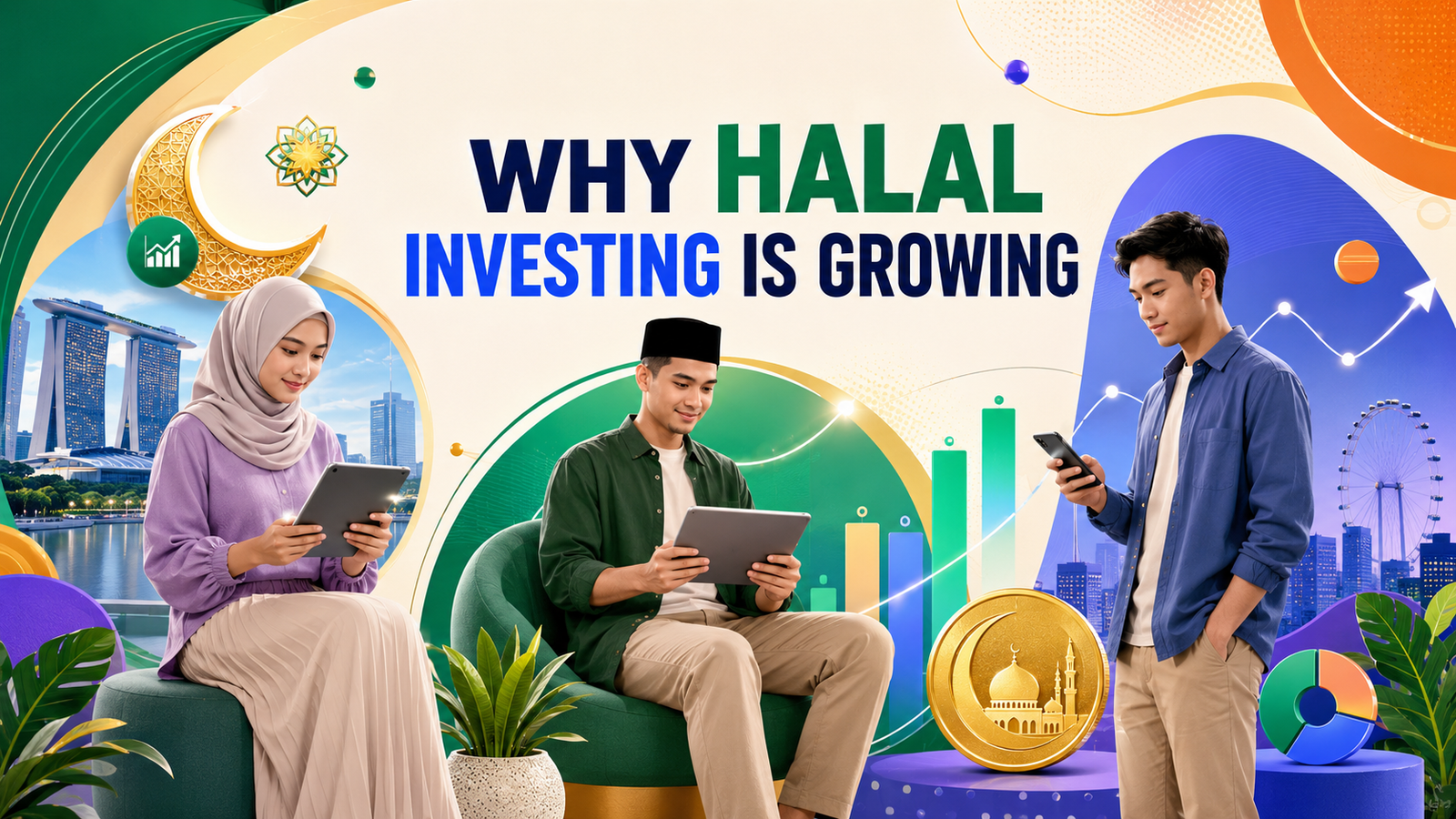
For young Muslims, the question is not simply how to grow wealth. It is also how to do so responsibly, without ignoring risk or Islamic principles.
Islamic Finance Is Growing Globally
Islamic finance is no longer a small corner of the financial world.
According to the Islamic Finance Development Report 2025, global Islamic finance assets reached about US$5.98 trillion in 2024, reflecting strong growth across Islamic banking, sukuk, funds and other services.
Read the Islamic Finance Development Report 2025
That growth gives Muslim investors more choices. It does not mean every Islamic investment will perform well.
A halal investment can still lose money. Industry growth and personal returns are not the same thing.
Younger Adults Are Investing Earlier
Research published by the World Economic Forum in 2025 found that younger adults are entering investment markets earlier than previous generations.
The study covered more than 13,000 adults across 13 markets, including Singapore. It found that 30 percent of Gen Z respondents started investing during university or early adulthood, compared with 15 percent of Millennials.
The same research found growing openness among younger investors to using artificial intelligence in financial decisions.
Read the World Economic Forum research
These findings were not limited to Muslim respondents. But they show how quickly investing is becoming normal for younger people.
What Makes an Investment Halal?
Halal investing is not conventional investing with an Islamic label attached.
Shariah screening generally looks at what a business does, how it earns money and whether its financial structure meets an accepted standard.
MUIS has explained that it does not certify individual stocks or investment portfolios. Investors still need to examine the company and the relevant Shariah screening criteria.
Read MUIS guidance on investing in the Singapore stock market
Different Shariah boards and index providers may also apply different screening methods. An investment accepted under one methodology may not necessarily qualify under another.
Questions Young Investors Should Ask
- What does the investment actually own?
- How does it produce returns?
- Who assessed its Shariah compliance?
- What screening standard was used?
- What are the fees?
- How easily can the investment be sold?
- What could cause a loss?
- Can the halal status change over time?
Arabic terminology, Islamic imagery and a halal hashtag do not answer these questions.
Halal Does Not Mean Risk Free
Young Muslims may feel pressure to invest because living costs are rising and social media constantly suggests that everyone else is becoming wealthy faster.
That pressure can lead to rushed decisions.
Before investing, ask whether the money may be needed for education, household expenses, emergencies or family obligations.
The better question is not only, “How much can I invest?”
It is also, “How much can I afford to place at risk without damaging my essential needs?”
Be Careful With Crypto and Artificial Intelligence
Cryptocurrency is attractive because it is accessible and moves quickly. That is also part of the danger.
Rapid price changes, scams, leverage and speculation can create serious losses. Muslim scholars may also reach different conclusions about particular digital assets and how they are traded.
Artificial intelligence can help explain terms, compare concepts and organise questions. It can also produce incorrect or outdated information with great confidence.
Use AI to improve the questions you ask. Do not treat it as a licensed financial adviser, a qualified Shariah scholar or a machine that can guarantee an investment outcome.
A Local Financial Education Voice
Ikhmal Haziq shares public educational content about financial literacy and halal investing. His current public profile identifies him as an authorised representative of AIA Singapore.
Readers should still verify current representative status and permitted activities through the MAS Financial Institution Representatives Register before engaging any financial professional.
View Ikhmal Haziq’s public profile
Verify a financial representative with MAS
Growing Wealth Without Losing Direction
The growth of Islamic finance gives young Muslims more opportunities, but more choice also brings greater responsibility.
A halal label does not guarantee profit.
A popular creator can still be mistaken.
A sophisticated application cannot remove investment risk.
Start with knowledge. Understand the product. Check how it was screened. Verify the person or company involved. Never allow fear, excitement or social media pressure to make the decision for you.
Reader Notice
This article is provided for general information and education only. It does not constitute personal financial, investment, legal or religious advice.
Investment values can rise or fall and investors may lose some or all of the money invested. Verify current product information, fees, risks, Shariah status and regulatory details before making any financial decision.
Readers below 18 should learn together with a parent or guardian and follow the eligibility requirements of regulated financial service providers.
