

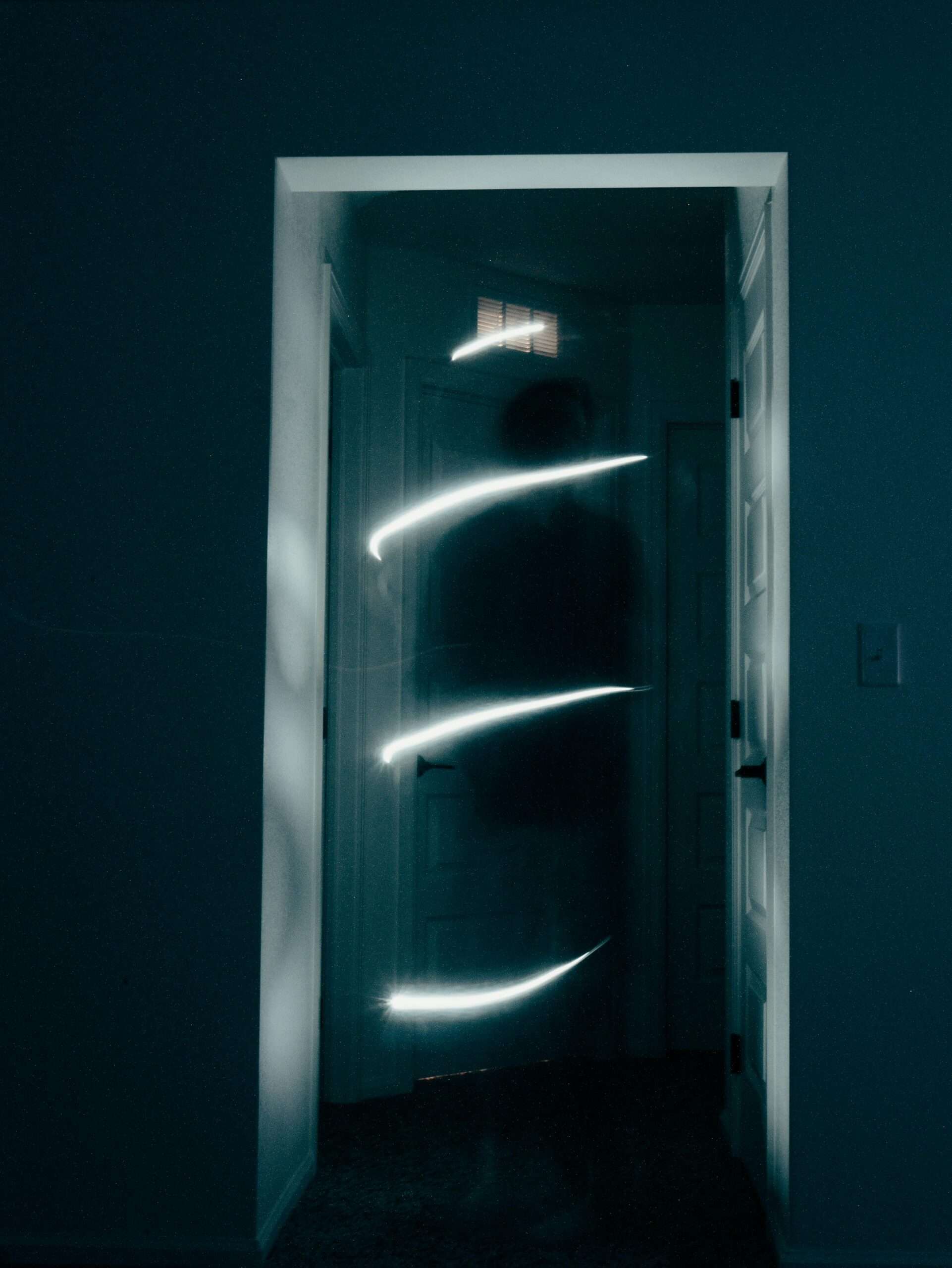
First, my life experience, Insidious style! Many of us would have watched the movies Insidious, where the main characters experienced out-of-the-body experience (OBE) or Astral Projection Dreams.
A Glimpse of the Unknown
At the age of 14, a profound experience altered my perception of reality. In a lucid dream, I found myself observing my own sleeping form. Curiosity took hold of me as I ventured out into my familiar surroundings, exploring my neighborhood with an otherworldly sense of freedom. The experience was both thrilling and unnerving. As I returned to my room in the dream, an unsettling sensation overcame me. It was as if another entity was observing my physical body, ready to enter. Instinctively, a surge of urgency propelled me to rush back to my body. The anxiety that gripped me upon waking left me bewildered, unsure of what I had just experienced.
Confusion and Unfamiliar Territory
Despite having occasional lucid dreams, these episodes remained rare for me. At times I felt as though an external presence was trying to enter my body, including one episode involving warmth, cold and difficulty waking. That is how the event felt to me. It does not prove that an external entity actually entered through the spine. Sleep paralysis and related sleep states can include a sensed presence, tactile sensations, fear, floating and out of body experiences. Reciting Quran helped me feel safe and regain calm, but my personal relief is not scientific or theological proof of the cause.
As time went on, my son, who shared the same room, also described disturbed sleep. The coincidence felt significant to us at the time. Looking back, shared timing and strong emotion do not by themselves establish a supernatural cause. People in the same household can also share stress, sleep disruption, routines and expectations.
These experiences left me with curiosity and fear, which pushed me to read more about Islamic teachings on sleep, dreams and the unseen. Seeking refuge in ALLAH and reciting Quran are established spiritual practices. What they do not give us is permission to label every unusual sleep experience as entry into an astral plane.
Modern sleep research describes sleep paralysis episodes that can include a sensed intruder, bodily pressure, floating sensations and out of body experiences. This does not settle every religious question about the unseen. It does show why intense sensation alone is not enough to diagnose a supernatural event.
Read a medical review of sleep paralysis, lucid dreaming and out of body experiences
The Nature of the Soul
Islam teaches that the ruh belongs to the unseen and that human knowledge about it is limited. Quran 39:42 says that ALLAH takes souls at death and also during sleep, then returns those whose death has not been decreed. The verse does not say that a sleeping person can deliberately direct the soul through an astral realm, nor does it establish meditation as a technique for leaving the body.
The Realm of Dreams
I came across this short clip on dreams in TikTok. You can get a brief explanation.
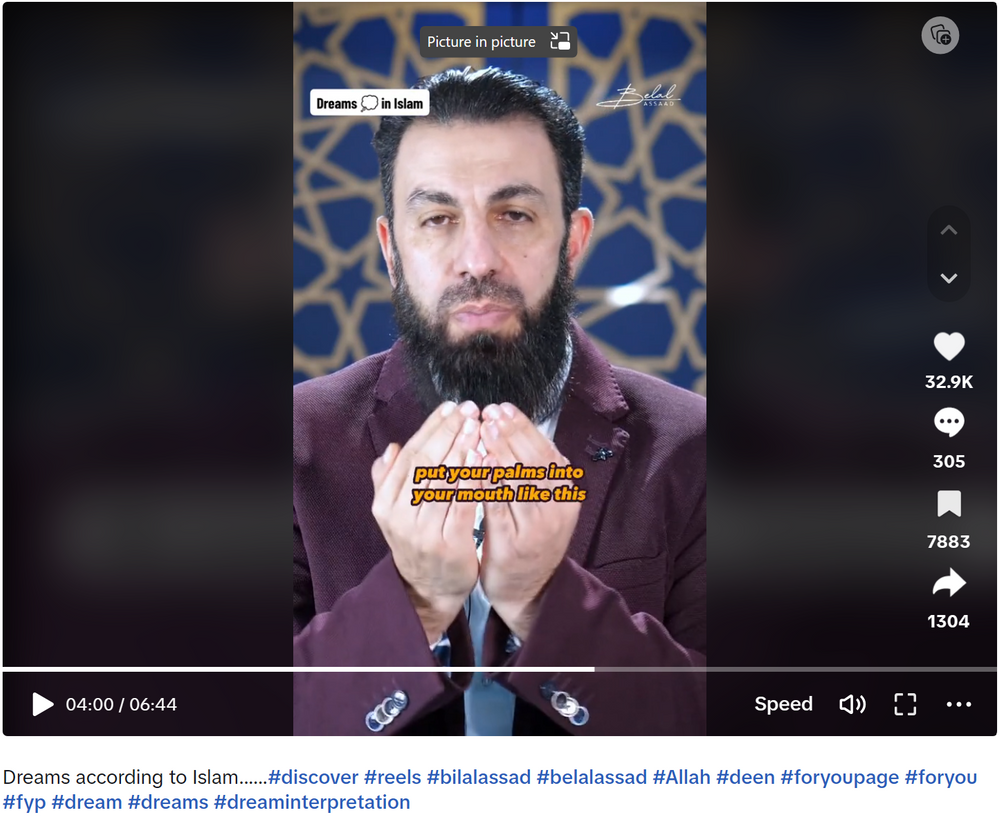
Islamic tradition gives some dreams religious significance, while also warning that not every dream is a message. Sahih Muslim 2263a describes three kinds of dreams: good tidings from ALLAH, disturbing dreams from Shaytan and dreams arising from a person’s own mind. Nothing in that hadith establishes astral travel through different planes of existence.
Islamic Guidance on Astral Projection
While astral projection is not explicitly mentioned in Islamic texts, there are principles and guidelines that can help shape our understanding of this practice within an Islamic context.
In Islamic tradition, dreams are classified into three main categories:
The True Dream (Ru’yā Ṣāliḥa): This type of dream is considered a form of divine communication. It is believed that Allah may send messages, guidance, or insights to individuals through true dreams. These dreams are seen as clear, vivid, and often carry a symbolic or prophetic nature. True dreams are highly regarded and can be an important source of guidance for the dreamer.
The Ordinary Dream (Ḥulm): Ordinary dreams are the most common type of dreams that people experience. They are often a result of the mind processing daily thoughts, emotions, and experiences. These dreams may not hold any significant or prophetic meanings and are considered a natural part of the dreaming process.
The Satanic Dream (Ḥulumāt): Satanic dreams are dreams that are influenced by Shaytan (Satan) or negative forces. They may involve disturbing, frightening, or misleading content. These dreams aim to create confusion, fear, or doubt in the dreamer’s mind. It is important for individuals to seek refuge in Allah and recite protective prayers if they experience such dreams.
Another Encounter
After a late-night outing with my family, I found myself in a dream that left me unsettled. I saw a female entity clothed in a long white dress, patiently waiting for me outside my room. Disturbed by this presence, I instinctively recited Quranic verses, seeking solace and protection. Abruptly, I awoke from my dream, still feeling the remnants of its eerie atmosphere.
The following day, during a casual conversation with my daughter, she confided in me about a disturbing nightmare she had experienced. In her dream, she found herself surrounded by three entities concealed in white shrouds, their presence emanating an unnerving sensation. Overwhelmed with fear, she woke up suddenly, the remnants of the nightmare clinging to her thoughts. It was then that we realized the synchronicity of our dreams—occurrences that had unfolded simultaneously.
At the time, the coincidence felt like confirmation that something unseen was present in our home. I can no longer present that conclusion as fact. Two people having disturbing dreams around the same time does not identify the cause. We chose to increase prayer and Quran recitation because those are meaningful Islamic practices, not because we had proven that an entity was in the house.
The Power of Prayer
Prayer and Quran recitation gave us reassurance during a frightening period. That spiritual benefit is enough. Islam does not require us to add claims about negative energy, parallel realms or hidden beings in the house when we do not actually know the cause.
The experience became a useful reminder to strengthen prayer and remembrance of ALLAH. It also taught me something else: feeling certain about an unusual experience is not the same as possessing certain knowledge about the unseen.
Islam gives no need to practise techniques designed to force an out of body experience or deliberately seek access to the unseen. Curiosity about a strange sleep experience is one thing. Training yourself to pursue unknown spiritual experiences is another.
The previous version of this article linked to a tutorial teaching readers how to induce astral projection. That link has been removed because it conflicts with the more responsible conclusion of this article.
https://www.youtube.com/watch?v=By57Ql8OWbo
Astral Projection in Islam | Dr. Omar ZaiThe Qur’an:
The holy book of Islam contains various verses that discuss dreams, spirituality, and the unseen. (Chapter 12) in particular narrates the story of Prophet Yusuf (Joseph) and his interpretation of dreams.
Before I conclude, Ilike my readers to go comprehend the two reports below for better clarity and understanding.
nn
“Shifting realities”
The reference provided is a Fatwa (Islamic legal ruling) from the Ifta Department of Darul Qasim, an Islamic educational institution. It discusses the topics of engaging human faculties, shifting realities, and astral projection within an Islamic perspective. The Fatwa emphasizes that engaging these faculties should only serve to enhance the worship of Allah and not be pursued for entertainment purposes. It also highlights that manipulating reality or venturing into shifting realities can be futile and against Islamic teachings. The Fatwa references scholars such as Al-Ghazali, Ibn Arabi, and Shah Waliyullah, and mentions the importance of following the methods prescribed by the Prophet Muhammad (peace be upon him). The Fatwa concludes by stating that Muslims should focus on the spiritual journey of prayer (salat) as the miʿrāj (ascension) of a believer. You Can read the full notes in the pdf below.
A Journey to Other Worlds
Daniel Miller graduated from MU with a Bachelor of English writes about Astral projection, the ability to separate one’s consciousness from the physical body and travel to a different plane or realm, appears in various cultures and religions throughout history. It is described as a spiritual or mystical experience, often associated with a sense of leaving the body and exploring higher realms. Astral projection can occur spontaneously or be induced through near-death experiences, hypnagogic states, or certain practices. The astral plane is seen as a dream world, and the astral body is believed to be connected to the physical body through an astral cord. Experiences of astral projection differ among individuals, but often involve encounters with spiritual beings, feelings of happiness or peace, and a sense of spirituality. It is a unique phenomenon that transcends physical boundaries and offers a glimpse into the unseen realms.
In conclusion, dreams, lucid dreams and out of body sensations can feel extraordinarily real. Islam teaches belief in the unseen, but it does not allow us to identify every dream figure as a deceased person, jinn, angel or Prophet. Nor should we rank such experiences according to someone’s supposed level of divine connection.
The safer Islamic approach is to follow the Prophetic guidance on dreams, seek refuge in ALLAH after disturbing dreams, avoid building doctrine from personal experiences and seek medical advice if unusual sleep episodes become frequent or distressing.
Understanding the nature of these entities is a complex matter, as it involves the unseen and the spiritual realm. Islamic metaphysics and teachings provide insights into the existence of different beings and their roles in the universe. However, the specific details and interpretations of these encounters may vary based on individual beliefs, experiences, and cultural contexts.
It is crucial for individuals who experience such dreams or engage in astral projection to approach them with a balanced perspective, grounded in Islamic principles. Seeking knowledge, consulting with knowledgeable scholars, and maintaining a connection with ALLAH through prayer and devotion can provide guidance and clarity in navigating these experiences.
Ultimately, the unseen belongs to ALLAH. Personal experiences can be meaningful without becoming proof. The strongest response is humility, sound Islamic practice and a willingness to consider ordinary sleep explanations alongside spiritual reflection.
