
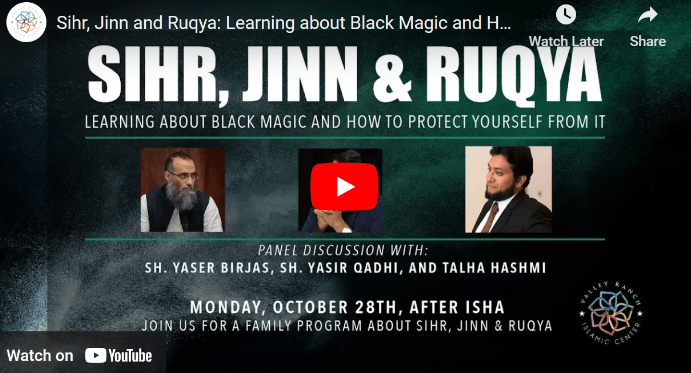
Islamic sources clearly affirm the existence of jinn and discuss sihr, while authentic hadith also affirm the evil eye. What should not be assumed is that these three subjects provide a ready made explanation for every illness, nightmare, family problem or period of bad luck. Belief in the unseen and careful diagnosis are different things.
Surveys conducted across various countries have revealed that more than half of Muslims believe in the existence of jinn and their relationship with black magic. The belief in jinn is most prevalent in South Asian and Middle Eastern countries, with significant percentages reported in Bangladesh and Morocco. However, it is essential to note that while belief in jinn is widespread, relatively few Muslims consider it acceptable to make offerings to them or rely on them for protection.
Islamic teachings emphasize that Muslims should rely solely on God for protection from sorcery and malicious spirits. The use of talismans or other means of protection is discouraged in favor of a strong faith in God’s power. However, reliance on traditional religious healers is widespread in regions like sub-Saharan Africa and South Asia, where cultural traditions play a significant role in seeking spiritual remedies.
It is crucial for healthcare professionals to be aware of these beliefs and traditions to provide culturally sensitive care and support. By understanding the connection between jinn and black magic in Islam, healthcare providers can effectively address the concerns and needs of Muslim patients who may attribute their ailments or difficulties to supernatural causes.
Key Takeaways:
- Belief in the existence of jinn and their connection to black magic is widespread among Muslims.
- Islam forbids appealing to jinn or using sorcery, emphasizing reliance on God alone for protection.
- Reliance on traditional religious healers is common in sub-Saharan Africa and South Asia.
- Understanding the beliefs and traditions related to jinn and black magic is essential for providing culturally sensitive care.
- Healthcare professionals should approach patients with empathy, respect, and an open mind to address their concerns effectively.
Belief in Jinn
According to Islamic beliefs, jinn were created by God along with angels and humans. Surveys conducted in multiple countries show that more than half of Muslims believe in the existence of jinn. Belief in jinn is most common in South Asian and Middle Eastern countries, with Bangladesh and Morocco having the highest percentages of believers.
Muslims who pray several times a day are more likely to believe in jinn. However, only a small proportion of Muslims actually claim to have seen jinn themselves. There is no universally reliable Islamic symptom checklist that can prove the presence of jinn or black magic. Physical symptoms, behavioural changes, nightmares and a feeling of being watched can have many medical, psychological, social or spiritual interpretations. A religious concern can be taken seriously without treating an ordinary symptom as supernatural proof.
Understanding the connection between jinn and black magic in Islam is essential for individuals who believe in their existence. While belief in jinn is widespread, it is important to recognize that Islam forbids appealing to jinn or using sorcery. Instead, reliance on God alone for protection from sorcery and malicious spirits is encouraged.
By deepening our understanding of jinn and their relationship with black magic, we can better navigate the challenges posed by these beliefs and provide appropriate support and guidance to those who seek help.
Belief in Witchcraft
The Quran and hadith also mention witchcraft and sorcery. Belief in witchcraft varies widely across different countries, with higher percentages in sub-Saharan Africa and the Middle East. Pakistani and Indonesian Muslims are more likely to believe in the existence of sorcery compared to their counterparts in Afghanistan and Bangladesh. Witchcraft is least common in Central Asia.
While belief in witchcraft is prevalent, few Muslims actually believe that sorcery is an acceptable practice in Islam. The effects of jinn possession and black magic can vary and may include physical and psychological symptoms, as well as interference in daily life.
Symptoms Are Not Proof of Jinn or Black Magic
Chronic illness, major behavioural change, nightmares, appetite loss, weight loss and financial difficulty should not be used as a checklist for diagnosing black magic or jinn possession. Those experiences deserve proper investigation. Depending on the problem, that may include medical care, mental health support, practical advice and trusted religious guidance.
The Evil Eye
The evil eye, caused by jealousy or envy, is another concept affirmed by Prophet Muhammad and believed to cause harm or misfortune. Surveys show that more than half of Muslims in many countries believe in the existence of the evil eye. Belief in the evil eye is particularly high in the Middle East and North Africa, as well as in Central Asia. In Southeast Asia, belief in the evil eye is lower compared to witchcraft.
Proper protection against the evil eye and its potential effects is important for Muslims. It is recommended to seek refuge in Allah and recite specific supplications to ward off the evil eye. Muslims may also seek protection through reciting certain chapters of the Quran, such as Surah Al-Falaq and Surah An-Nas, which are believed to have protective qualities.
Protective Measures Grounded in Islamic Practice
- Seek refuge in Allah through authentic supplications
- Recite Quran, including Surah Al Falaq and Surah An Nas
- Maintain the daily prayers and remembrance of Allah
- Avoid attributing independent protective power to charms or symbols
Popular objects such as the Hamsa, Nazar eye or black dots should not be presented as Islamic protection. The article’s own later discussion correctly warns against relying on talismans or objects believed to possess magical power.
Use of Talismans
The use of talismans, charms, or amulets with supposed magical powers is not encouraged in Islam. It is widely believed that reliance on God for protection is more important than relying on objects believed to possess magical abilities.
Surveys conducted in various countries indicate that the majority of Muslims do not wear talismans or protective objects. However, there are regions where the practice of wearing talismans is more prevalent.
In countries like Pakistan and Albania, the use of talismans is more common compared to other nations. On the other hand, Southeast Asian countries, including Indonesia and Malaysia, have a lower reliance on talismans for protection.
While some individuals may believe in the mystical powers of talismans, it is essential to understand that Islam discourages their use. Instead, the emphasis is placed on seeking protection from jinn and black magic through faith and trust in God.
Muslims in sub-Saharan Africa and South Asia often seek the assistance of traditional religious healers when dealing with jinn and black magic. These healers play a significant role in the local communities of countries like Senegal, Chad, and Afghanistan. It is important to recognize and respect the cultural traditions and beliefs of individuals who turn to these healers for help. While medical and psychological support should not be overlooked, it is essential to approach their practices with an open mind.
Traditional religious healers vary enormously in training, methods and reliability. Some may provide Quranic recitation and pastoral support responsibly. Others may make unsupported diagnoses, demand excessive payment or use practices that are religiously or medically unsafe. Cultural familiarity should not be mistaken for proven expertise in the unseen.
Healthcare professionals interacting with individuals seeking help from traditional religious healers should exercise cultural sensitivity and avoid dismissing their practices outright. By demonstrating respect and understanding, healthcare providers can build trust and establish effective communication with patients. Collaborative efforts between healthcare professionals and traditional healers can lead to better patient outcomes and holistic care.
It is important to note that the reliance on traditional religious healers is specific to certain regions and cultures. Hence, healthcare professionals should be aware of the cultural diversity and variations in the use of traditional healing practices. By tailoring their approach to each individual patient’s needs, healthcare providers can navigate the complexities of jinn and black magic in a culturally sensitive manner.
- Traditional healers play an important cultural role in some Muslim communities.
- Healthcare professionals should understand a patient’s religious explanation without automatically endorsing a supernatural diagnosis.
- Religious support can coexist with medical and psychological assessment.
- Any collaboration should protect the patient from harmful, exploitative or coercive practices.
Explanatory Models of Disease
Muslim patients often have unique explanatory models of disease, attributing their symptoms to supernatural causes such as jinn and black magic. These beliefs are deeply rooted in Islamic teachings and cultural traditions, shaping their understanding of illness and seeking treatment.
As a healthcare professional, it is crucial to comprehend and respect these explanatory models in order to provide culturally sensitive care and develop appropriate treatment plans. By understanding the importance of jinn and black magic in the lives of Muslim patients, healthcare providers can address their concerns effectively and offer holistic support.
In practicing empathy and respect, healthcare professionals can create a safe and inclusive environment for patients to express their beliefs and seek guidance. Engaging in open-minded conversations helps build trust and allows patients to feel validated in their experiences.
Integrating Explanatory Models
To effectively integrate these explanatory models into treatment plans, healthcare professionals can:
- Discuss and explore patients’ beliefs regarding jinn and black magic in a non-judgmental manner.
- Consider the potential impact of supernatural causes on the patient’s well-being and overall health.
- Collaborate with patients to find a balance between cultural beliefs and evidence-based medical approaches.
- Provide education and accurate information about illnesses and their causes, debunking any misconceptions.
By adopting a culturally sensitive approach and incorporating patients’ perspectives, healthcare professionals can enhance communication, ensure patient-centered care, and promote positive health outcomes.
Effectiveness of Unorthodox Therapies
When facing issues related to jinn and black magic, some individuals turn to unorthodox therapies as a means of seeking relief. These alternative approaches often involve the utilization of faith healers and are deeply rooted in religious concepts and beliefs.
While proponents of these therapies claim significant improvements in their mental well-being, it is essential to recognize that the efficacy of such treatments has not been scientifically proven. While the placebo effect and the power of belief may contribute to perceived positive outcomes, it is crucial to approach these alternative therapies with caution.
Addressing mental health issues related to jinn possession and black magic requires a holistic approach that combines evidence-based medical and psychological interventions. Seeking professional support, such as consulting with mental health practitioners, who can provide appropriate interventions and therapies, can be advantageous.
Finding the Right Balance
While respecting individuals’ personal beliefs and their search for healing, it is crucial to emphasize the importance of evidence-based care when dealing with jinn and black magic-related concerns. A collaborative approach that combines cultural sensitivity with scientific knowledge can foster an environment of trust and provide the most effective support.
In instances where traditional and alternative therapies are sought, mental health professionals can play a pivotal role in educating individuals about the potential risks and limitations of unorthodox approaches. By offering a comprehensive range of treatment options, they can help individuals make informed decisions and create a personalized plan to address their needs.
Healthcare professionals may face unique challenges when providing care to Muslim patients who believe in jinn and black magic in Islam. These challenges arise from differences in explanatory models of disease, cultural beliefs, and language barriers. To ensure effective care, healthcare providers must possess cultural competence, be knowledgeable about Muslim beliefs and practices, and employ culturally sensitive communication and assessment strategies.
One of the key challenges is understanding and respecting the explanatory models of disease that many Muslim patients hold. Some individuals attribute their symptoms or ailments to supernatural causes such as jinn or black magic. This belief is deeply rooted in Islamic teachings and cultural traditions. Healthcare professionals must approach these patients with empathy and an open mind, acknowledging their beliefs while providing evidence-based medical and psychological interventions when necessary.
Cultural beliefs and practices also play a significant role in the care of Muslim patients dealing with jinn and black magic. It is crucial for healthcare providers to familiarize themselves with these beliefs and practices to ensure culturally sensitive care. For instance, healthcare professionals should respect patients’ preferences for modesty, prayer times, and dietary restrictions. By accommodating these cultural needs, healthcare providers can establish trust and rapport, encouraging open communication and improved patient outcomes.
Language barriers may further complicate the encounter with Muslim patients. Effective communication is essential for accurate diagnosis, treatment compliance, and patient education. Healthcare professionals should employ interpreters or language services, if necessary, to overcome language barriers. Additionally, healthcare providers should use clear and simple language, avoiding medical jargon, to facilitate understanding and mutual decision-making.
To complement cultural competency and overcome these challenges, healthcare professionals should educate themselves about jinn and black magic in Islam. This knowledge will enable them to better understand their patients’ perspectives and address concerns related to jinn possession and black magic. By striking a balance between respecting patients’ beliefs and providing evidence-based care, healthcare providers can foster a collaborative and effective therapeutic relationship.
Conclusion
Understanding the complex relationships between jinn and black magic and their impact in Islam is crucial for healthcare professionals and individuals seeking help. Belief in jinn and black magic is widespread among Muslims, with variations across different countries and regions.
Respecting and understanding these beliefs is essential in providing culturally sensitive care. Healthcare professionals should balance cultural sensitivity with scientific knowledge and evidence-based practices to effectively address issues related to jinn and black magic.
By fostering an empathetic and respectful environment, healthcare professionals can help individuals navigate the challenges associated with jinn and black magic and provide appropriate care and treatment.
FAQ
What is the connection between jinn and black magic?
The Quran and hadith mention witchcraft, the evil eye, and supernatural beings known as jinn. While belief in jinn, black magic, and witchcraft is prevalent among Muslims, Islam forbids appealing to jinn and using sorcery. Muslims are encouraged to rely on God for protection against sorcery and malicious spirits.
Can symptoms prove jinn or black magic?
No ordinary symptom can by itself prove jinn possession or black magic. Physical and psychological symptoms should be assessed properly, while religious concerns can be discussed with a trusted and qualified scholar.
What if someone believes jinn or black magic is affecting them?
Take the distress seriously without assuming the cause. Authentic ruqyah and religious support can be used alongside medical or mental health assessment. The goal is care, not forcing every experience into one explanation.
How can one protect themselves against jinn and black magic?
Protection against jinn and black magic is best achieved through reliance on God rather than the use of talismans, charms, or amulets. Muslims are encouraged to have unwavering faith and seek refuge in God for protection.
What is the significance of traditional religious healers in dealing with jinn and black magic?
In sub-Saharan Africa and South Asia, reliance on traditional religious healers is common for seeking help in curing someone who is ill or dealing with jinn and black magic. It is important to respect cultural traditions and beliefs while providing appropriate medical and psychological support.
How do explanatory models of disease relate to jinn and black magic?
Muslim patients may attribute their symptoms to supernatural causes such as jinn and black magic. Understanding these explanatory models is essential for healthcare professionals to provide culturally sensitive care and develop appropriate treatment plans.
Are unorthodox therapies effective in dealing with jinn and black magic-related issues?
Some individuals seek unorthodox therapies, including the use of faith healers, when dealing with jinn and black magic-related issues. While some claim improvement, the effectiveness of such treatments has not been scientifically proven. A holistic approach is important when addressing mental health issues.
What challenges may healthcare professionals encounter when providing care to Muslim patients?
Differences in explanatory models of disease, cultural beliefs, and language barriers can pose challenges. It is crucial for healthcare providers to have cultural competence, be knowledgeable about Muslim beliefs and practices, and practice culturally sensitive communication and assessment strategies.
Why is understanding the connection between jinn and black magic important?
Understanding the complex relationships between jinn and black magic and their impact in Islam is crucial for healthcare professionals and individuals seeking help. It helps provide appropriate care and treatment while respecting and understanding the cultural beliefs of individuals.
Source Links
- https://www.pewresearch.org/religion/2012/08/09/the-worlds-muslims-unity-and-diversity-4-other-beliefs-and-practices/
- https://www.ncbi.nlm.nih.gov/pmc/articles/PMC5882841/
- https://youtu.be/lyU_OYDWl9A
