
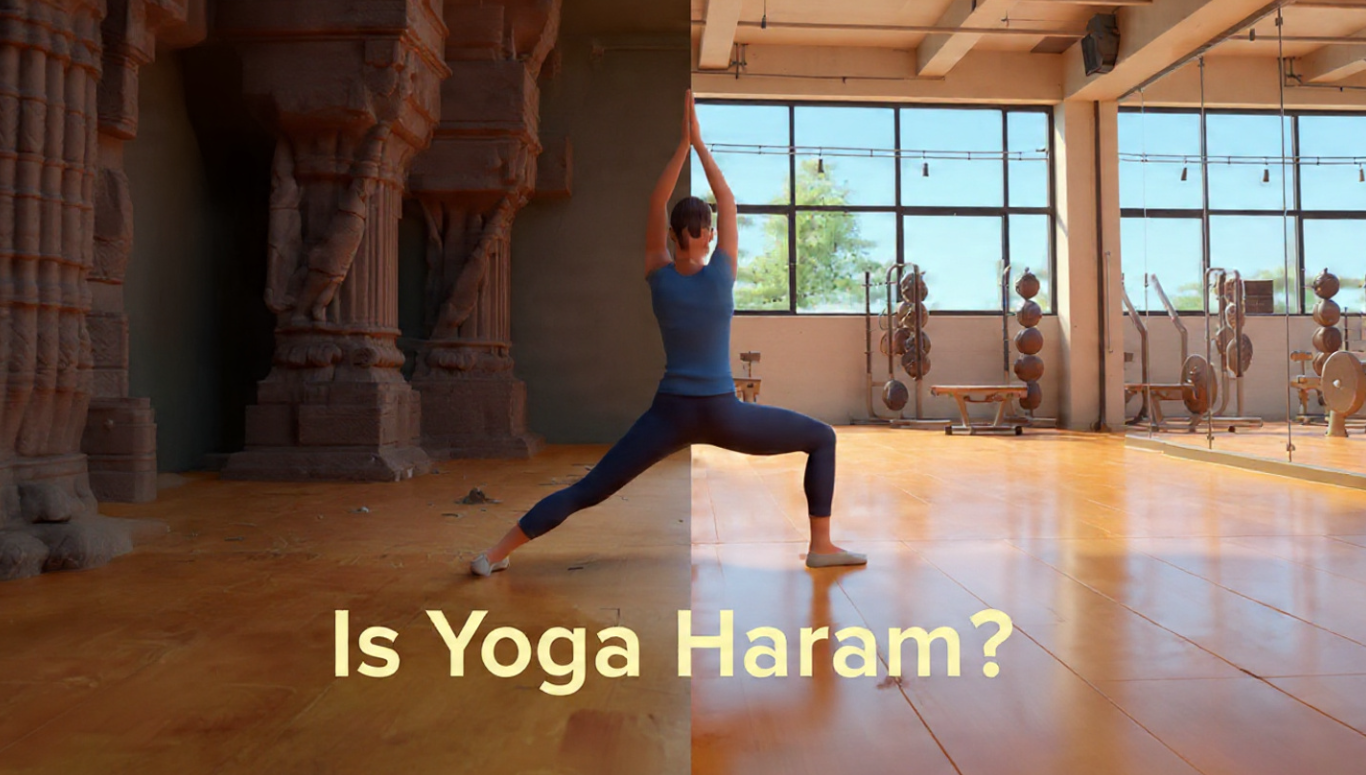
Yoga has ancient South Asian religious and philosophical roots. Classical yoga traditions were concerned with spiritual discipline and liberation, not simply modern fitness.
Modern postural yoga, however, is not identical to every classical yogic tradition. Over time, yoga developed into many forms, including religious practice, meditation, breathing exercises and largely secular fitness classes. That historical complexity matters when Muslims ask for a ruling today.
So here is the real question for Muslims today:
Are we accidentally copying devotional postures meant for other deities while thinking it is just exercise?
Let’s break this down properly.
Yoga Did Not Begin as Exercise
Yoga’s early purpose was not health.
It was devotion.
Historically, different yoga traditions have included spiritual disciplines such as meditation, breath control, ethical practices, bodily postures and ideas about liberation. Some modern schools also use mantras or explicitly Hindu religious concepts. Others present postures only as physical exercise.
Britannica describes yoga as a group of systems within Indian philosophy concerned with spiritual discipline and liberation, while modern yoga now takes many forms.
Read Britannica on yoga philosophy
For a contemporary Muslim legal discussion, the Federal Territories Mufti Department explained in September 2026 that movements genuinely free from religious elements, mantras and worship are not prohibited merely because their shapes resemble yoga.
Read the September 2026 Mufti Department clarification
This religious history is why Muslim scholars pay attention to the content and intention of a yoga practice. But a physical posture is not automatically an act of another religion merely because a similar shape appears in a religious tradition. Context, intention and the presence of explicitly religious elements matter.
Yoga, Spirituality and the Unseen
There is no evidence that jinn created yoga, and Muslims should not introduce that claim into the discussion. Some yoga traditions do include mantras, religious concepts, meditation or spiritual language. Those elements can raise clear Islamic concerns when they involve worship, invocation or beliefs that conflict with tawhid.
That concern is already sufficient. There is no need to describe ordinary stretching as an unseen portal or speculate about jinn where the evidence does not take us.
How Devotional Worship Became a Gym Stretch
Modern postural yoga developed through a complicated interaction of older Indian traditions, physical culture and global fitness movements. Some classes preserve explicit spiritual elements, while others deliberately present themselves as exercise. That history helps explain why two classes using the word yoga may contain very different religious content.
For a Muslim, the practical question is therefore not simply whether a movement once appeared in a yoga tradition. Ask what the class contains now. Religious chanting, devotional intention or incompatible spiritual teaching is different from ordinary mobility exercises that happen to use similar body positions.
How to Tell the Difference
You do not need to become a historian of every posture before stretching your back. You do need to know what the activity you are joining actually includes.
- Are there mantras or invocations?
- Is the teacher presenting Hindu theology or devotional ideas?
- Are participants asked to direct worship, sacred intention or spiritual surrender toward another religious concept?
- Or is the session simply physical stretching, mobility and breathing without religious content?
Those questions are more useful than assuming every shared body position is automatically shirk.
Conclusion
Yoga’s religious history is real, so Muslims should not dismiss explicit mantras, devotional practices or theological claims as meaningless decoration.
But the opposite exaggeration is also unhelpful. A physical stretch does not become shirk merely because a similar posture exists somewhere in another religious tradition.
Judge the activity by its actual content and purpose. If it contains worship or religious practices incompatible with Islam, avoid it. If it is genuinely physical exercise without those elements, recognised contemporary fatwa guidance has made room for that distinction.
A Current Malaysian Fatwa Clarification
In September 2026, the Federal Territories Mufti Department revisited the issue and explained an important distinction. Yoga that combines physical practice with religious elements, worship or mantras remains prohibited. But physical movements that are genuinely free from religious elements, mantras and worship are not prohibited merely because their shapes resemble yoga.
The department also notes that similarity between some Pilates movements and yoga does not make every exercise religious yoga.
Read the September 2026 Mufti Department clarification
So Is Yoga Haram?
Practices that include worship, mantras, invocation or religious beliefs contrary to Islam should be avoided.
Ordinary stretching or mobility exercises genuinely separated from those religious elements should not be labelled shirk simply because the movements resemble postures found in yoga.
If a particular class mixes fitness with spiritual teaching and you are unsure where the line is, ask the instructor what is involved or choose a clearly secular exercise alternative.
Related posts
Rethinking Islam
https://rethinkingislam.net/
Trailblazing Muslimahs
https://trailblazingmuslimahs.com/
