


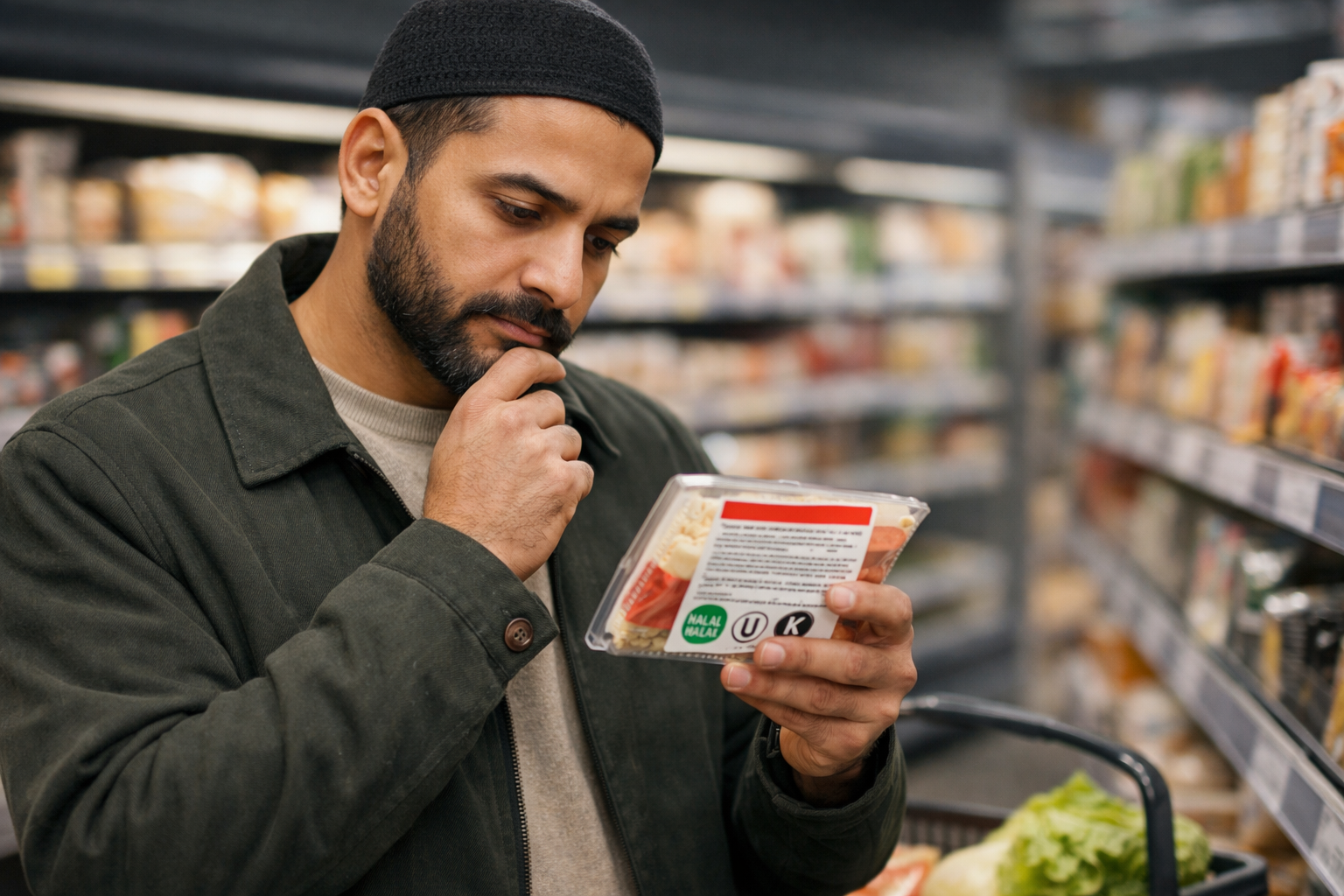
Kosher Halal Permissibility in Modern Era
If kosher was permitted then, are we sure it means the same thing now?
This is not a rebellious question.
It is a practical one.
Because the food we eat today has travelled more than most of us. It has crossed borders, factories, committees, machines, and labels. Somewhere along the way, many Muslims quietly decided that a kosher logo feels close enough to halal.
Close enough is comforting.
Close enough is also dangerous.
When Kosher and Halal Once Walked the Same Road
There was a time when kosher and halal naturally overlapped.
Animals were slaughtered by hand.
Blood was drained visibly.
Food was local, slow, and personal.
Religious consciousness was assumed, not outsourced.
In that world, trusting kosher food often made sense for Muslims. The butcher was known. The process was seen. The distance between the animal and the plate was short.
Faith had fewer middlemen.
Welcome to the Modern Food Maze
Today, your food has a resume.
It has passed through industrial slaughterhouses.
It has been approved by committees you will never meet.
It contains ingredients you cannot pronounce.
It may have been processed on the same line as something you would never eat.
Kosher certification today ensures compliance with Jewish dietary law. It does not aim to answer Islamic concerns. That does not make it careless. It makes it different.
And difference matters when you are serious about what you put into your body.
Kosher vs Halal Certification at a Glance
| Aspect | Kosher Certification | Halal Certification |
|---|---|---|
| Core focus | Jewish legal compliance | Islamic permissibility and accountability |
| Authority | Centralised rabbinical system | Multiple certifying bodies |
| Slaughter | Method based, intent assumed | Method and conscious intent emphasised |
| Stunning | Commonly accepted | Often debated or restricted |
| Alcohol involvement | Allowed in some processes | Generally avoided or scrutinised |
| Additives | Approved under Jewish law | Evaluated by Islamic principles |
| Responsibility | Trust the system | Engage the conscience |
Different faiths. Different questions. Different answers.
Ingredients Muslims Often Eat Without Realising
This is where things get awkward. And important.
Alcohol related substances
Kosher products may use alcohol as a solvent or flavour carrier. It may not show up clearly on the label. In kosher law, this is often acceptable. In Islam, alcohol is treated with far more caution.
Insect derived ingredients
Cochineal, a red dye made from insects, is permissible in Jewish law but prohibited in Islam. It appears in sweets, drinks, yoghurts, and desserts that proudly carry kosher certification.
Processing aids you never see
Enzymes and clarifying agents may be approved under kosher rules without being fully disclosed in simple terms. Muslims who assume kosher equals safe may never realise what they are consuming.
This is not fear mongering.
This is ingredient literacy.
Real Life Situations You Probably Recognise
On a flight
No halal meal left. The cabin crew offers kosher. You are hungry, tired, and polite. The meal looks religious enough. You eat it without thinking twice.
In a hospital
Kosher is offered as a faith sensitive option. You are grateful. You assume religious alignment. No one explains the process behind the tray.
At a vegan cafe
Kosher certified. Plant based. Feels safe. Except the flavouring contains alcohol derived ingredients. No one mentioned that.
In the supermarket
A kosher logo appears on a snack. You trust the symbol more than the ingredient list. Your conscience clocks out early.
These moments are common. The confusion is understandable.
The Question We Avoid Because It Is Inconvenient
Instead of asking only, is this allowed?
A better question might be, do I actually know what I am eating?
Islam does not teach blind trust in labels. It teaches responsibility. Awareness. Intention.
A logo is guidance.
It is not a replacement for conscience.
Eating Right Is Part of Living Right
This post does not end with a command.
It ends with a pause.
If you eat kosher sometimes, ask yourself why.
If you avoid it completely, ask whether knowledge or fear drives you.
If you feel unsure, that uncertainty is not weakness.
Faith was never meant to be fast food.
In a world where eating has become automatic, choosing consciously may be one of the most spiritual acts left.
FAQ Before the Comments Section
So can Muslims eat kosher food or not?
There is no single yes or no answer. It depends on the food, the ingredients, and how it was produced. Kosher certification answers a Jewish legal question, not an Islamic one.
Does this mean kosher food is haram?
No. It means kosher food is not automatically halal. Some kosher items may align with Islamic principles, others may not. Awareness matters more than assumptions.
If halal food is not available, is kosher the next best option?
For some Muslims, it may feel like a practical choice in certain situations. For others, it raises concerns. Islam recognises context, but it also encourages personal responsibility rather than blind shortcuts.
Is it wrong that I have eaten kosher food before?
No. Many Muslims have done so out of convenience or lack of information. This discussion is about learning and reflecting, not guilt or judgement.
Why does this topic feel so sensitive?
Because food touches daily life, identity, and faith. When answers are rushed or loud, people feel attacked. This post invites thought, not debate.
More Reads
- The Smarter Way to Travel as a Muslim Ditch DIY Go With a Halal Travel Expert
- Discover Halal Food and Islamic Hotels in Hanoi: A Muslim Traveller’s Guide
