

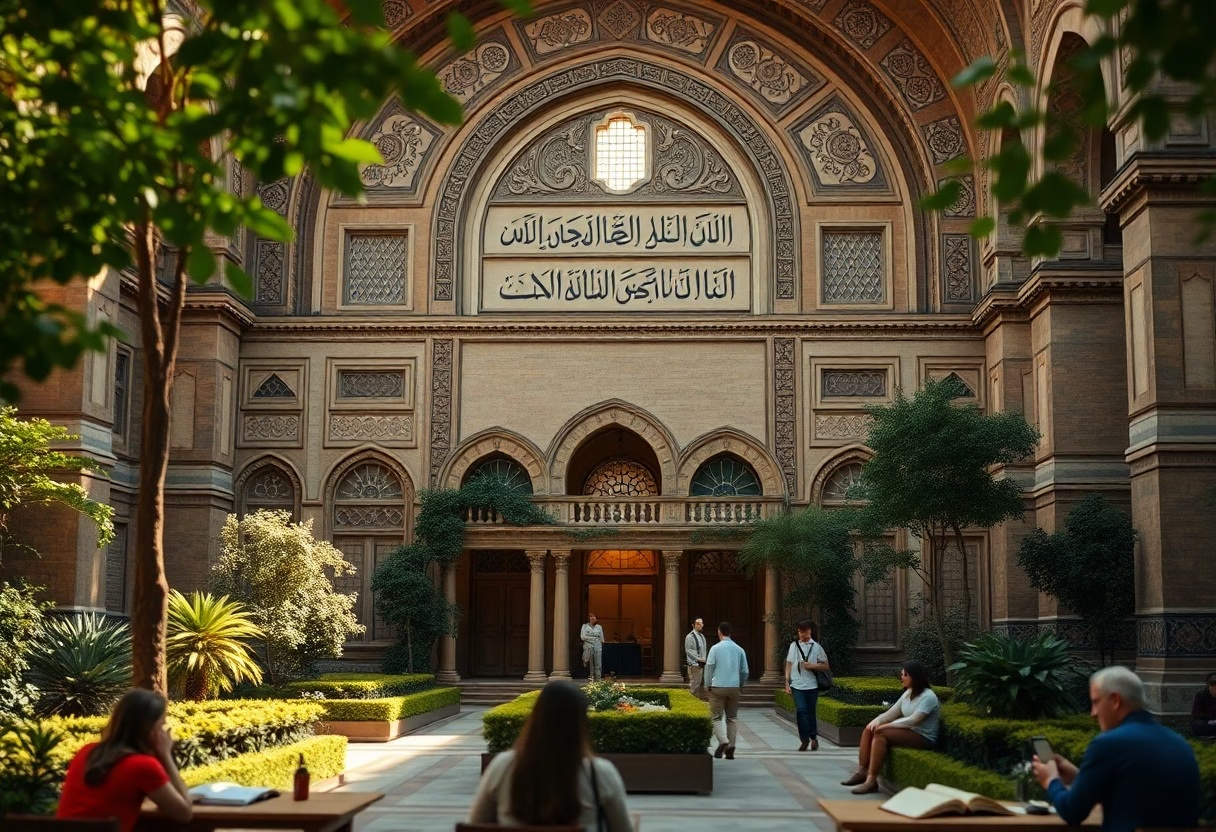
Most of us think universities have been around forever, but did you know that the first university in history was actually founded by a Muslim woman? Yes, you read that right! In the 9th century, Fatima al-Fihri established the University of al-Qarawiyyin in Morocco, which is recognized by UNESCO as the oldest existing degree-granting university. Dive into the awe-inspiring story of how this remarkable woman shook up the educational world and paved the way for generations to come!
Key Takeaways:
- The first university, the University of Al Quaraouiyine, was established in 859 AD in Fez, Morocco by Fatima al-Fihri, a Muslim woman dedicated to education and community service.
- This historical institution is recognized by UNESCO and the Guinness World Records as the oldest existing degree-granting university in the world, highlighting its significance in the evolution of higher education.
- Fatima al-Fihri’s legacy emphasizes the contributions of women in education and challenges contemporary perceptions of women’s roles in historical academic contexts.
The Woman Behind the Myth: Meet Fatima al-Fihri
Ever heard of a lady who built a university? Meet Fatima al-Fihri, the formidable woman who founded the world’s first university, Al Quaraouiyine, in 859 CE. A trailblazer of her time, she poured her inheritance into creating a center for scholarly pursuit in Fez, Morocco, defying the societal norms that limited women’s roles. Your jaw might drop at the thought of a woman not just dreaming but doing; she emerged as an emblem of empowerment in a period where such endeavors were unthinkable.
A Glimpse into Al-Fihri’s Life and Legacy
Born into a prominent family, Fatima al-Fihri’s early life was marked by privilege. Following her father’s death, she became determined to use her wealth to make a lasting impact. The establishment of Al Quaraouiyine was not merely a bold move; it was a profound statement about women’s capabilities in education and leadership. This prestigious institution nurtured many influential scholars, illustrating the significant legacy she left behind.
The Impact of Her Vision in a Transformative Era
Al-Fihri’s vision resonated far beyond her time, positioning her university as a beacon of knowledge in the medieval world. Her commitment to education laid the groundwork for future generations of scholars, creating a dynamic hub for learning that attracted students from across the globe. The university became instrumental in circulating advanced ideas in various fields, including mathematics, astronomy, and philosophy. Al-Fihri’s ambition challenged the prevailing societal narratives and opened doors for countless women to pursue knowledge and education in a landscape once dominated by men.
The Birth of Al-Qarawiyyin: Not Just Another School
Al-Qarawiyyin, established in 859 CE in Fez, Morocco, was not just any educational institution; it was a revolutionary initiative that reshaped the understanding of higher learning. Fatima al-Fihri transformed her inheritance into a hub for knowledge, culture, and scholarship, attracting intellects from across the Islamic world. This wasn’t merely a school; it became a vibrant center fostering debate, research, and innovation. The establishment of Al-Qarawiyyin marked the beginning of a new era in education, one that would influence educational structures for centuries to come.
The Foundational Principles of Al-Qarawiyyin
Al-Qarawiyyin was built on the foundational principles of inclusivity, scholarly pursuit, and critical thinking. Fatima al-Fihri envisioned a place where students from diverse backgrounds could engage in a broad range of disciplines, including theology, law, astronomy, and languages. This commitment to diverse knowledge enabled students to explore various fields and encouraged a culture of debate and dialogue imperative for intellectual growth.
How Al-Qarawiyyin Set the Stage for Modern Universities
Al-Qarawiyyin played a pivotal role in shaping the modern university experience by establishing core aspects like curriculum structure, faculty roles, and student interaction. The curriculum encompassed various subjects, creating a holistic educational experience that inspired later institutions. Students were encouraged to question and engage critically with their studies, a hallmark of contemporary academia. As such, Al-Qarawiyyin not only laid the groundwork for universities but also set a precedent for academic freedom and diversity in thought.
The impact of Al-Qarawiyyin extends far beyond its inception; it introduced educational values and practices that resonate today. Recognition of the importance of a structured curriculum, a diverse faculty, and the encouragement of critical inquiry all stem from its legacy. Al-Qarawiyyin influenced renowned institutions like the University of Bologna and the University of Paris, showing that an academic environment thrives on openness and exchange of ideas. This rich tapestry of knowledge, nurtured by Fatima al-Fihri’s vision, continues to inspire educators and students around the globe.
Education and Scholarship: A Flourishing Hub
Al-Qarawiyyin quickly transformed into a vibrant center of education and scholarship, attracting not only local students but also scholars from far and wide. The university became a melting pot of cultures, ideas, and philosophies. Enthusiastic learners gathered to engage in rich discussions, pushing the boundaries of knowledge and setting the stage for advancements in various fields. With both secular and Islamic studies on the curriculum, the institution fostered a spirit of inquiry and exploration, igniting passions for knowledge that resonated through generations.
The Curriculum That Challenged Conventions
The curriculum at Al-Qarawiyyin was nothing short of revolutionary. Innovative subjects like mathematics, astronomy, medicine, and linguistics were taught alongside core Islamic studies, breaking down barriers that often restricted educational access. The combination of practical and theoretical learning enabled students to challenge existing conventions, paving the way for a more comprehensive understanding of the world around them.
Famous Scholars and Their Contributions to Knowledge
Al-Qarawiyyin nurtured a slew of notable scholars whose contributions shaped the course of human knowledge. Among them was the renowned philosopher Ibn Khaldun, an expert in sociology and historiography, who laid the groundwork for future social sciences. Another illustrious figure was Ibn Rushd, often referred to as Averroes, championing the integration of Aristotelian philosophy with Islamic thought, thereby influencing European intellectual circles for centuries to come.
Among the illustrious alumni of Al-Qarawiyyin, contributions from scholars like Ibn Khaldun and Ibn Rushd helped configure the landscape of modern disciplines. Ibn Khaldun’s revolutionary work, “Muqaddimah,” introduced concepts of causality and analysis of the socio-political environment, and is considered a precursor to modern historiography. Meanwhile, Ibn Rushd’s philosophical writings navigated the tension between faith and reason, facilitating the transmission of Greek philosophies into medieval Europe. Their intellectual legacies, stemming from the halls of Al-Qarawiyyin, continue to echo throughout various fields of study today.
Legacy and Influence: The Ripple Effect on Higher Education
Al-Qarawiyyin’s legacy transcends its walls, creating a formidable ripple effect that shaped the landscape of higher education across the globe. This remarkable institution laid the foundation for academic principles that continue to thrive today, influencing modern universities and their curricula. The emphasis on scholarship, critical thinking, and interdisciplinary studies found at Al-Qarawiyyin can be seen mirrored in esteemed institutions such as Oxford and Cambridge, proving that its impact is far-reaching and enduring. By championing education and fostering intellectual curiosity, Al-Qarawiyyin forever altered the course of knowledge.
How Al-Qarawiyyin Inspired Other Institutions Worldwide
Al-Qarawiyyin set a gold standard that reverberated through the ages, inspiring the establishment of numerous educational centers worldwide. Its pioneering approach to academia, emphasizing the integration of religious and secular studies, served as a model that universities in Europe and the Islamic world would emulate. With scholars and students flocking from all corners of the globe, Al-Qarawiyyin became a beacon for learning, cementing its place as a crucial pillar in the annals of educational history.
The Role of Women in Education Through History
The story of women’s roles in education is rich and varied, encompassing both victories and challenges. Throughout history, women like Fatima al-Fihri, who founded Al-Qarawiyyin, broke barriers by championing education in diverse settings. Despite societal constraints, women have historically been educators, scholars, and advocates for higher learning. From medieval times, where women were often patronesses of arts and knowledge, to modern-day proponents of equal access to education, their contributions have forged pathways and shaped the educational landscape. Their tenacity and leadership continue to inspire new generations, signaling that education is a shared pursuit, transcending gender and boundaries.
Revisiting the Narrative: Why It Matters Today
Understanding the story of Fatima al-Fihri and Al-Qarawiyyin reshapes your perception of women in history and their immense contributions to education and society. This narrative serves as a powerful reminder that historical achievements often go unrecognized, particularly those of women in patriarchal societies. By revisiting these narratives, you are encouraged to critically evaluate and celebrate diverse contributions in academia and beyond, steering conversations toward inclusivity and representation.
Challenging Historical Misconceptions
Many narratives have painted the past in a monochromatic light, neglecting the vibrant contributions of figures like Fatima al-Fihri. Challenging these preconceived notions can expand your understanding of history, illustrating how women have always played pivotal roles in shaping society, especially in fields traditionally dominated by men. This interchange of ideas disrupts established historical myths and allows for a more comprehensive view of our collective past.
Empowering Future Generations Through Representation
Representation in history carries profound implications for shaping future generations. By showcasing figures like al-Fihri, you provide young minds with relatable role models who inspire courage, innovation, and resilience. This positive portrayal draws attention to the potential of women in leadership, encouraging a brighter, more equal future in academic and professional spheres.
When you highlight women like Fatima al-Fihri in educational contexts, it transforms learning into an empowering experience. Students see that ambition and intellect aren’t confined by gender, and they become inspired to pursue their dreams, despite societal expectations. This broader representation cultivates an environment where diverse voices are celebrated, sparking innovation across disciplines. Thus, the story of Al-Qarawiyyin isn’t just a relic of history; it’s a call to action for you to encourage inclusivity and empower the trailblazers of tomorrow.
Summing up
Conclusively, now that you know the first university was founded by a Muslim woman, you’ll look at higher education with a newfound appreciation. It’s a delightful twist in history that shows how often women have been the unsung heroes behind great institutions. So next time you’re hitting the books, give a nod to Fatima al-Fihri, who paved the way for your academic journey—and maybe even sneak in a little gratitude for all the women changing the world from behind the scenes. Who knew your degree had such powerful roots?
Q: What was the name of the first university founded by a Muslim woman?
A: The first university is known as Al-Qarawiyyin, founded in 859 AD in Fez, Morocco. It was established by Fatima al-Fihri, a remarkable scholar and philanthropist. This institution not only played a critical role in the advancement of education but also became a center for knowledge and culture in the Muslim world and beyond.
Q: How did Fatima al-Fihri finance the establishment of Al-Qarawiyyin?
A: Fatima al-Fihri used her inheritance from her father to finance the construction of Al-Qarawiyyin. After the passing of her father, who was a wealthy merchant, she dedicated her resources to building a mosque and a place of learning. This financial commitment demonstrated her dedication to education and her vision for creating a lasting institution for future generations.
Q: What was the significance of Al-Qarawiyyin in the context of education and knowledge?
A: Al-Qarawiyyin is recognized not only as the first university in the world but also as a pivotal institution in the history of education. It facilitated the exchange of knowledge and ideas among scholars of various backgrounds, including Islamic studies, sciences, and philosophy. The university attracted students and intellectuals from diverse regions, thus laying the groundwork for future educational systems worldwide and influencing the academic landscape for centuries to come.

1 Comment
Pingback: The Modern Crisis That Paves the Way for Imam Mahdi