

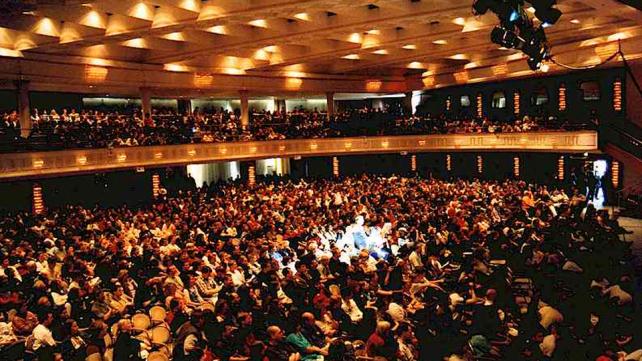
Are concerts haram?
It sounds like a simple yes or no question.
It is not.
There are really two questions hiding inside it. First, what is the Islamic ruling on music and musical instruments? Second, what actually happens at the event you want to attend?
If we mix those two questions together, the answer becomes louder but not necessarily clearer.
Muslim Scholars Have Disagreed About Music
One major scholarly position holds that musical instruments are generally prohibited, with limited exceptions such as the daff in particular circumstances.
A key evidence used for this position is Sahih al Bukhari 5590, which mentions people who will treat musical instruments as lawful alongside other prohibited matters.
Other recognised scholars have interpreted the evidence differently and allowed music subject to conditions concerning lyrics, behaviour, intention and its effect on religious obligations.
Egypt’s Dar al Ifta, for example, describes music accompanied by instruments as an issue on which jurists have differed and permits it under conditions.
Read the Dar al Ifta discussion
So this is not a subject where every Muslim scholar has given exactly the same ruling.
Then What About Concerts?
A concert adds another layer.
Even a person who follows a more permissive opinion on music still has to ask what else the event involves.
- Will prayers be missed?
- Is alcohol part of the environment?
- Are the lyrics sexually explicit or degrading?
- Is there behaviour you would normally consider inappropriate?
- Will the crowd make modest conduct difficult?
- Is the event safe?
- Are you comfortable with what the performance celebrates or promotes?
The answer to those questions can change the ruling on attending a particular event even for someone who does not believe all music is prohibited.
Quran 31:6 Is Often Quoted
Surah Luqman speaks about people who purchase distracting speech in order to mislead others from the path of Allah.
Some early scholars interpreted the expression as referring to singing or music. Others understood it more broadly as distracting speech or entertainment used to lead people away from truth.
The verse is therefore part of the discussion, but it should not be quoted as though the English text simply says “concerts are haram”. It does not.
A Pop Concert Is Not Automatically One Thing
Modern concerts vary enormously.
A seated orchestral performance is not the same environment as a festival built around alcohol and sexually explicit performance.
A small acoustic show is not identical to a crowded stadium event.
A concert with clean lyrics and controlled seating is not identical to an event where the entire atmosphere revolves around intoxication, sexual display or deliberate provocation.
That does not settle the separate disagreement about musical instruments. It simply means the event itself also has to be assessed honestly.
What About Nasheed Concerts?
The label nasheed does not automatically make an event religiously safe.
A nasheed event can still involve missed prayers, excessive celebrity culture, inappropriate crowd behaviour or an atmosphere that feels more like worship of personality than remembrance of Allah.
Equally, a nasheed performance can be calm, family friendly and religiously meaningful.
The name on the poster does not do the moral thinking for us.
What About Mixing Between Men and Women?
Men and women existing in the same public venue is not automatically the same thing as prohibited interaction.
What matters is behaviour.
Unwanted physical contact, sexual conduct, deliberate touching, indecent dress, intoxication and unsafe crowding can create clear concerns.
So can an environment designed around arousal or loss of self control.
A person should assess the actual event rather than using the word “mixing” as a shortcut for everything that happens in public.
Do Not Forget Salah
This part is less controversial.
If attending an event causes you to deliberately abandon an obligatory prayer, the problem is no longer only the music.
Plan around prayer times. Know whether you can leave your seat. Know whether there is a suitable place to pray. If the event makes fulfilling an obligation practically impossible, that should matter in the decision.
What About Lyrics?
Lyrics matter even under permissive views of music.
A song that celebrates cruelty, drugs, sexual exploitation or contempt for faith is not made harmless simply because the melody is catchy.
On the other hand, not every love song or emotional song automatically becomes forbidden because it is not a nasheed.
Listen to what is actually being said.
A Useful Way to Decide
If you follow the scholarly position that instruments are generally prohibited, your conclusion about most modern concerts will naturally be restrictive.
If you follow a recognised position that allows music under conditions, you still need to examine the event itself.
Ask:
- What is being performed?
- What happens in the crowd?
- Will I miss an obligation?
- Will I be placed in an environment I already know is bad for me?
- Can I attend without compromising the religious principles I normally follow?
So Are Concerts Haram?
There is no single ruling that accurately describes every event while ignoring the longstanding scholarly disagreement about music.
For scholars who prohibit instruments, most conventional concerts will be impermissible because of the music itself.
For scholars who permit music under conditions, a concert may still become impermissible because of its lyrics, alcohol, sexual conduct, missed prayers or other prohibited elements.
And some events may avoid many of those problems.
The honest answer therefore requires knowing which scholarly view you follow and what actually happens at the event.
Final Reflection
Islam does not require us to pretend that every enjoyable thing is harmless.
It also does not require us to turn every disagreement into a shouting competition.
Know the evidence. Know the scholarly disagreement. Know yourself.
Then decide whether the event is worth what it asks from your attention, your time and your faith.
