

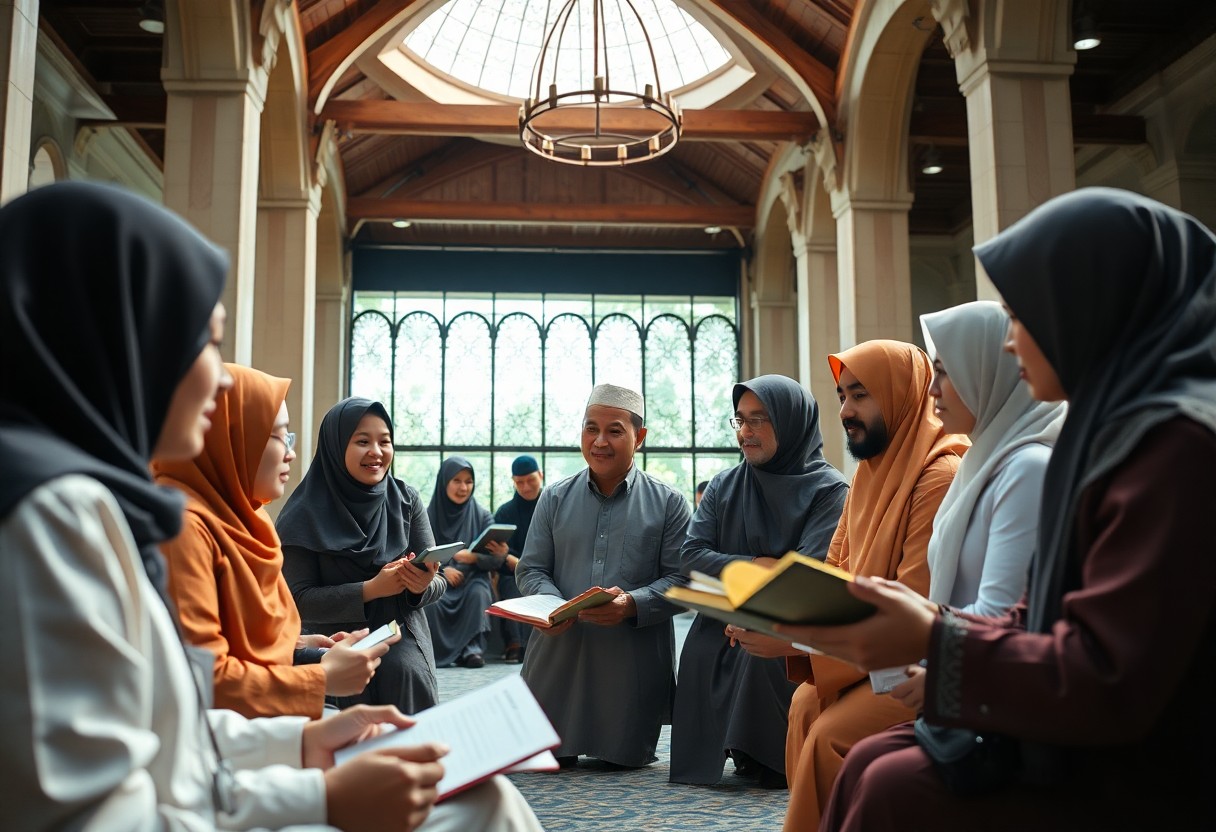
Many women in Singapore are making significant contributions to Islamic institutions, serving as ustazahs who educate and empower their communities. Through their leadership, they are redefining traditional roles and advocating for gender equality within the religious framework. As they take on positions of influence, these women are not only enhancing the accessibility of Islamic knowledge but also fostering a more inclusive environment that addresses contemporary issues. Their work is pivotal in shaping the future of Islam in Singapore, highlighting a transformative shift in how female leadership is perceived.
Key Takeaways:
- Ustazahs are increasingly taking on leadership roles within Islamic institutions in Singapore, promoting gender inclusivity.
- These women are actively shaping educational curricula and community programs, addressing contemporary issues within the Muslim community.
- Their contributions enhance the representation of women in religious contexts, fostering greater engagement and participation in Islamic discourse.
Breaking Stereotypes: The Rise of Ustazahs
The emergence of Ustazahs in leadership positions marks a pivotal shift in the perception of women in Islamic education. These women are challenging longstanding stereotypes by becoming key figures in shaping curricula and guiding communities. Their participation is not only enriching the Islamic landscape but also paving the way for future generations to embrace leadership roles. After this transformation, the narrative surrounding women in Islamic institutions is steadily evolving.
- Leadership roles for Ustazahs
- Islamic education advancements
- Stereotypes broken
- Community engagement
- Future generation guidance
| Year | Significant Event |
| 1980 | First Ustazah graduated from formal Islamic studies |
| 1995 | Establishment of women-led Islamic organizations |
| 2005 | Inclusion of female scholars in religious councils |
| 2015 | Visible presence in public religious discourse |
| 2023 | Growing leadership among Ustazahs |
Historical Context: Women in Islamic Education
Historically, women in Islamic education faced numerous barriers, with limited opportunities for formal training and leadership roles. Despite these challenges, many women contributed informally as community leaders, educators, and scholars. The dedication of these early pioneers laid the groundwork for the current generation of Ustazahs who are now reshaping the educational landscape in Singapore.
Shifts in Perception: From Traditional Roles to Leadership
Perception of women in Islamic contexts has evolved as Ustazahs demonstrate their capabilities beyond traditional roles. Notably, their increasing visibility in diverse areas like religious discourse, community service, and educational leadership challenges societal norms. The Singaporean Muslim community now recognizes that women can embody the dual roles of both educators and leaders, which enhances the depth of religious discussions and fosters a more inclusive environment.
This shift is visible in the growing number of Ustazahs taking charge of institutions and leading significant projects within the community. As they engage with youth, mentor aspiring leaders, and address contemporary issues from an Islamic perspective, they contribute substantial knowledge and insights. Their presence not only inspires other women but also cultivates an atmosphere where leadership is defined by competence rather than gender, reinforcing the idea that Islamic leadership can be achieved by all, regardless of gender.
Defining the Ustazah’s Role in Modern Institutions
In the evolving landscape of Islamic institutions in Singapore, the role of the ustazah has expanded beyond traditional boundaries. She acts not only as a religious educator but also as a community leader and advocate for gender inclusivity. Their involvement in decision-making processes within mosques and educational settings underscores their vital contribution to shaping modern interpretations of Islam.
The Educational Framework for Ustazahs
The educational framework for ustazahs has been tailored to include a combination of Islamic studies and contemporary subjects, ensuring they are well-equipped to address current social issues. This comprehensive training allows them to engage effectively with diverse community needs while maintaining a solid foundation in religious teachings.
Contributions to Curriculum Development and Innovation
Ustazahs have significantly influenced curriculum development within educational institutions, introducing innovative approaches that blend traditional knowledge with modern contexts. This evolution reflects their understanding of the needs of contemporary learners, bridging gaps between religious teachings and daily life.
Ustazahs have pioneered various initiatives that emphasize critical thinking and cultural relevance in Islamic education. By integrating technology and interactive methods into lesson plans, they create engaging learning environments. Notable programs include gender studies within Islamic contexts and community service projects that promote social responsibility. These developments ensure that students are not only learning religious principles but also applying them in ways that resonate with modern societal challenges.
Leading with Compassion: Ustazahs and Community Engagement
Ustazahs have become instrumental in fostering compassion within their communities, utilizing their positions to bridge gaps among diverse groups. Through their outreach efforts, they provide vital support to those in need, addressing issues ranging from mental health to financial hardship. By championing empathy and understanding, these women leaders ensure that their initiatives resonate deeply with community members, creating a culture of support and inclusion.
Building Support Networks for Women and Families
Ustazahs play a pivotal role in establishing support networks tailored for women and families. They facilitate workshops and gatherings that provide a platform for sharing experiences and resources, helping participants navigate challenges such as parenting and domestic issues. By promoting solidarity among women, they empower families to thrive within their community.
Initiatives and Programs Targeting Social Issues
Through various initiatives, Ustazahs tackle pressing social issues affecting their communities. Educational programs focus on topics like racial harmony and mental well-being, while also offering skills training to enhance employability. These efforts not only raise awareness but also foster a proactive approach among community members to address societal concerns collectively.
One notable initiative launched by Ustazahs includes a mentorship program aimed at young women, where participants are paired with successful female leaders from different sectors. This program empowers them through tailored skills workshops, self-confidence training, and career development advice. Additionally, Ustazahs organize community dialogues to discuss social issues like domestic violence, providing a safe space for victims to share their stories and access necessary support services. Such programs contribute significantly to building resilience and unity within the community.
Challenges and Triumphs: Navigating Leadership in Islamic Institutions
Despite their contributions, ustazahs face numerous challenges in navigating leadership roles within Islamic institutions. They often encounter societal expectations that prioritize traditional male leadership, making it difficult for them to assert authority and recognition. Additionally, institutional barriers such as limited access to funding and mentorship networks exacerbate these challenges. However, their resilience and commitment to community engagement have allowed them to carve out significant spaces for themselves, leading to transformative changes in the institutions they serve.
Barriers Faced by Ustazahs in Their Journey
Ustazahs frequently confront barriers including cultural biases, institutional sexism, and a lack of representation in leadership positions. Many society members still perceive religious leadership as a male domain, limiting opportunities for women to rise. Additionally, mentorship and funding disparities often hinder their professional growth, leaving them to navigate these challenges largely alone. Despite these struggles, they continue to strive for excellence and equity within Islamic institutions.
Celebrating Success Stories: Pioneering Ustazahs
Pioneering ustazahs have achieved remarkable success, becoming role models for future generations. Their contributions range from innovative educational programs to community outreach initiatives that address social issues. These women have not only gained respect within their institutions but have also reshaped perceptions of women’s roles in Islamic leadership. By breaking through barriers, they inspire others to follow in their footsteps and advocate for change within their communities.
One notable example is Ustazah Farah, who founded a mentorship program aimed at young Muslim women, providing them with spiritual guidance and professional development. Her program has successfully inspired over 300 participants, empowering them to take on leadership roles in various sectors. Similarly, Ustazah Aminah leads initiatives addressing mental health within the community, emphasizing the importance of emotional well-being in Islamic teachings. Their achievements exemplify how ustazahs are not only navigating challenges but also pioneering new avenues for female leadership in Singapore’s Islamic institutions.
The Future Landscape: Shaping Islamic Thought and Practices
As the landscape of Islamic institutions evolves, women’s leadership is set to redefine the framework of Islamic thought and practices. With initiatives that encourage dialogue, Ustazahs are paving the way for innovative interpretations and inclusivity in religious education. They influence community engagement by integrating modern challenges with religious teachings, ensuring that future generations are equipped to navigate their faith in a contemporary context.
Emerging Trends in Women’s Leadership within Institutions
Women are increasingly taking on leadership roles within Islamic institutions, leading programs that focus on community outreach, educational reform, and interfaith dialogue. This shift not only empowers women but also enriches the institutional structure, fostering an environment where diverse perspectives are valued and integrated. As a result, organizations are witnessing enhanced engagement and sustainability in their outreach efforts.
The Impact of Digital Platforms and Global Networks
The rise of digital platforms has transformed how women in Islam connect with each other and share knowledge globally. By utilizing online resources, Ustazahs can disseminate their teachings widely, reaching audiences beyond geographical boundaries. This connectivity fuels a dynamic exchange of ideas, fostering collaboration across different cultures and facilitating a more nuanced understanding of Islamic principles.
Online forums, webinars, and social media platforms have allowed Ustazahs to build global networks, connecting with their counterparts around the world. These platforms enable real-time discussions about relevant issues such as women’s rights, education, and social justice within the context of Islam. For instance, initiatives like online study circles and virtual conferences provide spaces for knowledge sharing and best practices, reinforcing the importance of women’s contributions in these dialogues. Such interconnectedness not only amplifies their voices but also strengthens their collective influence in shaping contemporary Islamic thought.
Final Words
Considering all points, the influence of ustazahs in shaping Islamic institutions in Singapore is increasingly evident. They play a pivotal role in education, community engagement, and spiritual leadership, demonstrating their capabilities and commitment to advancing societal values. Their contributions not only foster women’s empowerment within these institutions but also encourage a more inclusive approach to Islamic practices. As they continue to lead and innovate, their impact will likely inspire future generations, thereby strengthening the community’s fabric and promoting a more balanced perception of gender roles in Islam.
