

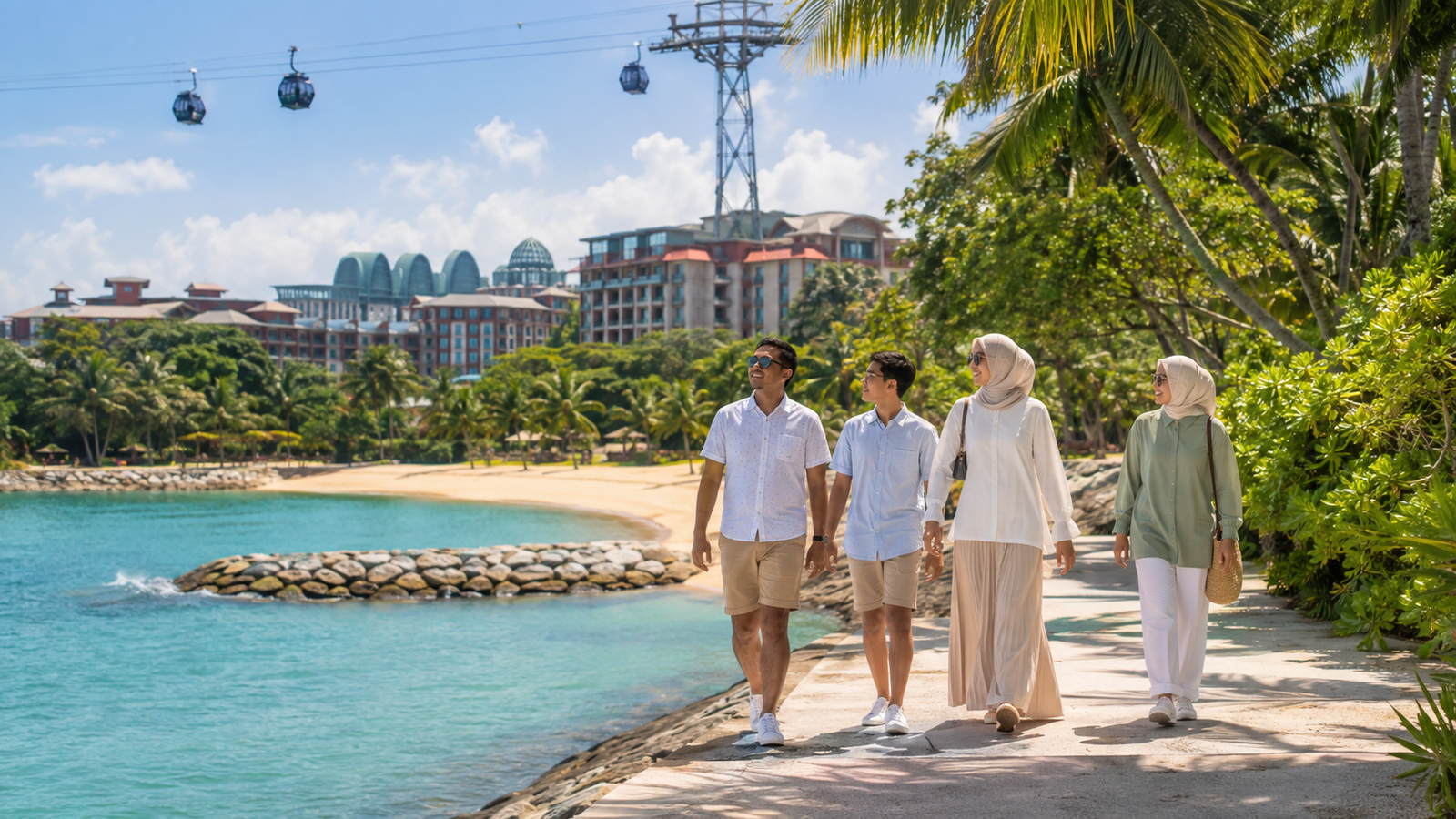
Sentosa Island covers 500 hectares of land, but many local parents feel the space shrinks the moment a toddler starts a public meltdown. This writer once spent forty-five minutes trying to find a specific “secret” nature path, only to end up back at the same ice cream kiosk three times while the kids cried for a nap. It was a humbling reminder that even a world-class resort island requires a solid plan to avoid a total family collapse.
With over 20 attractions packed into one space, the island serves as a convenient escape that feels like a holiday without the need for a passport. A typical day trip can cost a family anywhere from S$100 to over S$300, making it vital to know which experiences offer the best bang for the buck. People often wonder if the high-flying cable cars are worth the price or if the free tram is enough to keep the day moving smoothly.
Pro tip: Families can save significantly by visiting the free water play areas and coastal trails instead of focusing only on high-priced theme parks.
This guide looks at the best ways to navigate the island with strollers and snacks in tow. The reader will learn about the three main beaches, the easiest transport routes, and where to find a meal that won’t empty the wallet. It is entirely possible to have a proper Singapore escape that is both organized and genuinely fun for all ages.
Island Entry: Sentosa Express or Cable Car Thrills?
Choosing the right entry method sets the tone for the entire family adventure, balancing cost against the excitement of the arrival. While some prefer a swift transit to the heart of the action, others view the journey as the first “ride” of the day. Deciding between the efficiency of the monorail and the spectacle of the skies requires a quick look at the family budget and the patience levels of the youngest travelers.
Comparing Entry Options
The Sentosa Express is the most common choice for families seeking a straightforward route. Departing from the third level of VivoCity (Lobby L), this monorail takes approximately 8 minutes to reach Beach Station, making it the fastest way to get near the Sentosa shoreline for free beach activities. At a flat rate of S$4 per person for a return trip, it is significantly more affordable than the aerial alternative.
| Feature | Sentosa Express | Cable Car Sky Network |
|---|---|---|
| Adult Cost | S$4.00 | S$35.00 |
| Child Cost | S$4.00 | S$25.00 |
| Travel Time | ~8 Minutes | ~15-30 Minutes |
| Best For | Strollers & Speed | Views & Experience |
For those prioritizing the experience, the Cable Car Sky Network offers a dramatic entrance. The system consists of two lines: the Mount Faber Line, which connects from HarbourFront Tower 2, and the Sentosa Line. Passengers are treated to panoramic views of the Singapore skyline and the busy shipping harbour from a high vantage point.
Pro Tip: If traveling with a bulky double stroller, the Sentosa Express is much easier to board as the cabins are level with the platform and offer more floor space than the cable car gondolas.
Practical Considerations for Parents
The cost difference is the most striking factor, with a family of four spending S$16 on the monorail versus over S$100 for the cable car. However, the cable car serves as a standalone attraction, often keeping children mesmerized by the height and the bird’s-eye view of the water parks below. For a middle-ground approach, some families take the cable car into the island for the “wow” factor and use the free internal shuttles to move around later.
Navigating these entry points with toddlers requires a bit of strategic positioning. The Sentosa Express often has long queues during weekend peaks, but the high frequency of trains keeps the line moving. In contrast, the cable car offers a private cabin for the family, which can be a welcome relief from crowds before the day truly begins.
Beach days on the island are not just about sand and surf; they are the most effective way to enjoy a day out without spending a cent on admission. While the island is famous for its high-octane theme parks, the three main coastal stretches offer a slower pace that often feels more like a “proper” holiday than any rollercoaster could. These man-made shores, crafted with soft imported sand, provide a surprisingly natural-feeling escape for families who just want to let the kids run wild.
Choosing Your Coastal Vibe: Palawan, Siloso, or Tanjong?
The choice of beach depends entirely on the age of the children and the desired energy level for the afternoon. Each spot has a distinct personality, ranging from high-energy sports hubs to quiet, tucked-away coves. All three beaches are equipped with essential family infrastructure, including public restrooms and shower facilities, making it easy to rinse off the salt before heading home.
Palawan Beach: The Family Favorite
Palawan is the undisputed champion for parents with toddlers and primary-schoolers. The main draw is the Palawan Pirate Ship, a massive, free-to-access water playground featuring multiple slides and shallow pools. I once watched my own kids spend three hours straight here while I sat nearby; it is a rare moment of peace for any parent. The water here is generally calm, and the proximity to casual food stalls makes it a very low-stress home base for the day.
Siloso Beach: For Active Explorers
If the family includes teenagers or confident swimmers, Siloso is the better bet. It is the hub for beach clubs and water sports, but it also features some of the calmest waters on the island, which is ideal for young swimmers practicing their strokes. It feels more “urban” and buzzy than the other spots, with plenty of music and activity to keep older kids from getting bored.
Tanjong Beach: The Quiet Retreat
Tanjong is the most secluded of the three and is perfect for families who prefer a book and a picnic over a water slide. While it is known for weekend beach parties that are less family-focused, on a weekday morning, it is a serene paradise. It is the best place to find a quiet corner for a nap or to search for small seashells in the sand.
Essential Beach Checklist:
- Sunscreen and hats (the tropical sun reflects intensely off the white sand)
- Reusable water bottles to stay hydrated between swims
- A change of clothes for the Sentosa Express ride back
- Small snacks to avoid the “hangry” meltdown before finding a restaurant
Finding these pockets of free recreation is the secret to a sustainable Singapore escape. By prioritizing the beaches, a family can balance out the cost of other paid attractions while still giving the kids plenty of space to burn off energy.
Spending a full day on the island does not require a constant stream of ticket purchases to keep children entertained. While the high-profile theme parks often dominate the conversation, the island’s interior and coastal fringes offer high-quality, complimentary experiences that balance high-energy play with calm exploration.
Splash Zones and History for Free
The Palawan Pirate Ship serves as a central hub for families with children aged toddlers to 10. This expansive water play area features slides, fountains, and tipping buckets, allowing parents to supervise from nearby shaded seating while kids burn off energy at no cost.
For a change of pace, the Fort Siloso Skywalk provides an 11-storey high perspective of the coastline. This 181-meter long elevated bridge is completely free to enter and leads visitors toward the historic fortifications, offering a scenic walk that avoids the humidity of the forest floor.
Pro tip: Pack a dry set of clothes in a waterproof bag before heading to Palawan; the pirate ship area is so engaging that “just five more minutes” often turns into an hour-long soak.
Nature Discovery and Coastal Art
The Sentosa Nature Discovery gallery acts as an interactive gateway to the island’s wilderness. Families can explore the hands-on exhibits before embarking on the Imbiah Trail, a protected path where sightings of local macaques and squirrels are common.
Since the closure of KidZania Singapore in 2020, these outdoor alternatives have become even more vital for budget-conscious itineraries. Those seeking a quieter atmosphere can head to Sentosa Cove to view public art installations and walk the waterfront docks, which offer a distinct contrast to the busy beach stretches.
| Attraction | Best Age Group | Key Feature |
|---|---|---|
| Palawan Pirate Ship | 3–10 years | Water slides & buckets |
| Fort Siloso Skywalk | All ages | 11-storey panoramic views |
| Imbiah Trail | 5+ years | Wildlife & jungle trekking |
Finding these hidden pockets of greenery and play requires moving between different zones of the island. While the distances are manageable for adults, the tropical heat makes hopping between the beach stations and the inland hills a challenge for those pushing heavy strollers or carrying beach gear.
Efficiently moving across the island requires a mix of the Sentosa Express monorail, public buses, and well-maintained walking paths. While entering the island often involves a scenic cable car or monorail ride, the internal logistics of getting a family from a beach to a restaurant or a nature trail require a different strategy. My own family once learned this the hard way after attempting to walk the entire coastline with a double stroller in the midday sun; we quickly realized that the free shuttle system is the true backbone of a stress-free visit.
The Monorail and Bus Network
The Sentosa Express is the most recognizable transport mode, featuring four key stops: VivoCity (the mainland gateway), Resorts World (for theme parks), Imbiah (for nature and views), and Beach Station (the coastal hub). It is fully air-conditioned and stroller-friendly, making it a reliable way to bypass the humidity when moving between major attraction clusters.
For destinations tucked further away from the tracks, the island operates three primary bus routes, labeled Bus A, B, and C. These buses are free once you are on the island and provide access to areas like the golf club or residential coves. Families should note that while most buses accommodate strollers, you may be asked to fold them during peak hours when the aisles become crowded with beachgoers.
Coastal and Pedestrian Access
Navigating the three main beaches is easiest via the Beach Shuttle, a dedicated tram-style service that runs along the Siloso, Palawan, and Tanjong stretches. This is often faster than the standard buses for short hops between sand-based activities. For those who prefer to stay on foot, several dedicated walkways provide safe passage:
- Sentosa Boardwalk: A 600-meter sheltered path from VivoCity that offers free entry and travelators to assist tired legs.
- Merlion Walk: A themed pedestrian link that connects the central Imbiah attractions down toward the beach level.
- Siloso Trail: A paved route suitable for strollers that winds through the western end of the island.
Choosing the right path depends heavily on the time of day, as the Merlion Walk offers little shade compared to the covered Boardwalk. Effective navigation ensures the family arrives at a dining spot before the “hangry” phase sets in, allowing for a smooth transition into the next part of the itinerary.
Finding a meal that satisfies a picky toddler without depleting the vacation fund is entirely possible on Sentosa through strategic location scouting. While the island has a reputation for high-end resort dining, families can find a range of price points that bridge the gap between a quick snack and a formal sit-down experience.
Kid-Friendly Bites: Dining Options for Every Family Budget
For those seeking the best value, Malaysian Food Street at Resorts World Sentosa is a reliable staple for local flavors. The air-conditioned space replicates a nostalgic hawker setting, where a plate of Hokkien Mee or Chicken Rice typically costs between S$8 and S$15. It is an ideal spot for families who want variety without the premium price tag of a hotel restaurant.
Closer to the water, the Good Old Days Food Court near Beach Station serves as a practical refueling station. It offers affordable local sets and buffet options that cater to large groups. Because it is located right at the transport hub, it is a convenient stop before heading back to the mainland or moving between different beach zones.
Casual Sit-Down and International Favorites
If the goal is a relaxed meal with a view, Trapizza on Siloso Beach is a popular choice for its thin-crust pizzas and Italian fare. The atmosphere is casual enough that parents do not have to worry about noisy children, and the proximity to the sand allows for a bit of play while waiting for the food to arrive.
Resorts World Sentosa also houses several international chains and themed restaurants. Many of these establishments are well-equipped for young guests, providing high chairs and dedicated kids’ portions. This variety ensures that even if one child wants pasta and another wants burgers, there is a central area that can accommodate both.
Practical Saving Strategies
Eating out for every meal can quickly inflate the daily budget. To keep costs manageable, many local parents pack a small cooler or bag with essentials. Bringing your own snacks and drinks can save roughly 15-20% on total food and beverage costs over a full day of exploration.
| Dining Spot | Vibe | Price Range |
|---|---|---|
| Malaysian Food Street | Hawker Style | S$8 – S$15 |
| Good Old Days | Casual/Local | S$10 – S$20 |
| Trapizza | Beachfront Italian | S$25 – S$40 |
Budgeting for food is just one piece of the puzzle when organizing a trip that balances cost and convenience. Choosing the right dining locations helps maintain energy levels for the afternoon’s activities without causing unnecessary financial stress.
Applying a strategic flow to the day ensures that high-energy attractions and quiet moments coexist without leading to a mid-afternoon meltdown. While the island offers a wealth of dining and transport options, the real challenge lies in balancing the heavy hitters with the hidden gems. A parent might assume they can tackle everything in a single trip, but the sheer scale of the Universal Studios Singapore experience-which typically requires a full day of 9 to 10 hours-means that stacking too many activities often results in exhausted children and wasted tickets.
Mastering the Time and Budget Balance
Success on the island depends on hitting the most popular spots during off-peak windows. Crowds usually peak between 11 AM and 4 PM, so arriving right at opening or waiting until the late afternoon provides a much smoother experience. For families looking to stretch their dollars, the Sentosa Fun Pass acts as a flexible currency for attractions, offering bundled savings of roughly 10% to 20% compared to buying individual tickets at the gate.
| Attraction | Estimated Time | Best Strategy |
|---|---|---|
| S.E.A. Aquarium | 2–3 Hours | Visit at 10 AM to avoid the midday school groups. |
| Luge and Skyride | 1–2 Hours | Go after 5 PM for cooler weather and shorter lines. |
| Universal Studios | 9–10 Hours | Dedicate a full day; use the Express Pass if visiting on weekends. |
Building a Multi-Age Itinerary
Planning for a household with both a toddler and a teenager requires a “divide and conquer” approach or a carefully layered schedule. Most major routes are stroller-friendly, allowing parents to move easily between high-adrenaline zones and calm coastal paths. To keep everyone satisfied, follow these three steps:
- Target the Anchors Early – Start the morning at a major site like the S.E.A. Aquarium while energy levels are high. This keeps the most expensive part of the day from being ruined by afternoon crankiness.
- Integrate Free “Buffer” Zones – Use the midday heat to retreat to the free water play areas or shaded nature trails. These provide a sensory break from the loud music and bright lights of the theme parks.
- End with Shared Thrills – Finish the day at the Luge and Skyride. It serves as a perfect bridge between age groups, offering enough excitement for teens while remaining safe for younger children riding with an adult.
I once tried to squeeze the aquarium, a full beach afternoon, and a late-night show into six hours with my two kids. We ended up with one child asleep on a bench and the other crying because we missed the last shuttle. Now, I always prioritize one “big” ticket item and leave the rest of the afternoon for unstructured exploration along the coast.
Conclusion
A successful Sentosa trip depends entirely on matching the transport and activities to a family’s specific budget. This island serves as a versatile backyard for Singaporeans, offering everything from expensive high-altitude views to completely free coastal playgrounds. People often assume a day here requires a massive layout of cash, but strategic choices prove otherwise.
Key Takeaways for a Stress-Free Visit
- The Sentosa Express monorail provides a budget-friendly entry at S$4, while the S$35 return Cable Car ticket offers a premium scenic experience for those prioritizing the view.
- Palawan Beach remains the top pick for parents because of the free Palawan Pirate Ship water play area and its proximity to family-oriented food stalls.
- Free internal shuttle buses and the beach tram allow families to save their energy for the attractions rather than walking long distances in the heat.
- Dining costs vary wildly, so the reader should look for casual beach shacks or the food court at Beach Station to keep meal expenses under control.
- Strategic planning prevents the “over-ambitious parent” meltdown, which the author once experienced after trying to fit a theme park and a beach hike into a single afternoon.
How to Plan the Next Island Escape
The reader should check the weather forecast and pack a dedicated bag with swimsuits, high-SPF sunscreen, and refillable water bottles. People can then visit the official Sentosa website to book any high-demand attraction tickets at least 48 hours in advance to secure specific time slots. Mapping out a route that starts at the furthest point and works back toward the mainland helps avoid the evening crowds. Sentosa works best when treated as a series of small adventures rather than a frantic checklist.
Adventure is accessible right across the boardwalk.
