

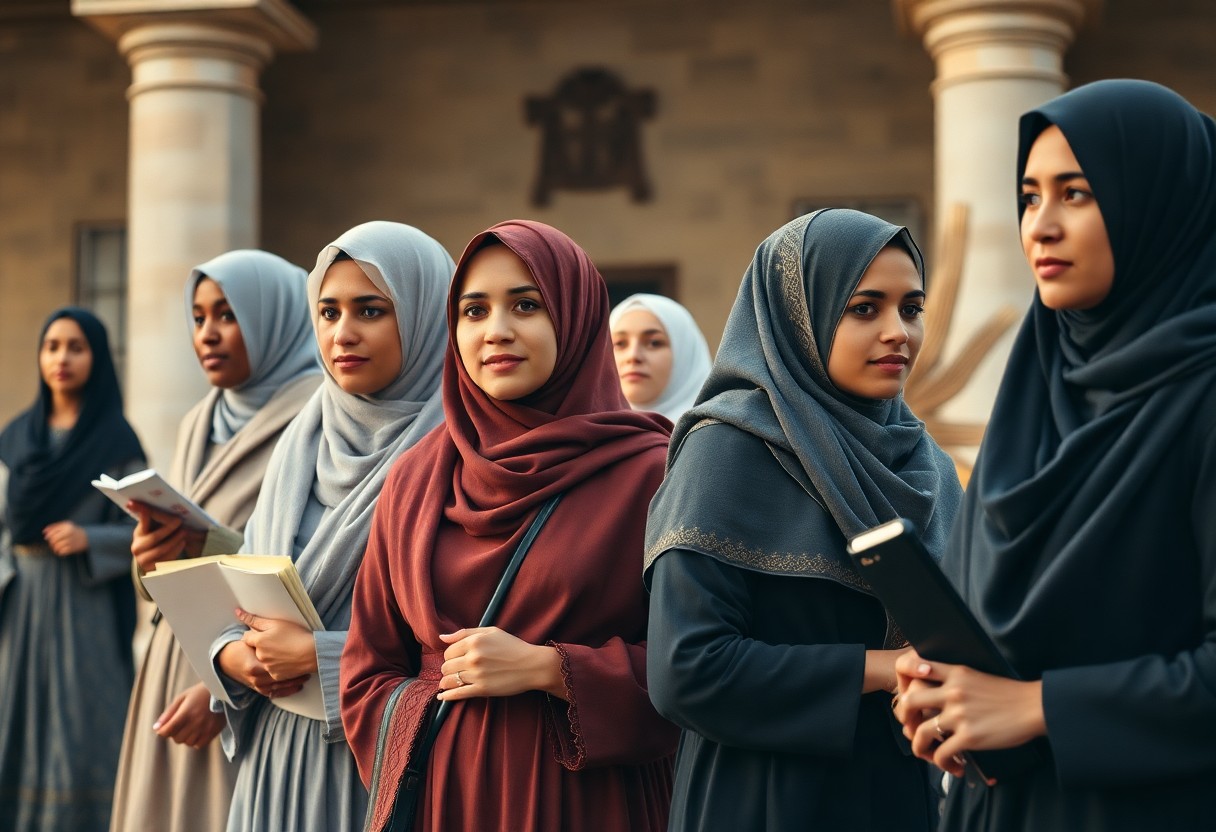
There’s a rich tapestry of Muslim women throughout history whose contributions have profoundly shaped society. From pioneering leaders to groundbreaking thinkers, these remarkable figures challenge stereotypes and break barriers. As you explore their stories, you’ll uncover examples of resilience, intellectual brilliance, and social reform that resonate even today. Join us in celebrating the legacies of these extraordinary women and understand how their impact continues to influence your world.
Trailblazers of Change: Pioneering Figures in History
Among the remarkable Muslim women who have influenced the course of history, several stand out as trailblazers of change, redefining societal norms and challenging the status quo. Through their vision, determination, and commitment to their causes, these women have paved the way for future generations, demonstrating how one individual can enact significant transformations within communities and beyond.
Fatima al-Fihri: The Visionary Behind the World’s First University
With relentless ambition, Fatima al-Fihri established the University of al-Qarawiyyin in Fez, Morocco in 859 CE, widely recognized as the world’s oldest degree-granting university. Her dedication to education stemmed from a profound desire to promote knowledge in her community, setting a precedent for women’s leadership in academia and scholarship.
Malala Yousafzai: A Voice for Education in the Face of Oppression
Malala Yousafzai, an advocate for girls’ education, rose to global prominence after surviving an assassination attempt by the Taliban in 2012. Her unwavering determination to continue her fight against educational oppression has inspired millions. By co-authoring the memoir “I Am Malala” and delivering a powerful speech at the United Nations, she highlights the importance of education for all, emphasizing that one child, one teacher, one pen, and one book can change the world.
Born in Pakistan’s Swat Valley, you may recall how her passion for education emerged in an environment where girls faced severe restrictions. Following her attack, Malala’s voice became even more potent and resonated on international platforms, advocating for the right to education in communities affected by violence and discrimination. In 2014, she received the Nobel Peace Prize, becoming the youngest-ever laureate, a testament to her profound impact and commitment to empowering young women around the globe. Her journey illustrates the strength found in vulnerability and the unexpected power of one young girl’s resolve to demand change.
The Advocates: Fighting for Rights and Equality
Many Muslim women have emerged as prominent advocates for social change, fighting tirelessly for their rights and the rights of others. Their efforts have laid the groundwork for significant shifts in societal norms and policies, demonstrating that determination and courage can forge pathways to equality. These trailblazers have often challenged cultural and political barriers, leading movements that inspire future generations to continue the fight for justice.
Ameenah Gurib-Fakim: The First Female President of Mauritius
Ameenah Gurib-Fakim made history as the first female president of Mauritius, serving from 2015 to 2018. A noted biodiversity scientist, she was previously awarded the prestigious L’Oréal-UNESCO Award for Women in Science. Her presidency highlighted the importance of women in leadership roles and inspired many to reconsider the potential of female governance in contributing to societal development.
Huda Sha’arawi: The Pioneer of Women’s Movements in Egypt
Huda Sha’arawi stands as a remarkable figure in the history of women’s rights in Egypt. In 1923, she founded the Egyptian Feminist Union, actively advocating for women’s education, suffrage, and social reforms. By publicly removing her veil upon returning from an international feminist congress, she symbolized the fight against oppressive cultural norms and inspired countless women to assert their rights. Her legacy continues to influence gender equality movements throughout the Arab world.
As a prominent activist, Huda Sha’arawi challenged the status quo, bringing together women from various backgrounds. In addition to her work with the Egyptian Feminist Union, she also focused on integrating education for women into national reform agendas. Sha’arawi’s efforts paved the way for successive generations of feminists, showcasing that women’s empowerment was vital for Egypt’s socio-economic progress. Her bold actions and tireless contributions established her as a cornerstone of the women’s movement in the region, as she deftly balanced advocacy with cultural sensibilities.
The Innovators: Shaping Science and Technology
Throughout history, Muslim women have been at the forefront of scientific discovery and technological advancement. Their groundbreaking work in various fields such as mathematics, engineering, and environmental science has often been overlooked, yet it has played a vital role in shaping the world we live in today. From revolutionary theories to sustainable practices, these innovators challenge stereotypes and pave the way for future generations.
Maryam Mirzakhani: The First Woman to Win the Fields Medal
Maryam Mirzakhani made history by becoming the first woman to receive the Fields Medal, the highest honor in mathematics, in 2014. Her groundbreaking research in complex systems and geometry not only garnered global recognition but also inspired countless young mathematicians, encouraging them to pursue their passions fearlessly. Mirzakhani’s journey from Iran to becoming a leader in her field illustrates the powerful impact one dedicated individual can have on the world of mathematics.
Asha Muhammad: Leading Advances in Environmental Sustainability
Asha Muhammad stands out in environmental science through her relentless pursuit of sustainable practices. As an advocate for renewable energy and innovative waste management solutions, she has been instrumental in promoting eco-friendly technologies across communities. Her work often bridges the gap between science and society, empowering individuals to adopt sustainable habits.
With a focus on practical applications of environmental research, Asha Muhammad has developed influential programs that advocate for community engagement in sustainability efforts. Her initiatives have led to significant reductions in carbon footprints for numerous urban areas, proving that effective environmental strategies can be both economically viable and environmentally sound. Muhammad’s leadership in developing cleaner technologies and promoting biodiversity not only addresses pressing environmental challenges but also emphasizes the importance of education in building a greener future. Through her work, you can see how the intersection of innovation and activism creates a lasting impact on our planet’s wellbeing.
The Cultural Icons: Transforming Art and Literature
Your understanding of the impact of Muslim women on culture expands profoundly with figures who have transformed art and literature. These cultural icons have not only shaped narratives but also challenged societal norms, using their platforms to advocate for gender equality, social justice, and personal autonomy. Their works resonate across borders, inspiring countless individuals to rethink the role of women in society. Their legacy lives on in the pages of literature and in the frames of art, continuously encouraging dialogue and reflection.
Nawal El Saadawi: A Bold Voice in Feminist Literature
Nawal El Saadawi is celebrated as a pioneering feminist writer whose works expose the intersection of gender, culture, and oppression in the Arab world. Through her novels, essays, and activism, she challenges traditional gender roles and advocates for women’s rights, often at great personal risk, making her an emblematic figure in feminist literature.
Assia Djebar: An Influential Algerian Novelist and Filmmaker
Assia Djebar’s literary contributions reflect the complexities of Algerian identity and the experiences of women in a post-colonial context. Her innovative narrative style intertwines personal stories with historical events, giving voice to the struggles and resilience of women in her country.
Beyond her novels, Assia Djebar wielded her influence through cinema, becoming one of the first Algerian women filmmakers. Her works, including the acclaimed novel “Fantasia: An Algerian Cavalcade,” explore themes of memory, gender, and national identity. Djebar’s narratives often depict women as agents of change, helping to redefine their roles within their cultures. Her storytelling not only preserves important historical narratives but also encourages readers to engage critically with issues of gender and colonialism. Djebar’s legacy continues to inspire new generations of artists and writers, making her an enduring force in both literature and film.
Lessons from History: What Their Stories Teach Us
Examining the journeys of influential Muslim women reveals valuable lessons about resilience and empowerment. Their stories illustrate the strength of conviction against societal barriers, showcasing how determination leads to groundbreaking achievements. By studying their paths, you can draw inspiration for navigating your own challenges and appreciate the profound impact that personal narratives have on collective history. Each story serves not just as a testament to individual accomplishments but also as a reminder that the fight for equality and recognition is a shared human experience.
The Impact of Representation in Leadership
Representation in leadership roles has shown to significantly influence societal norms and inspire future generations. Muslim women who rose to prominence in various fields demonstrate how their visibility can challenge stereotypes and encourage others to break free from traditional confines. Examples like Malala Yousafzai and Ilhan Omar illustrate the importance of diverse voices in shaping conversations around education, civic engagement, and policy development, promoting a more equitable world for all.
Understanding the Intersection of Faith and Feminism
Exploring the intersection between faith and feminism offers a nuanced understanding of how these identities can coexist harmoniously. Muslim women navigate their beliefs while advocating for gender equality, illustrating that feminism is not monolithic but can incorporate various cultural and religious perspectives. By acknowledging the unique challenges faced by Muslim women, you can foster an inclusive dialogue that enriches both feminist movements and religious communities.
Engaging with this intersection encourages a deeper appreciation for how Islamic principles promote justice and equity, aligning closely with *core feminist values*. You learn that many Muslim women embrace both their faith and feminist ideals, viewing them as complementary rather than opposing forces. Recognizing figures like Amina Wadud, who challenges patriarchal interpretations of Islam, provides insight into how faith can motivate social change. This understanding positions you to advocate for a more inclusive approach within both faith-based and feminist discussions, promoting solidarity and fostering respect across different cultural perspectives.
Final Words
Conclusively, understanding the contributions of Muslim women who changed history enhances your appreciation for their roles in shaping cultural, social, and political landscapes. You can draw inspiration from figures like Fatima al-Fihri, who founded the world’s first university, or Malala Yousafzai, who advocates for education. Their stories exemplify resilience and determination, showing you that gender should never limit one’s potential to impact the world. Embracing these narratives encourages a broader perspective on history and emphasizes the importance of diverse voices in our shared human experience.
