
Still living with parents, renting a room, or waiting for keys? A home is not only a flat. It is how you live, share space, and keep peace in the meantime.
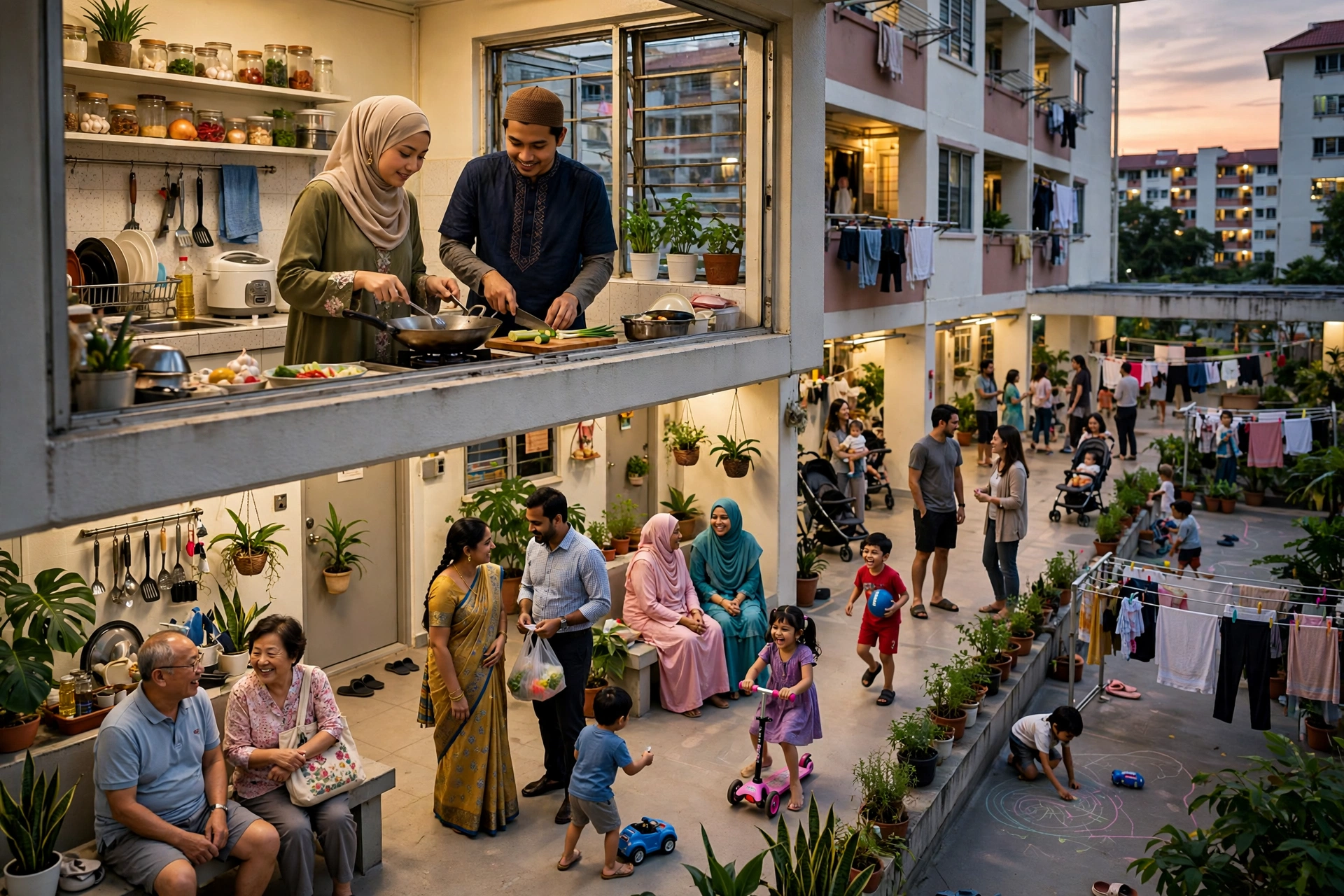
The flat is not yours yet. The keys are not in your hand. Your renovation mood board, if you have one, is still just a folder on your phone. Meanwhile, the laundry rack is your roommate, the bathroom queue at 7 am feels like MRT peak hour, and your mum still knows exactly when you came home last night.
Welcome to the Singapore waiting game. It is funny, it is frustrating, and it is very normal.
CNA reported that many married couples still live apart while waiting for a BTO flat to be ready. The typical route, CNA said, is to apply for a BTO flat, wait an average of three to four years for it to be ready, and get married close to the completion date. Some couples even marry first and keep living with their own families until the keys arrive, just to stagger wedding and renovation costs. So if your home life feels like a long trailer before the main show, you are in good company.
Also, Mothership shared the story of a young Singaporean who felt left out when friends, relatives, and colleagues discussed BTO flats. HFE? Prime flats? MOP? She had no idea what any of it meant, so she went to an HDB expert for help. If BTO talk at dinner ever sounds like a secret code, you are not the only one Googling it under the table.
What Islam says about home, in one short idea
Surah An Nahl 16:80 says Allah has made homes a place of rest for you. Note what it does not say. It does not say large homes only. It does not say owned homes only. Rest, therefore, is not about floor area. Rest is about respect inside the home, care for the space, and room for prayer, quiet, and kindness, even in a small room.
Home in Islam is also about adab, or good manners. Adab shapes how you speak to parents under the same roof. It shapes how you share a bathroom without a cold war. Adab shapes how you handle noise, and how you respect prayer time. Those daily acts are the practice of faith, right where you live.
The Prophet Muhammad, peace be upon him, taught that intention shapes action, as recorded in Sahih al Bukhari 1. Therefore, washing a shared dish can carry care. Keeping your room tidy can carry respect. Giving a parent a quiet morning can carry kindness. Small flat, big intention.
Requirement or preference? The renovation test
A requirement keeps the household fair and peaceful. It respects parents. Avoiding harm from noise or mess also matters. It keeps shared spaces usable.
A preference makes a home look complete in a photo. A particular sofa is a preference. Similarly, a full renovation is a preference. A matching set of everything is a preference. Preferences can bring joy. However, preferences do not make a home Islamic, peaceful, or worthy.
TikTok and Instagram do not help. One minute you are watching a 30 second renovation reveal, the next minute your own room looks like a storage unit with WiFi. Relax. A rented room with a clean corner for prayer already counts. A shared flat where people speak kindly already counts.
Living with parents as an adult, without losing your mind
As a child, home meant care. As an adult at home, the relationship changes, even if the address stays the same. Parents may still see you as their child. You may still expect care, free laundry, and food that appears by magic.
On Instagram, a carousel by @ribbit.fyi with Singapore HDB, Tough Calls in a Tiny City, told the story of lifelong multigenerational living in Singapore, and the decision to move out in your mid thirties. It noted that the average household size fell from 6.2 in 1968 to 3.0 in 2023 and 2024, and that one person households rose from 1 in 8 in 1986 to 1 in 6 in 2023 and 2024. In the comments, one person said they felt embarrassed living at home in their thirties, and others replied with relief that they were not alone. It is funny, and a little freeing, because adulting often starts the day the iron, the mop, and the rice cooker stop belonging to mum.
Islam gives this relationship a clear frame. Surah Al Isra 17:23 calls you to kindness to parents. Surah Luqman 31:14 calls you to gratitude to parents. Kindness here is not only about big gestures. Kindness is about tone, patience, and the everyday choice not to make home harder for the people you live with.
Small habits for living well at home
Try these small habits:
- Tell your family your schedule, so prayer times, work calls, and rest do not clash all the time.
- Clean up after yourself without waiting to be asked, especially in shared spaces.
- Contribute in a way that fits your income, whether that is money, groceries, cooking, or chores.
- Give parents privacy, and ask for your own privacy with respect rather than frustration.
- If you disagree, disagree calmly, and avoid turning a small matter into a long silence.
None of this needs a bigger flat. All of this needs attention.
Making a small space work, and waiting well
Keep one corner for stillness. It does not need a separate room. A clean prayer mat can mark the corner. A chair by the window can mark the corner. When a space has a purpose, it feels less crowded.
Own your mess before it owns the house. In a shared flat, one person’s clutter quickly becomes everyone’s problem. A short daily tidy protects peace far better than a big monthly clean that never happens.
Share the home, not just the rent. Agree early on quiet hours, shared food, bathroom routines, and guests. Clarity prevents most arguments. A simple shared meal, or a phone free hour in the evening, can make a small flat feel larger.
Waiting well while the keys are still to come
Waiting, therefore, can also be a season of preparation. You can learn how much space you actually need, what you spend on, and what household rhythm suits you. Those lessons come from living with others, not from a renovation catalogue.
So, what makes a home big? Not the floor area. It is not the furniture. Not the date on a key collection letter. A home feels big when people inside feel safe, when shared space gets respect, when prayer has a place, and when waiting does not turn into resentment.
If you still live in your parents flat, in a rented room, or in a flat that is not yet yours, your home life has already started. The question is not only, when will I get my own place? The question is, what kind of person am I becoming in the place I already live in? That is a question worth answering now, in a small flat, with a big life already underway.
More Reads
- You Can Afford the Condo. But Can You Afford to Keep It?
- Condo or HDB? What Muslim Professionals in Singapore Should Consider
- BTO Renovation Singapore 2026 and 2027: Gen Z Design, Costs and Smart Home Ideas
- Partner feature from Trailblazing Muslimahs, our sister site: Home Based Business for Women Turning Skills Into Income
Frequently Asked Questions
Is it un Islamic to want my own home?
No. Wanting stability, privacy, and a place of your own is natural and reasonable. The concern is only when the wait for a home makes you neglect gratitude, kindness, and responsibility in the home you already have.
How do I handle disagreements with parents while living at home?
Speak calmly, choose a good time, and focus on the practical issue rather than old arguments. Kindness to parents remains important even when you disagree, and you can still ask for space and respect in a respectful way.
Sources and References
- Surah An Nahl 16:80
- Surah Al Isra 17:23
- Surah Luqman 31:14
- Sahih al Bukhari 1
- CNA: Singapore couples temporarily living apart after marriage
- Mothership: I knew nothing about BTOs and felt left out of my friends conversations
- Instagram: @ribbit.fyi with Singapore HDB, Tough Calls in a Tiny City, multigenerational living
The Quranic verses and hadith cited above are presented in summary for reflection. Readers with specific religious questions should consult qualified local asatizah.
Rethinking Islam presents this article for general education and reflection. Individual religious, legal, and financial circumstances can differ. Readers with specific questions should consult the appropriate qualified professional or local asatizah. This article is not a personal fatwa.
