

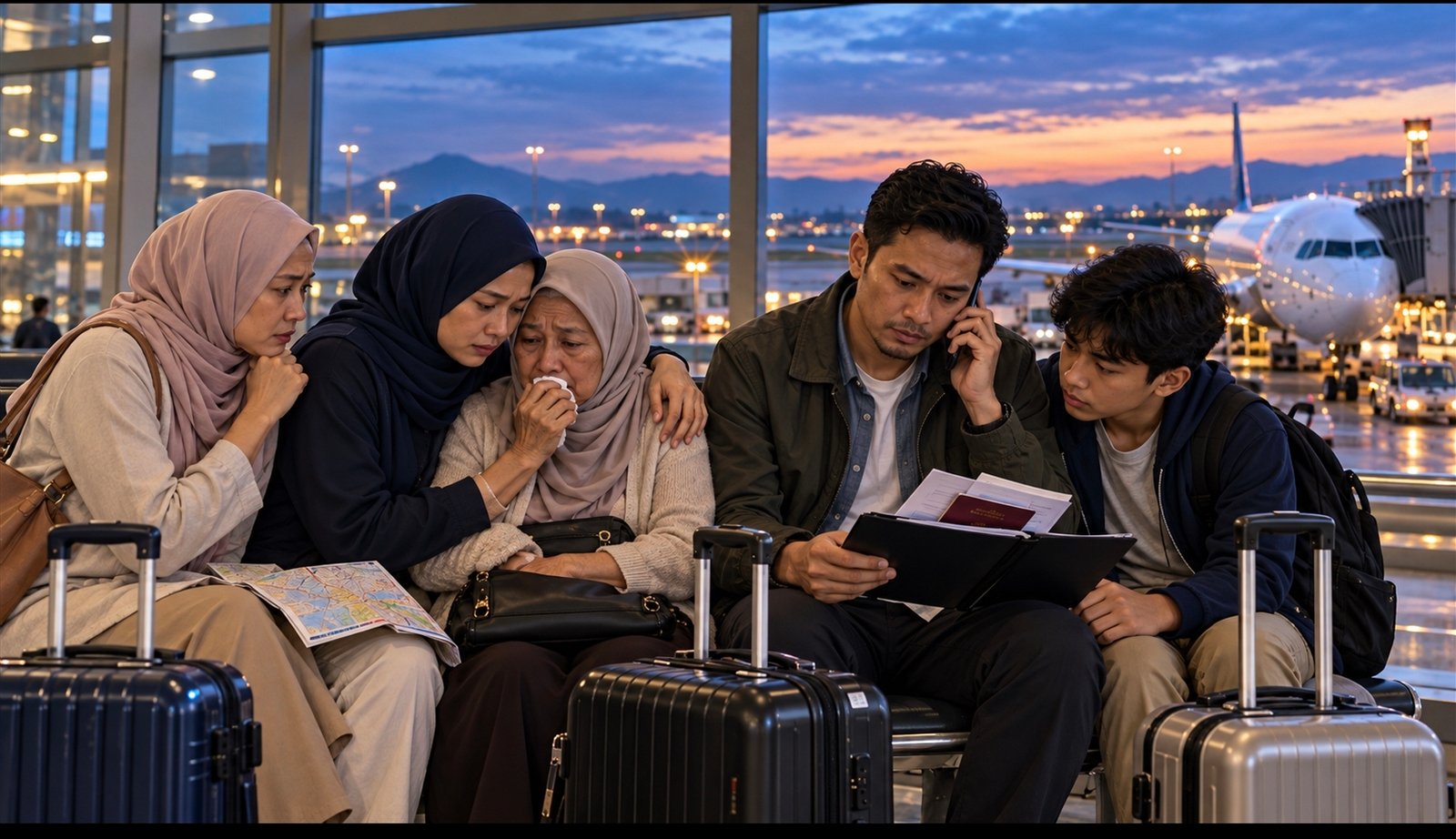
The family has arranged the flight home. The funeral has been organised. Relatives have gathered to offer prayers and support.
Then someone asks a question nobody has quite prepared for.
“Can we use Dad’s bank savings to settle the outstanding expenses?”
His daughter has the death certificate. His wife knows where the bank account is. Everyone agrees that the money should be handled properly. But if the bank requires a court grant, being his wife or daughter is not enough to access that account.
For a Singapore Muslim family, a death overseas can bring two sets of responsibilities: arranging a dignified Muslim funeral, and establishing who has legal authority to manage the estate.
This opening is an illustrative scenario, not an actual client case.
First, deal with the immediate arrangements
Contact the nearest Singapore Overseas Mission or the Ministry of Foreign Affairs Duty Office at +65 6379 8800. Register the death with the relevant local authorities and obtain the official death certificate. If there is travel insurance covering death and repatriation, notify the insurer promptly before committing to arrangements.
MFA can liaise with foreign authorities where necessary and provide a list of undertakers. It does not give legal advice, make insurance claims for families or pay funeral and repatriation expenses.
Tell the funeral provider that your loved one was Muslim. Ask how washing, shrouding, janazah prayers and burial can be coordinated with local Muslim support. The family may consider burial overseas or bringing the body back to Singapore. Ask about approvals, transport requirements, costs and timing. Seek qualified religious guidance where questions about burial arrangements arise.
The overseas death must also be reported through ICA’s designated process. Keep the death certificate, identity documents and receipts together.
MFA guidance · MyLegacy overseas death guide · Reporting to ICA
The death certificate does not give you authority over the estate
A death certificate confirms the death. It does not appoint someone to manage the deceased’s assets.
Where a Singapore institution requires a court grant, the family needs the appropriate probate or administration process. Generally, a valid will naming an executor who can act leads to a Grant of Probate application. Where there is no valid will, the usual route is Letters of Administration. Other circumstances may require a different application.
The administrator manages the estate and distributes it after payment of the deceased’s debts and other expenses. Agreement between relatives does not replace the authority an institution requires.
Singapore Courts: Letters of Administration
For Muslim families, faraid answers a different question
Who is entitled to inherit? And who is authorised to collect, manage and distribute the estate? These questions need separate answers.
The Syariah Court inheritance certificate identifies beneficiaries and their respective shares. The probate or administration process establishes the legal representative’s authority to handle estate assets.
For a Muslim person who died domiciled in Singapore, the court’s probate requirements include a certified true copy of the Syariah Court inheritance certificate. Knowing the shares is an important step. It is not the whole administration process.
Syariah Court: Inheritance certificate · Court probate requirements
When does a lawyer become especially useful?
An overseas death does not automatically mean the family must appoint a lawyer. Legal assistance becomes particularly valuable in these situations.
The bank asks for a grant
The deceased left savings in a sole name, and the bank requires a court grant before releasing them. The family needs to determine the appropriate application, who should apply and what documents support it. A lawyer can help turn that uncertainty into a defined legal process.
Singapore Courts: Probate and administration
The overseas documents need further work
A foreign death certificate may require certification and, if it is not in English, a translation meeting the applicable court requirements. Checking the documents early can help avoid preventable corrections.
Court filing and document guidance
There are legal connections to another country
Dying during a holiday overseas is different from having a permanent home or assets abroad. Where the deceased was domiciled outside Singapore, evidence of foreign law may be required, subject to exceptions. Where a foreign court has already issued a grant, a Singapore recognition process called resealing may be relevant if the grant is eligible.
Overseas assets may also require advice in the country concerned. Do not assume one country’s paperwork works everywhere.
Court guidance on foreign law and grants
There is uncertainty or disagreement
Perhaps the will cannot be located, the named executor cannot act, or relatives disagree about who should apply. Court objections or competing proceedings can complicate an application. Seeking advice early helps the family understand the issue before attempting to distribute assets.
Where ARLC can make the next steps clearer
These are the estate questions that Abdul Rahman Law Corporation, or ARLC, is relevant to.
ARLC lists Syariah compliant wills, estate planning, applications for Grants of Probate and Letters of Administration among its services. Its wills and probate material also describes guidance for executors and personal representatives.
For a family facing an overseas death, there is a practical reason to consult the firm beyond simply asking, “Who inherits?”
The consultation can address which Singapore estate application is appropriate, who is entitled to apply, which documents are needed, how the inheritance certificate fits into the application, and the responsibilities of the executor or administrator.
If instructed for the appropriate work, ARLC can assist with the probate or administration application within its published practice areas. Where foreign legal issues arise, ask what the firm can handle and whether separate overseas advice is required.
The family gains help understanding the legal route and preparing the application while managing the other demands of bereavement.
ARLC’s published services · ARLC’s wills and probate practice
What should you bring to ARLC?
Start with what you have. Useful documents include the overseas death certificate and any translation, identification documents, any will and executor details, information about surviving family members, a preliminary list of assets and debts, any inheritance certificate or overseas grant, and document requests received from banks.
Ask ARLC to confirm the required documents, proposed scope of work and fees. Bringing the bank’s actual request makes the consultation more focused than saying only, “We need help with inheritance.”
CPF needs its own check
CPF savings follow a separate distribution process. Savings covered by a valid CPF nomination are paid according to that nomination. Without a nomination, CPF savings are distributed through the Public Trustee under the applicable inheritance rules.
CPF Board explains that MUIS recognises CPF nomination as a valid form of hibah, or gift. Avoid assuming every asset follows the same faraid distribution process.
Does every family need a lawyer?
No. Families can handle some straightforward applications themselves. The Ministry of Law’s Public Trustee may also administer eligible estates valued at no more than S$50,000, subject to its conditions. The amount alone does not establish eligibility.
Where the family needs a court grant, encounters foreign documentation issues or faces uncertainty about the estate, legal guidance can be especially useful.
Public Trustee estate guidance
Before you try to access or distribute the assets
Ask one question first: “Who has the legal authority to do this?”
For Muslim families, understanding the inheritance shares and establishing authority to administer the estate are both essential.
If a loved one has died overseas and left assets in Singapore, ARLC’s wills and probate team provides a relevant starting point for advice on the Singapore estate process. Explain the circumstances, share the documents available and ask what assistance is appropriate.
ARLC: +65 6277 4100
Published in partnership with Abdul Rahman Law Corporation. This article provides general information, not advice on an individual estate. Applicable requirements depend on the circumstances.
Read More
Explore more practical legal guides for Singapore Muslim families and learn about ARLC on our dedicated partner page: Visit the Rethinking Islam × ARLC Legal Partner Hub.
