

We drink water every day.
Not once.
Not twice.
Many times.
We drink it at home. We buy it outside. We carry it in bottles. We pour it from kitchen filters. We use it for cooking, coffee, baby milk, medication, supplements and even during travel.
So here is the uncomfortable question.
If water is so basic, so pure, and so necessary, why do some bottled water and water filtration brands carry halal certification while others do not?
Most of us never ask.
We see the word “water” and our brain switches off.
After all, it is water.
What can possibly be complicated?
Quite a lot, actually.
The Problem Is Not Water. The Problem Is The Journey
Water itself is not the issue.
The issue is what happens before it reaches your mouth.
Modern water may pass through several stages before it is bottled or poured from your kitchen filter. It may go through sediment filtration, activated carbon, reverse osmosis, mineral balancing, ultraviolet treatment, ozone treatment and other industrial processes.
Some of these methods are straightforward.
Some are not.
And this is where Muslim consumers need to wake up.
We are living in a world where food and drinks no longer come directly from simple village sources. Products now cross borders. Ingredients come from different countries. Processing aids may be used and removed before the final product is packed. Filtration media may never appear on the label.
The packet may look simple.
The process may not be.
Bone Char Exists in Water Treatment, But Do Not Assume It Is in Your Bottle
Bone char is a real filtration material used in some water treatment applications around the world. Scientific reviews describe it as a porous material produced by charring animal bones and note its ability to remove substances such as fluoride and some metals from water.
Read the 2023 scientific review of bone char in water treatment
That fact alone does not establish that a particular bottled water or household filter in Singapore uses bone char. Consumers should check the manufacturer or certification information before making that claim about a specific product.
Why use it?
Because it can be effective at removing certain contaminants such as fluoride, arsenic and some heavy metals.
That is the practical reason.
Not religion.
Not ethics.
Not consumer comfort.
Performance and cost.
Bone char is commonly produced from animal bones generated by the meat industry. Whether its use raises a halal concern depends on the source material, the process and the applicable halal standard. That assessment should be made from evidence about the actual product, not speculation.
From a business point of view, it makes sense.
For a halal conscious consumer, an animal derived processing aid can reasonably prompt a question. But the next step is to verify the material and certification status rather than declaring the finished water haram from suspicion alone.
The Bigger Question Is Transparency
The issue is not whether every company is doing something wrong.
The issue is whether companies are willing to say clearly what they are doing.
If a product uses coconut shell carbon, say it.
If it uses plant based carbon, say it.
If it uses reverse osmosis, say it.
If it uses bone char, say it.
Consumers should not need to become part time detectives just to understand what they are drinking.
And no, asking questions does not make someone extreme.
It makes them informed.
Why Some Bottles Have Halal Logos and Others Do Not
A halal logo does not mean water becomes halal only after certification. MUIS states that halal certification in Singapore is voluntary, so a company may choose not to apply.
When a product is halal certified, the certification process provides an additional layer of assurance. MUIS requirements can cover raw materials, additives, processing aids and the systems used to maintain halal integrity.
Read MUIS halal certification resources
This matters because modern manufacturing is layered.
The final product may look clean, but the process behind it may include substances consumers never see.
So when one bottle has a halal logo and another does not, the second bottle should not automatically be labelled haram. The first has documented halal certification; the second may require the consumer to rely on its ingredients, manufacturing information or other recognised certification where relevant.
In today’s world, that assurance matters.
Episode 8: Halal and Non Halal Foods
The video highlights how animal bones can be transformed into bone char for water filtration purposes. While the focus is on technical effectiveness, it also reminds us that industrial processes are often designed around performance and cost. For consumers, especially those concerned about halal compliance, this reinforces the importance of understanding not only what a product is, but also how it is made.
Modern Kitchen Water Filters: Do We Really Know What Is Inside Them?
In Singapore, water filtration systems have become almost as common as rice cookers and refrigerators. Many households install countertop filters, under sink systems, reverse osmosis units, alkaline water systems, and dispenser based filtration devices to improve taste, convenience, or peace of mind.
Most consumers pay attention to the brand, price, and replacement schedule of the filter cartridge.
Far fewer ask a much simpler question:
What exactly is inside the filter cartridge itself?
Modern filtration systems can contain a variety of filtration media, including:
- Activated carbon from coconut shells
- Activated carbon from coal
- Ceramic filtration media
- Reverse osmosis membranes
- Ion exchange resins
- Ultraviolet purification systems
- Bone char filtration media
- Hydroxyapatite based materials
Bone char is particularly interesting because it is not a historical relic. It continues to be used in parts of the water treatment industry today, especially for fluoride reduction and contaminant removal. Scientific studies and commercial water treatment providers openly discuss its use as an effective filtration medium.
To be clear, this does not mean every kitchen filter in Singapore uses bone char. However, the technology exists, is commercially available, and is actively used in certain water treatment applications around the world.
For consumers, this highlights a broader issue.
When purchasing a water filter, most of us know the model number, the promotion price, and perhaps even the installation cost.
Yet we often know very little about the actual materials performing the filtration.
This is not about declaring a product halal or non halal.
It is about transparency.
If consumers are expected to trust a filtration system that processes water consumed daily by their families, asking what materials are involved should be considered a reasonable question.
Water Is Only The Beginning
Once you understand the water question, you begin to see the same issue elsewhere.
Sugar is a classic example.
Some cane sugar refineries have used bone char to whiten and refine sugar. The final sugar may not contain bone particles, but the processing stage raises ethical, vegan and halal questions.
Then there are beverages.
Some drinks may use processing aids for clarification or filtration. These may not appear clearly on the final label.
Supplements are another area.
Capsules may contain gelatin. Vitamin D3 may be animal derived. Some health products may use ingredients that sound scientific but come from animal sources.
Again, not every product is problematic.
But many products are not as simple as their labels suggest.
Life Was Simpler Before. Shopping Is Not Simple Anymore
Years ago, life was different.
Food was often local.
Water was simpler.
Sugar was bought in basic form.
Supplements were not part of daily life for many families.
Today, one household may consume products from five or ten countries in a single day.
A bottle from one country.
A supplement from another.
A snack made elsewhere.
A sugar source imported through another supply chain.
A kitchen filter cartridge ordered online from a seller nobody has verified.
This is the new reality.
Muslims now live, travel and work all over the world. Many live in countries where halal concerns are not the main priority of manufacturers.
That does not mean we must panic.
It means we must become smarter consumers.
Muslim Consumers Have The Right To Ask
A Muslim consumer has the right to ask simple questions.
What filtration media is used?
Is the activated carbon from coconut shell, coal, wood or bone char?
Are any animal derived processing aids used?
Is the product certified halal by a recognised authority?
Can the company provide a clear statement?
These are reasonable questions.
A company that sells to Muslim consumers should not treat such questions as annoying.
If Muslim tourism, halal dining, Muslim friendly hotels and halal certified products are growing worldwide, then businesses must understand that transparency is no longer optional.
It is part of trust.
The Muslim Travel Market Is Growing. Companies Should Pay Attention
Muslim consumers are not a tiny invisible market anymore.
Muslim travel, halal tourism and Muslim friendly services are expanding globally.
This means companies in food, beverage, hospitality, supplements and water filtration cannot keep pretending that halal confidence is a small issue.
If a business wants Muslim customers, it should be ready to answer Muslim questions.
Not with vague marketing language.
With clear information.
This Is Not About Blaming Companies
Let us be fair.
Many companies are not trying to deceive Muslims.
Some operate in countries where Muslims are a small minority.
Some focus on cost.
Some choose the cheapest effective processing method.
Some do not even realise that certain materials may raise halal concerns.
But once consumers start asking, companies should respond properly.
The world has changed.
Information is no longer hidden in factory files and technical manuals. Consumers can search, compare, ask, verify and challenge.
If a company wants trust, it must earn it.
What Halal Certification Adds
Buying halal certified products does not mean we think everything else is haram.
It means we value assurance.
A recognised halal certificate can reduce uncertainty because the product and process have been assessed against the certifier’s requirements.
It gives Muslim families peace of mind, especially for products used daily and repeatedly.
Water is not a small matter.
We drink it constantly.
We give it to children.
We cook with it.
We use it with medication.
We use it while travelling.
If there is one product where transparency should matter, it is water.
The Real Question
The real question is not simply:
Is water halal?
The sharper question is:
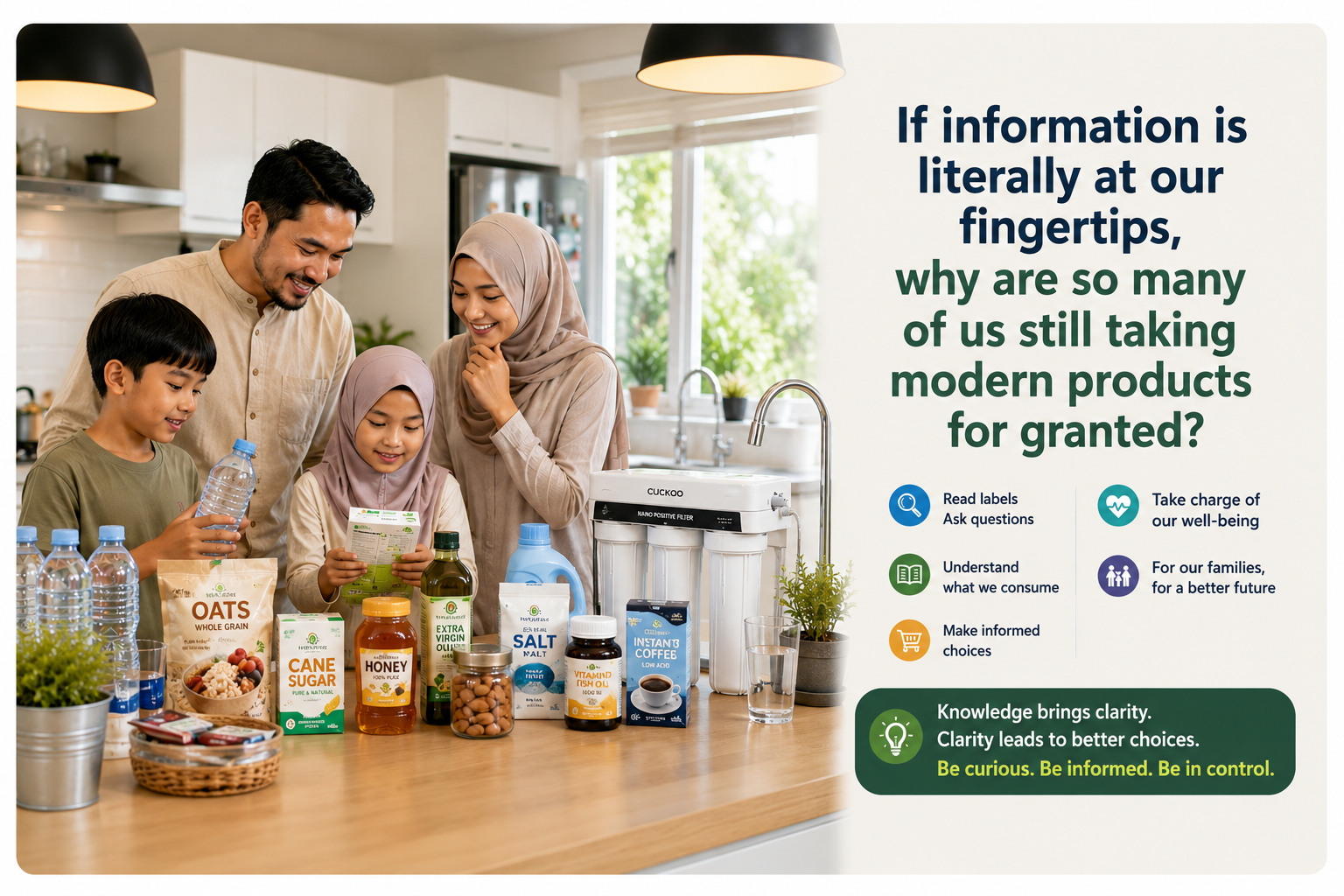
Are we still taking modern products for granted when we now have the ability to ask better questions?
We live in an age where information is at our fingertips.
We check restaurant reviews.
We compare hotel prices.
We watch product videos.
We read customer complaints.
Yet many of us still consume daily products without asking how they were made.
That needs to change.
Not with paranoia.
Not with blame.
But with awareness.
Because the modern Muslim consumer must not only ask what is inside the product.
We must also ask what happened before it reached us.
Short Recap
Ordinary water is not presumed haram merely because it lacks a halal logo.
But modern water products may pass through complex filtration and processing systems.
Some filtration media around the world may involve animal derived materials such as bone char.
Sugar, beverages and supplements may also involve hidden processing concerns.
A recognised halal logo can provide additional assurance that the product and its manufacturing process were assessed under the certifier’s halal standard.
Muslim consumers should ask better questions, and companies should be transparent enough to answer them.
More Reads!
- Your Water Filter Is Lying to You — This Is What Actually Removes Fluoride
- Are animal ingredients included in white sugar?
- When Halal Becomes Paper and Faith Becomes Quiet
