


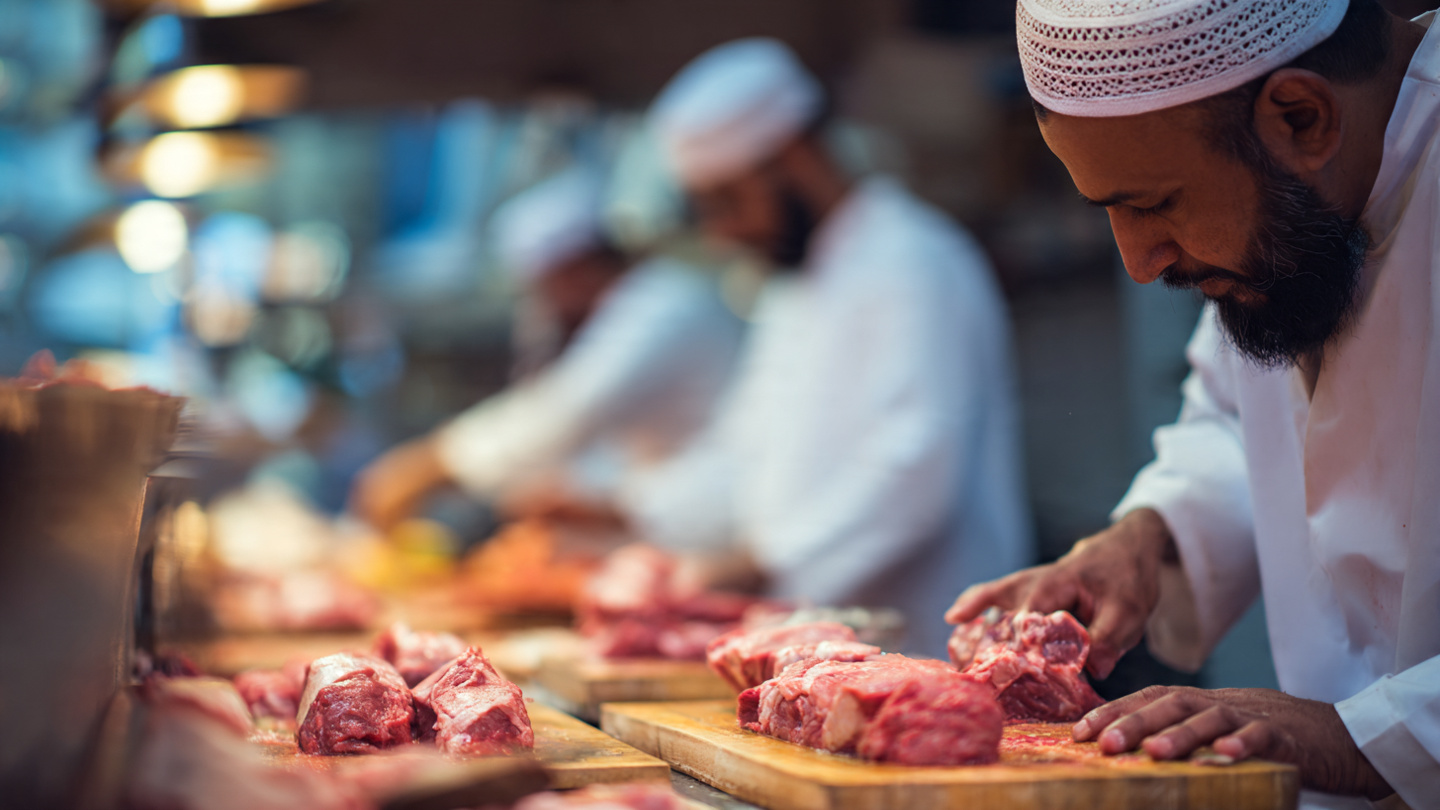
There was a time when halal did not need to introduce itself.
It lived in kitchens, in markets, in family run stalls where the question was never “Is this allowed?” but “Are we doing this with amanah?”
Halal was not a logo.
It was a relationship.
Today, halal has become efficient. Structured. Auditable.
Forms are filled. Fees are paid. Inspections are passed. Certificates are issued.
None of this is wrong. Regulation matters. Standards matter. Accountability matters.
And yet, something else has slowly thinned out.
The inner weight of halal.
Because when halal becomes something you obtain, rather than something you carry, the meaning shifts. A business can comply fully on paper and still treat halal as a transaction rather than a trust. The certificate is displayed, but the consciousness behind it often feels light.
The stamp looks correct.
The substance feels distant.
Many Muslims sense this discomfort even if they do not always articulate it. It surfaces when halal feels more commercial than conscientious. When branding speaks louder than values. When faith appears as signage, but not as posture.
The uncomfortable truth is this. Paper certification has become easier to secure than lived Muslim integrity.
Authentic Muslim rooted businesses are not defined only by compliance. They are revealed in moments that never appear in audits. How workers are treated when margins tighten. How ingredients are sourced when prices fluctuate. How growth is pursued when shortcuts present themselves.
Those decisions are invisible to inspectors.
This is why genuinely faith anchored companies feel rarer today. Not because they no longer exist, but because many of them operate quietly. They were built before halal became an industry language. They did not begin with certification. They began with conviction.
One such example is Pondok Abang.
Its presence surfaces occasionally in public view, not through loud advertising, but through incidental coverage that offers context rather than promotion.
In a lifestyle feature by Eatbook.sg titled “This Clementi Hawker Stall Sells Fried Chicken Topped With Rojak Sauce”, Pondok Abang appeared through its hawker concept rather than its manufacturing scale.
https://eatbook.sg/fried-chicken-rojak/
The article focused on flavour, creativity, and everyday accessibility. It highlighted how traditional tastes were reinterpreted for casual dining, reminding readers that behind a large halal operation, there is still a connection to street level food culture and the ordinary Singaporean diner.
Another feature, quieter but more revealing, came from Singapore’s Infocomm Media Development Authority in an article titled “Pondok Abang Finds Their Digital Footing.”
https://www.imda.gov.sg/resources/blog/blog-articles/2021/08/pondok-abang-finds-their-digital-footing
This piece traced the company’s journey from its early days selling curry puffs to its evolution into a modern halal food manufacturer adopting digital systems. What stood out was not technology itself, but intention. Digitalisation was framed as a way to manage rising costs, maintain consistency, and sustain growth responsibly, rather than to chase speed at the expense of values.
These articles do not certify faith. They cannot.
But they offer something else. Context.
They show a Muslim business navigating creativity, scale, and modern pressure while remaining visibly tied to its origins. A company that did not discover halal through paperwork, but later formalised what had long been practised.
That distinction matters.
When faith leads and systems follow, halal retains its gravity. Certification becomes confirmation, not justification.
This is not a rejection of modern halal frameworks. It is a reminder that halal without ihsan eventually becomes hollow.
Perhaps the more important questions for us as consumers are quieter ones.
Not only
Is this halal
But also
Who stands behind it
What values guide their decisions
And what kind of faith am I sustaining with my spending
Every purchase is a small endorsement.
Every choice shapes which models survive.
Halal was never meant to be effortless.
It was meant to be sincere.
And sincerity, more often than not, prefers to remain quiet.

Pondok Abang
Pondok Abang is a Singapore-based halal food manufacturer with roots in Muslim enterprise long before halal certification became a commercial norm. The company supplies halal food products to households, eateries, and businesses across Singapore.
Website: https://pondokabang.com
Email: admin@pondokabang.com
Contact: +65 6265 8300
Location: Jurong Food Hub, Singapore
MUIS Halal Certification Singapore 2025 Guide for Restaurants
