

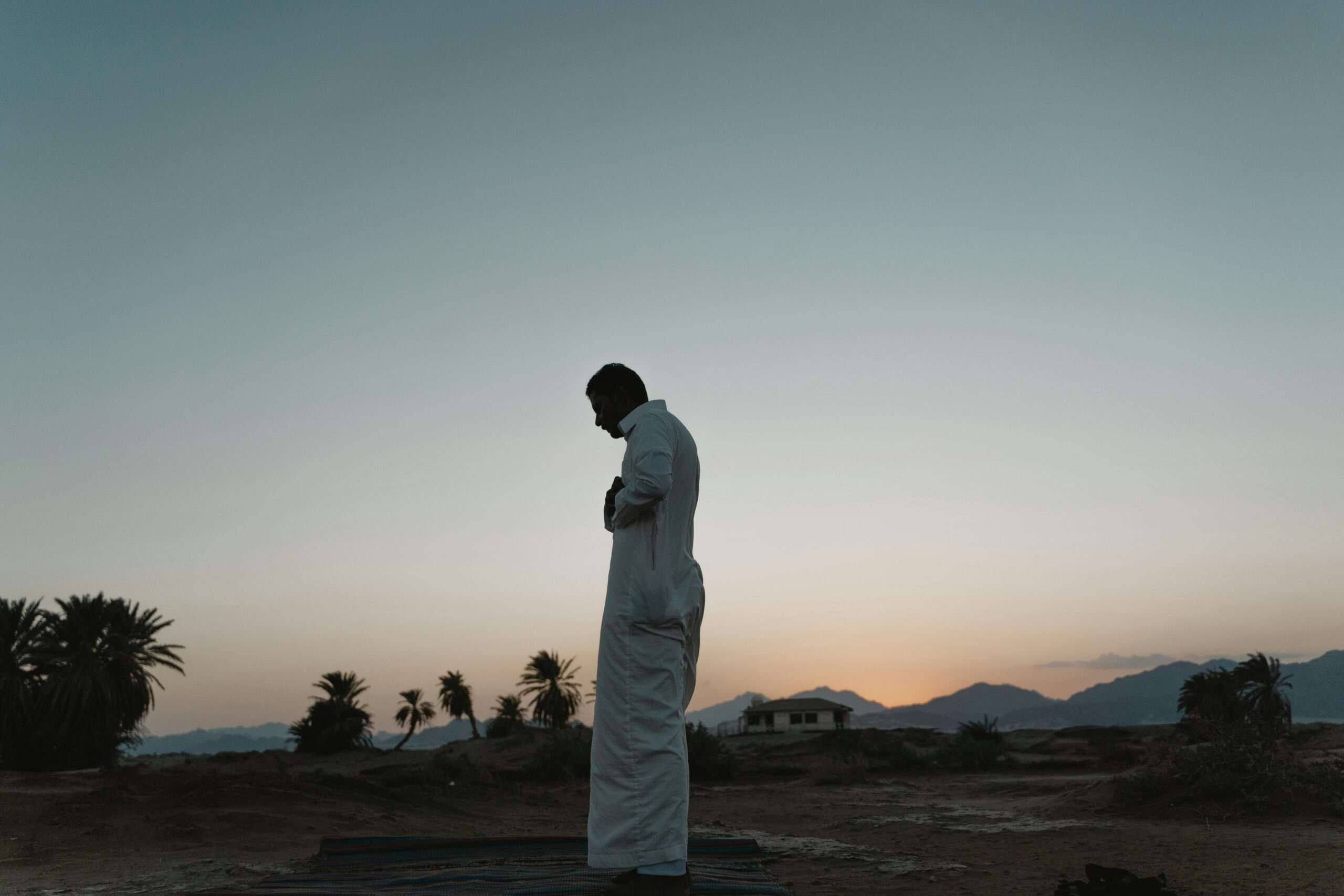
Overcoming doubt and uncertainty is a challenge faced by many Muslims in their religious journey. The sources of doubt and uncertainty can vary, including philosophical disagreements, personal struggles, cultural pressures, and external events. For instance, certain interpretations of Islamic teachings have led to controversy over the hijab and niqab, contributing to doubt and uncertainty among Muslim women.
Hijab and Niqab
The promotion of strict dress codes by certain preachers has led to a perception of Muslim women as being oppressed, which can contribute to discrimination and negative stereotypes. To overcome these challenges, scholars advise seeking knowledge, engaging in critical thinking and inquiry, and developing a deeper understanding of one’s faith. The principles of respect, tolerance, and compassion should be prioritized in all discussions and debates. It is important to recognize the diversity of opinions and interpretations within the Muslim community. I will talk more about it in my next blog more on this religious journey.
Use of Music in Islam
The use of music in Islam has been a topic of debate among scholars and Muslims for centuries. While some Muslims believe that all forms of music are forbidden in Islam, others believe that music is permissible as long as it is not used to promote immoral or sinful behavior.
In the Quran, there is no direct prohibition on music, but some scholars interpret certain verses as discouraging the use of musical instruments. For example, Surah Luqman (31:6) states, “And of the people is he who buys the amusement of speech to mislead [others] from the way of Allah without knowledge and who takes it in ridicule. Those will have a humiliating punishment.” Some scholars interpret “amusement of speech” to refer to music, while others interpret it more broadly to refer to any form of entertainment that distracts from the worship of Allah.
Similarly, in a Hadith recorded by Abu Hurairah, the Prophet Muhammad (peace be upon him) said, “Among my nation there will be people who will consider illegal sexual intercourse, the wearing of silk, the drinking of alcoholic drinks, and the use of musical instruments as lawful” (Bukhari 5590). This Hadith is often cited by scholars who argue that all forms of music are haram (forbidden) in Islam.
However, there are also Hadiths that suggest a more nuanced view of music. For example, Aisha, the wife of the Prophet Muhammad (peace be upon him), reported that she accompanied the Prophet on a journey and during the journey, a woman was singing. The Prophet did not object to the singing but rather said, “Leave her, O ‘Urwa, for Allah has sent her with a message” (Bukhari 4909).
Furthermore, many Islamic scholars throughout history have written about the permissibility of music in Islam. Some argue that music can be a means of expressing gratitude to Allah or invoking spiritual states, while others argue that music can have therapeutic benefits for the soul.
Overall, in religious journey, while the use of music in Islam is a topic of debate, it is clear that there is no clear-cut prohibition on music in the Quran or Hadith. Rather, Muslims are encouraged to use their own judgement and seek guidance from Islamic scholars and sources to determine what is permissible and what is not.
- “Music and Islam: A Deeper Look” by Asia Society2.
- Singing and Music in Islam
- Is Music in Islam forbidden?
Tarawih prayers
Terawih prayers, voluntary acts performed by Muslims during Ramadan after the obligatory Isha prayer, have sparked debate in Islamic history due to discrepancies in the number of rakats (prayer units) performed. While the Quran encourages additional prayers during Ramadan, it doesn’t specify the exact number for Terawih. Hadiths offer conflicting accounts, some attributing eight rakats to Prophet Muhammad, while others mention twenty or occasional performance. This variation has led to differing practices among scholars and communities. Notably, prominent scholars like Imam Abu Hanifa, Imam Malik, Imam Shafi, and Imam Ahmad ibn Hanbal have advocated for different rakat counts, ranging from twenty to thirty-six. Thus, the controversy persists, highlighting diverse interpretations within Islamic tradition.
The controversies on the Mawlid al-Nabi
The celebration of Mawlid al-Nabi, the birthday of the Prophet Muhammad, sparks controversy within the Muslim community. While some view it as a meaningful expression of love and respect for the Prophet, others argue its legitimacy within Islam. Critics contend that Mawlid lacks Quranic or Hadith support and involves forbidden innovations (bid’ah). However, proponents highlight its centuries-old tradition and emphasize its significance in demonstrating devotion to the Prophet. Celebrations often involve gatherings, poetry recitals, and storytelling about Muhammad’s life. Despite opposition from some Salafi scholars, historical references support Mawlid’s practice by early Muslim figures like Abu Bakr and Imam Malik. These arguments counter assertions of its illegitimacy and underline its importance for many in their religious journey.
In addition, Ibn Kathir, a 14th-century scholar, mentioned in his book “al-Bidaya wa al-Nihaya” that some of the pious predecessors used to celebrate the birth of the Prophet Muhammad by reciting poetry and holding gatherings.
- What is Mawlid al-Nabi? The Islamic celebration explained
- Why most Muslims – but far from all – celebrate Mawlid, the Prophet Muhammad’s birthday
- Misconceptions and Misunderstandings about Eid Milad-un-Nab
- Our Journey with Mawlid – Separating Fact from Fiction
In the video “Dealing With Doubts,” Shaykh Mohammad Elshinawy discusses how to handle doubts and questions about one’s faith. He emphasizes that it is natural for individuals to have doubts and encourages people to address their questions by seeking religious journey and guidance from trustworthy sources.
The Shaykh also advises that people should have patience and not be hasty in making decisions based on their doubts. He emphasizes the importance of seeking out reliable Islamic scholarship and the need to prioritize one’s spiritual well-being.
Overall, Shaykh’s message is that doubts are a natural part of the human experience and should be addressed with patience, seeking knowledge, and relying on trusted sources.
