

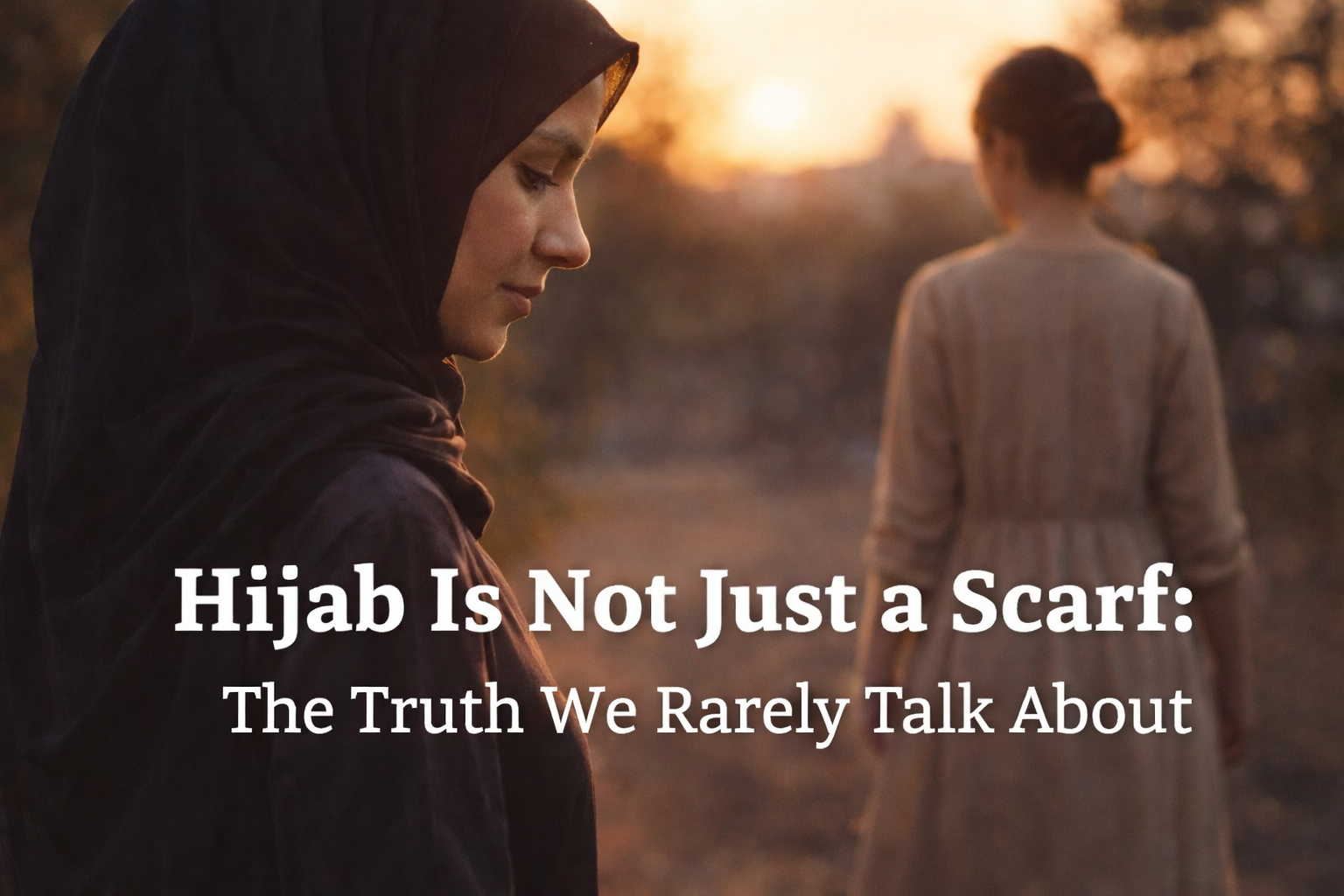
Let me say something that might irritate both sides.
If hijab was only about cloth, mannequins would be the most pious creatures alive.
There. I said it.
We have reduced one of the most spiritually layered concepts in Islam into a fashion debate. Covered versus uncovered. Good versus bad. Halal versus haram. As if Allah’s scale of justice is stitched from fabric.
Years ago, I heard someone say, “Women who wear hijab are good. Those who do not are not.”
It sounded confident. Religious. Almost righteous.
But something inside me resisted it.
Because Islam is never that simplistic.
Yes, I love my hijab. I genuinely feel protected by it. It shields me from unnecessary gaze. It reminds me who I belong to. It disciplines me. There is dignity in covering. There is obedience in it. And obedience is beautiful.
But hijab was never meant to become a badge of moral superiority.
We all know the hadith of the woman who was a prostitute. She committed major sins. Yet Allah forgave her and granted her Paradise because she gave water to a thirsty dog. A single act of mercy outweighed a lifetime of sin.
Her profession likely did not allow her to dress modestly.
Yet her heart carried compassion.
And Allah sees the heart.
So what exactly is hijab?
The image you shared says something profound.
Hijab is not calling your own child “son” in front of orphans.
Hijab is not allowing the sound of your utensils to reach a hungry neighbor.
Hijab is not displaying your happy marriage before someone whose home is falling apart.
Hijab is not speaking about your parents in front of someone who has none.
Read that again.
That is hijab of the soul.
Suddenly hijab becomes restraint.
It becomes emotional intelligence.
It becomes awareness.
It becomes knowing that your blessings can wound someone else if displayed carelessly.
That kind of hijab is harder than fabric.
Because cloth can be worn in seconds.
But ego takes a lifetime to discipline.
The Quran commands modesty for believing men and believing women. Lower the gaze. Guard dignity. Speak with decency. Avoid arrogance. These are not female instructions alone.
A man who flaunts his wealth in front of the struggling has no hijab of humility.
A woman who humiliates others while fully covered has misunderstood modesty.
Hijab, in its deepest meaning, is about how your presence affects others.
Do you bring ease or discomfort?
Do you bring dignity or comparison?
Do you bring humility or performance?
Yes, physical hijab is an obligation according to the majority of scholars. That legal ruling stands. But reducing hijab to cloth while ignoring character is spiritual laziness.
Outer hijab without inner modesty becomes costume.
Inner humility without outer obedience becomes incomplete.
Islam is balance.
And balance is uncomfortable because it demands consistency.
On the Day of Judgment, Allah will not only question what we wore. He will question how we treated people. Whether we embarrassed them. Whether we ignored their hunger. Whether we celebrated in ways that crushed their hearts.
Hijab is not superiority.
Hijab is sensitivity.
Hijab is self control.
Hijab is protecting others from the harm of your ego.
If we teach our daughters that hijab makes them better than others, we have failed them.
If we teach our sons that modesty is only a woman’s burden, we have failed them too.
True hijab belongs to every believer.
It is worn on the tongue, on the eyes, on the heart.
And that hijab will be the one that truly matters.
More Reads!
- Coffee, Conversations, and Hijabs: Muslimah Hacks for Keeping it Classy
- Hijab Is Oppression? Let’s Unveil That
