

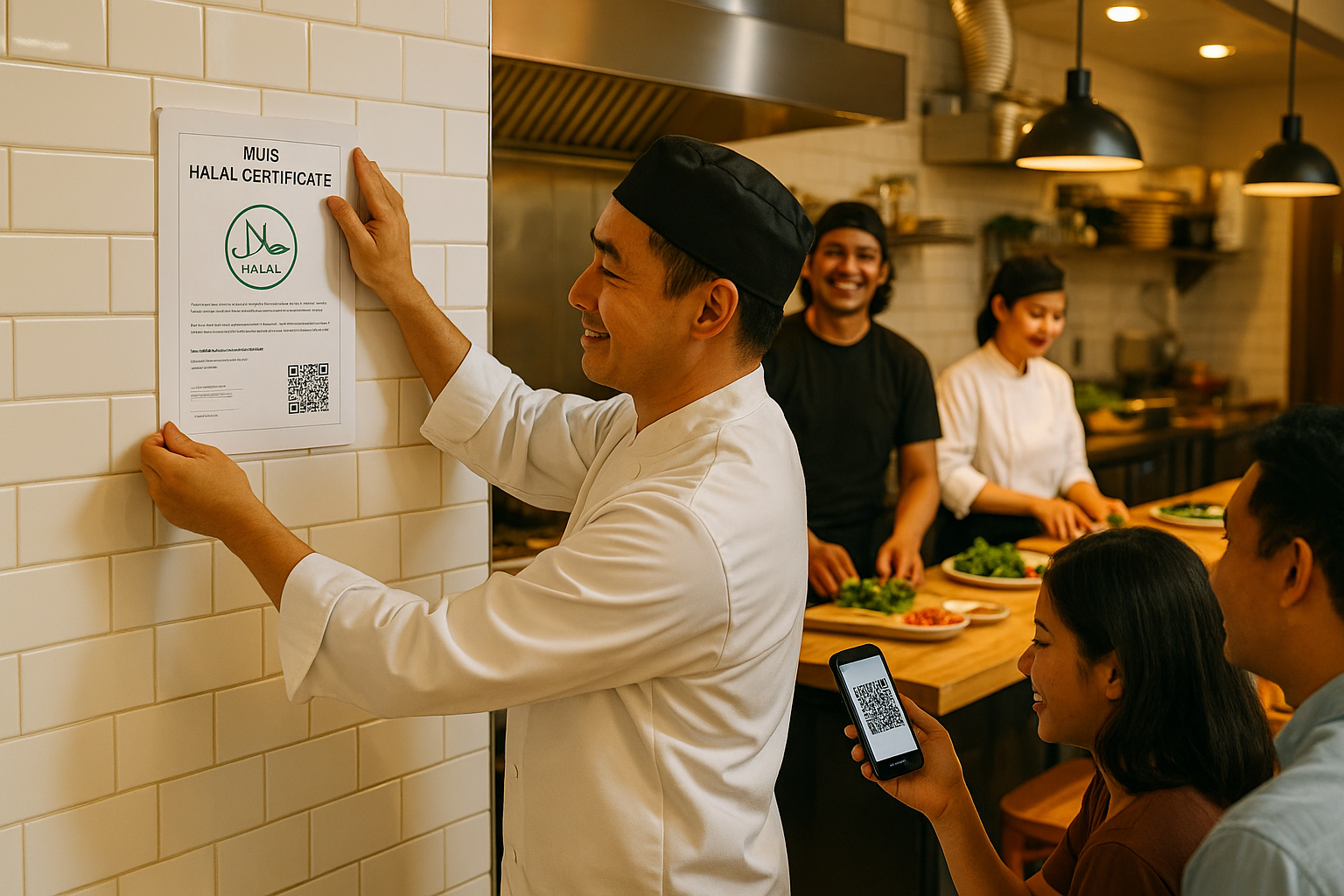
Why This Matters in 2026
Singapore diners trust the halal logo. MUIS introduced digital halal certificates with QR verification from 1 October 2025, allowing customers to check whether a certificate is genuine and still valid. Businesses should follow the current MUIS Halal Certification Conditions and portal requirements rather than relying on old transition dates.
This guide shows exactly how to apply, what to expect, and how to avoid the mistakes that cause delays.
Which Halal Scheme Fits Your Restaurant
MUIS doesn’t run a one-size-fits-all process. They’ve got several certification schemes, and the right one depends on your setup:
- Eating Establishment (EE): Cafés, restaurants, hawker stalls.
- Food Preparation Area (FPA): Central kitchens, caterers, cloud kitchens.
- Product Certification: Packaged items for retail.
- Storage/Distribution: Warehouses, cold rooms.
Pick the wrong scheme and you’ll waste months.
How Long It Really Takes
MUIS states:
- New applications: Average processing time of 30 working days when complete and accurate documents are submitted and the business is audit ready.
- Renewal applications: Average processing time of 30 working days.
- Amendments: Average processing time of 10 working days.
MUIS notes that these processing times exclude the time applicants take to respond and assume the company is audit ready. Incomplete documents or delayed replies can therefore extend the overall timeline.
Check the current MUIS halal certification process here.
The 30-Minute Self-Audit Checklist
Before you even open the MUIS portal, check these off:
- Ingredient & supplier list — all documented, with halal certificates for critical items.
- Kitchen layout & flow — clear separation of halal vs non-halal zones, or full halal compliance.
- Staff training records — every team member briefed and signed off.
- Cleaning & cross-contamination controls — SOPs in writing.
- HalMQ compliance — MUIS uses the Halal Quality Management System (HalMQ), benchmarked against ISO and HACCP.
Common Reasons for Rejection
- Forgetting to declare a menu change.
- Missing supplier documents.
- Unclear storage or labeling practices.
- Incomplete SOPs or no HalMQ structure.
Each one can delay approval by weeks.
Costs and Renewal
Fees vary depending on scheme, seating capacity, and business size. MUIS publishes an official fee schedule on the GoBusiness portal. Renewal is not automatic; you’ll need to show ongoing compliance and sometimes undergo fresh audits.
Where a Consultant Helps
A halal consultant can:
- Translate HalMQ into workable SOPs for your kitchen.
- Handle submission through GoBusiness and reply to MUIS queries.
- Run mock audits so your first inspection is smooth.
- Support you with renewals, supplier changes, or menu updates.
They save time, but only if they’re experienced with MUIS cases. Always ask for recent client references.
Recap
The halal mark is more than a logo. With MUIS’ new QR-enabled certificate, customers can see instantly whether your certification is real. The process takes weeks, not days, and the biggest delays happen when your paperwork or systems aren’t ready. Use the checklist above to prepare, and if you would rather focus on running your restaurant than chasing forms, consider engaging an experienced halal consultant who can demonstrate recent work with Singapore food businesses and current MUIS requirements.
More Reads!
- Singapore Long Term Visit Pass Guide for Foreign Spouses
- Asset Progression – What Every Muslim Family Needs to Try for Themselves
